
2026 Best Indoor Isolating Switch Manufacturers?

Choosing the right Indoor Isolating Switch manufacturer requires more than comparing prices or browsing attractive product photographs. In 2026, buyers must examine rated voltage, current capacity, short-circuit performance, mechanical endurance, enclosure protection, and maintenance access. A switch may look robust while hiding weak terminals, unclear markings, or limited testing evidence.

Electrical safety specialist Dr. Jan De Kock offers a useful principle: “Isolation must be predictable, visible, and safe under real working conditions.” That principle guides this review. We examine manufacturers through documented standards, factory experience, product consistency, technical support, and field suitability. Attention also goes to IEC 60947-3 alignment, interlocking design, contact durability, and temperature performance inside compact switchboards. Small details matter. A loose handle can undermine confidence.

This guide does not treat one supplier as perfect. Even established brands can face delivery delays, regional service gaps, or product changes. That deserves honest consideration. Our comparison therefore considers practical evidence, not marketing language alone. We look at installations where technicians operate switches wearing gloves, inspect terminals under dim lighting, and maintain equipment in warm electrical rooms. Those conditions reveal more than a catalogue. The best Indoor Isolating Switch manufacturers should provide dependable products, clear documentation, responsive engineering support, and traceable quality control. Rankings may still vary by application, budget, and local approval requirements. That is the uncomfortable part. No universal winner exists. The right choice depends on how safely and consistently the switch performs after installation.
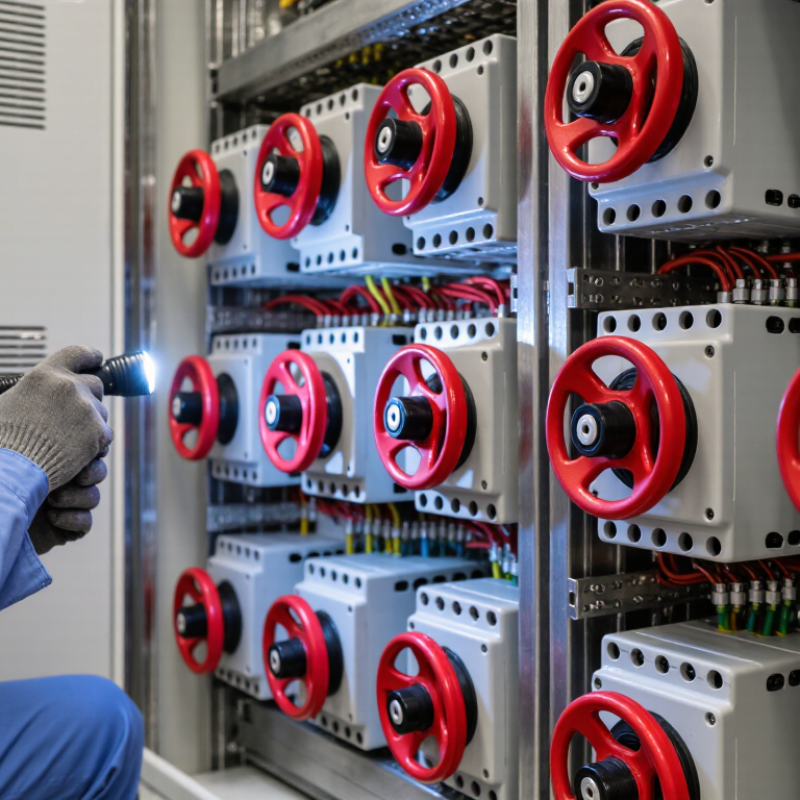
2026 Best Indoor Isolating Switch Manufacturers?

What Is an Indoor Isolating Switch?

An indoor isolating switch is a mechanical device used to separate an electrical circuit from its power source. It creates a safe isolation point during inspection, repair, or planned maintenance. Unlike a circuit breaker, it is generally not designed to interrupt heavy load current or short-circuit faults. Not a breaker. Visible separation matters.

Inside metal-enclosed switchgear, the switch may use fixed, withdrawable, or motor-operated contacts. When open, the contacts provide a specified clearance and insulation distance. Many installations include an earthing switch, mechanical interlocks, and position indicators. These features help prevent unsafe operations, such as closing an earth connection onto an energized circuit. Field inspections often find unclear labels or stiff operating mechanisms, although these details seem minor.

Selection should match the system voltage, continuous current, short-time withstand current, insulation level, and installation altitude. Indoor conditions still require attention to humidity, condensation, dust, and temperature changes. For low-voltage equipment, IEC 60947-3 may apply; medium- and high-voltage designs commonly follow IEC 62271-102, subject to local requirements. A reliable manufacturer should provide tested ratings, clear wiring diagrams, maintenance instructions, and traceable quality records. The enclosure should also support safe access and adequate creepage distances.

A practical concern remains. A switch can appear open while its mechanism is damaged or misaligned. Verification with approved procedures is essential. Clear training, routine inspection, and electrical testing matter as much as the nameplate rating.

2026 Best Indoor Isolating Switch Manufacturers? What Is an Indoor Isolating Switch?

An indoor isolating switch, also called an indoor disconnector, is a mechanical switching device used to provide a clearly defined electrical isolation point in medium-voltage switchgear. It is normally operated after the load current has been interrupted by a circuit breaker or load-break device.

The chart shows the common medium-voltage portion of the IEC 62271-1 preferred rated voltage series used for indoor switchgear and isolating-switch applications. Actual product selection also depends on rated current, short-time withstand current, insulation level, operating mechanism, interlocking, enclosure type, and installation conditions.

Key Features and Technical Standards for Indoor Isolating Switches

Choosing the best indoor isolating switch manufacturer in 2026 requires more than comparing prices or catalog photographs. A reliable supplier should provide equipment tested against applicable IEC standards, including IEC 62271-102 for disconnectors and earthing switches. For metal-enclosed assemblies, IEC 62271-200 is also important. Always confirm the rated voltage, normal current, short-time withstand current, and peak withstand current for the intended network.

Safety features deserve close attention. A clear mechanical position indicator helps operators verify isolation from the front of the panel. Door interlocks should prevent unsafe switching sequences, while an earthing switch should support controlled discharge before maintenance. Check insulation levels, creepage distance, temperature-rise performance, mechanical endurance, and indoor enclosure protection. Routine test reports should be traceable to the actual serial number, not just a generic product family.

Small details matter.

During factory acceptance or site commissioning, inspect contact alignment, operating torque, interlock action, and the condition of insulating surfaces. Dust, condensation, and installation errors can reduce dielectric performance even when the design is compliant. One practical weakness is that buyers sometimes trust certificates without checking the test configuration. That deserves more attention. Manufacturer experience is valuable, but transparent drawings, verified test data, spare-part support, and clear maintenance instructions provide stronger evidence of long-term reliability.

How to Evaluate Indoor Isolating Switch Manufacturers in 2026

Evaluating indoor isolating switch manufacturers in 2026 requires more than comparing prices. Start with the switch’s actual duty: rated voltage, continuous current, short-time withstand, and operating frequency. A 12 kV, 630 A installation needs different evidence than a small commercial panel. Ask for complete type-test reports, routine-test records, and clearly identified test standards. Vague certificates deserve caution.

Factory experience matters. Review production controls, incoming material checks, contact alignment procedures, and final inspection records. Request traceability for copper, insulation, springs, and operating mechanisms. During a factory visit, inspect a finished cabinet and operate the handle several times. It should feel consistent, not stiff or loose. Check interlocks physically. A polished presentation proves little.

Environmental performance also separates capable manufacturers. Confirm the enclosure rating, condensation protection, insulation clearances, and performance at the project’s temperature and humidity range. Ask for maintenance intervals and replacement-part availability. Independent site references are useful, especially from installations with similar load cycles. I once trusted a neat spreadsheet too quickly; the promised delivery date ignored testing delays. That mistake changed my evaluation method. I now score technical evidence, manufacturing discipline, service response, and delivery reliability separately. No supplier scores perfectly. The strongest candidate is usually the one that explains limitations openly, corrects drawing details, and supports commissioning with trained engineers. Small omissions can become expensive during energization.

2026 Best Indoor Isolating Switch Manufacturers? - How to Evaluate Indoor Isolating Switch Manufacturers in 2026

Evaluation Dimension Measurable Indicator Practical Benchmark for Indoor Medium-Voltage Applications Recommended Verification Evidence Suggested Weight
Applicable Product Standard Compliance with the latest applicable IEC or equivalent national standard For AC disconnectors and earthing switches above 1 kV, require compliance with IEC 62271-102. For metal-enclosed switchgear assemblies, also evaluate IEC 62271-200 where applicable. Declaration of conformity, type-test reports, routine-test procedures, and clearly identified standard editions 15%
Rated Voltage Selection Rated voltage compared with the system's maximum operating voltage Common indoor medium-voltage classes include 3.6 kV, 7.2 kV, 12 kV, 17.5 kV, 24 kV, and 36 kV. The selected rating must not be lower than the system requirement. Technical datasheet, nameplate drawing, insulation-coordination documentation, and project-specific calculation 8%
Continuous Current Capacity Rated normal current and temperature-rise performance Typical indoor medium-voltage switchgear applications use ratings such as 630 A, 1250 A, 2000 A, or 3150 A. The rating must match the feeder or busbar design current with suitable margin. Temperature-rise test report, rated-current declaration, conductor arrangement, and installation instructions 8%
Short-Time Withstand Capability Rated short-time withstand current and duration Common project requirements include 16 kA, 20 kA, 25 kA, 31.5 kA, or 40 kA for 1 s or 3 s. The value must be equal to or greater than the calculated short-circuit duty. Short-time withstand test report, peak withstand data, protection study, and coordination calculation 12%
Insulation Performance Power-frequency withstand voltage and lightning impulse withstand voltage Values depend on the rated voltage and insulation coordination. For a 12 kV class, a commonly specified level is 28 kV power-frequency withstand and 75 kV lightning impulse withstand, subject to the applicable standard and configuration. Dielectric type-test report, routine dielectric-test record, creepage-distance drawing, and insulation-coordination data 12%
Mechanical Endurance Number of operating cycles and mechanism reliability Specify the required mechanical endurance class under IEC 62271-102. Higher-cycle designs are preferable for frequent-operation applications; manual and motor-operated mechanisms should be evaluated separately. Mechanical endurance test report, operating-cycle specification, mechanism drawings, and maintenance schedule 10%
Earthing-Switch Safety Interlocking, position indication, and short-circuit making capability where required The design should prevent unsafe switching sequences, provide clear OPEN/CLOSED/EARTHED indication, and include an earthing-switch rating appropriate to the system fault level when fault-making duty is specified. Interlocking schematic, functional test records, position-indicator drawings, and earthing-switch type-test documentation 12%
Indoor Environmental Suitability Ambient temperature, altitude, humidity, condensation, and enclosure protection IEC 62271-1 normal service conditions generally include an ambient temperature from −5 °C to +40 °C and an altitude not exceeding 1,000 m unless otherwise specified. Verify derating for harsher conditions. Environmental service-condition declaration, altitude derating curves, enclosure data, and installation requirements 8%
Ingress Protection and Internal Arc Coordination IP rating and compatibility with the surrounding switchgear enclosure Evaluate the required IP code under IEC 60529. The isolating switch should be assessed as part of the complete assembly, especially where internal-arc classification or compartment separation is required. IP test report, enclosure drawings, compartment layout, and complete-switchgear internal-arc documentation where applicable 8%
Production Quality and Traceability Routine testing, inspection controls, material traceability, and quality management Every completed unit should undergo documented routine checks appropriate to the product, including mechanical operation, wiring, insulation, and functional verification. Manufacturing controls should be traceable to serial number or batch. ISO 9001 certificate, inspection and test plan, routine-test records, calibration certificates, and serial-number traceability 7%
Lifecycle Support and Serviceability Spare-parts availability, maintenance intervals, technical support, and documentation quality Prefer suppliers able to provide operation manuals, installation drawings, spare-parts lists, recommended lubrication and inspection intervals, and long-term support for the expected service life. Service manual, spare-parts commitment, training plan, warranty terms, response-time policy, and reference project documentation 5%
Total Cost of Ownership Purchase price plus installation, testing, maintenance, downtime, and replacement costs Compare equivalent ratings and test scope rather than unit price alone. Include motor operators, auxiliary contacts, interlocks, commissioning, periodic inspection, and expected spare-parts expenditure. Itemized quotation, lifecycle-cost model, maintenance-cost estimate, delivery schedule, and warranty conditions 5%
The benchmarks above are evaluation references for indoor medium-voltage isolating switches and must be confirmed against the project voltage level, fault current, installation environment, local regulations, and the latest applicable standards.

Leading Indoor Isolating Switch Manufacturers for Different Applications

2026 Best Indoor Isolating Switch Manufacturers?

Leading indoor isolating switch manufacturers serve very different operating environments. Commercial buildings often need compact switches for distribution boards and maintenance isolation. Industrial plants require stronger housings, visible position indicators, and reliable mechanical interlocks. Indoor substations may demand medium-voltage units with tested insulation, controlled operation, and clear earthing provisions. Solar, battery, and automation projects also need carefully matched pole configurations and voltage ratings. A capable manufacturer should provide traceable test reports, stable production controls, and responsive technical support.

Application fit matters more than a polished catalogue. Check rated current, insulation level, short-circuit withstand, operating frequency, enclosure protection, and installation clearances. For frequent maintenance, smooth handle movement and durable labeling reduce mistakes. For critical equipment, verify whether the switch supports padlocking, auxiliary contacts, and remote status monitoring. Standards compliance is essential, but certificates alone do not prove long-term field performance. A factory audit or sample inspection can reveal uneven finishing, weak terminals, or confusing markings. These details are easy to overlook.

Tips: Define the load and fault conditions before contacting manufacturers. Ask for drawings, routine test records, service intervals, and spare-part availability. Compare switching life, not only purchase price. Confirm that the isolator is intended for isolation, not routine load interruption, unless specifically rated for that duty. A perfect shortlist is rare. Recheck assumptions with the installer, because site conditions often differ from the original design.

Installation, Safety, Maintenance, and Purchasing Considerations

2026 Best Indoor Isolating Switch Manufacturers?

Installation, Safety, Maintenance, and Purchasing Considerations

Selecting an indoor isolating switch requires more than comparing prices. A qualified electrician should verify the circuit voltage, current rating, fault level, and installation environment. The switch must provide clear isolation and fit securely inside the distribution enclosure. Allow space for cable bending and inspection. Tight spaces create avoidable mistakes.

Safety depends on correct installation. Power must be disconnected and proven dead with a suitable tester before work begins. Terminals should be tightened to the manufacturer’s specified torque. Loose connections can produce heat, discoloration, and eventual failure. Use a lockable handle where unauthorized operation could create danger. Clear circuit labels also matter. A rushed label can delay emergency work.

Maintenance is often overlooked. Inspect the enclosure for dust, moisture, cracks, and unusual heat marks. Test the operating mechanism during scheduled electrical servicing, without forcing a stiff handle. Infrared inspection can reveal warm terminals before visible damage appears. Purchasing teams should request verified test data, suitable ingress protection, compatible cable sizes, spare-part availability, and clear installation instructions. Local electrical requirements still apply, even when a product appears technically suitable. I have seen installations pass visual checks yet fail because the enclosure was poorly matched to indoor humidity. That detail deserves more attention.

CAMaster Logo