Best ASU Air Separation Unit Suppliers in China

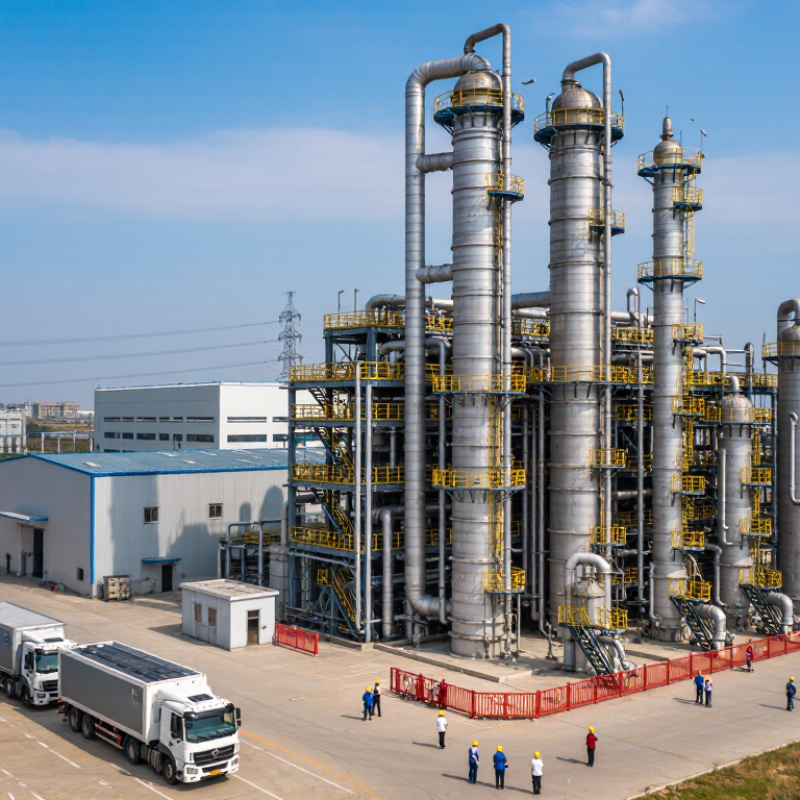
Choosing among the best ASU suppliers in China takes more than comparing prices or impressive plant photos. An Air Separation Unit(ASU)uses processes such as cryogenic distillation to separate gases from air, supplying oxygen, nitrogen, or argon for industrial use. Its design must match the buyer’s required capacity, product purity, operating conditions, and site utilities. A mismatch can affect energy use and day-to-day reliability.

This guide looks at Chinese suppliers through practical questions: Do they provide process design, equipment manufacturing, installation support, and commissioning? Can they explain expected power consumption and maintenance needs with clear assumptions? Ask for comparable project references, inspect quality documentation, and confirm which services are handled directly or by partners. Details matter.

A polished brochure is useful, but it is not proof of performance. Request technical proposals and clarify exclusions before comparing quotations. Shortlist suppliers that respond with specific, verifiable information rather than broad promises. No supplier is perfect. Even experienced teams may face schedule or site challenges, so after-sales support deserves careful review. This introduction sets out a grounded way to assess China’s ASU market and identify suppliers suited to a project’s real operating needs.
Best ASU Air Separation Unit Suppliers in China

How Cryogenic ASUs Separate Air into Oxygen, Nitrogen, and Argon

A cryogenic air separation unit begins with filtration and compression. Water vapor, carbon dioxide, and other contaminants are removed before the air enters cold heat exchangers; otherwise, ice can block narrow passages. The cooled air partially liquefies and flows through distillation columns. At atmospheric pressure, nitrogen boils at about −195.8°C, argon at −185.8°C, and oxygen at −183.0°C, according to NIST Chemistry WebBook data. Their different boiling points allow staged separation, though the close oxygen–argon temperatures make argon recovery more demanding. Small temperature changes matter.

In a typical column, nitrogen-rich vapor rises while oxygen-rich liquid collects lower down. An intermediate stream can feed an argon column, where additional stages improve purity. NOAA’s dry-air composition data puts nitrogen at about 78.08%, oxygen at 20.95%, and argon at 0.93%. That small argon fraction helps explain why recovery needs careful control. It is not magic. For buyers comparing ASU suppliers in China, ask for guaranteed product purity, flow rate, pressure, and specific power consumption under stated feed conditions. These figures are more useful than a headline capacity alone. Real plants vary. A detailed performance test can reveal whether the design matches the site’s climate, load changes, and maintenance capability.

Which ASU Capacity and Purity Benchmarks Matter, Including 99.999% Nitrogen

For an ASU supplier comparison, capacity must match actual demand, not a headline figure. Ask for guaranteed oxygen and nitrogen flow in Nm³/h, with reference conditions stated, plus turndown and seasonal performance. A plant rated for 10,000 Nm³/h of oxygen may not provide the nitrogen flow your process needs at the same time. The U.S. DOE’s 2022 Industrial Decarbonization Roadmap underscores why site energy use matters: compare specific power, typically expressed as kWh per tonne of oxygen, alongside output.

Purity targets should follow the process. Many industrial oxygen applications use about 99.5% oxygen, while electronics and specialty processes may need nitrogen at 99.999%. That nitrogen specification allows roughly 10 ppm total impurities, so ask which contaminants are measured and how sampling is verified. EIGA’s oxygen-service guidance also makes materials compatibility and safe operating procedures important review points. Purity claims without test conditions are weak evidence.

Tips: Request a written performance guarantee at your site’s temperature and pressure. Check startup time, maintenance intervals, and backup supply arrangements. Do not assume higher purity is automatically better; it can raise energy use and cost. A small but useful detail: confirm whether quoted capacity is continuous or peak. Supplier proposals sometimes blur that distinction.

Best ASU Air Separation Unit Suppliers in China — Which ASU Capacity and Purity Benchmarks Matter, Including 99.999% Nitrogen
Evaluation Dimension Practical Benchmark or Specification What to Verify When Comparing Suppliers
Capacity basis State each product flow separately in Nm³/h or t/day. Define the reference conditions; Nm³ commonly refers to gas volume at 0°C and 1.01325 bar, but conventions can differ. Confirm whether capacity means oxygen, nitrogen, or total product; specify gas or liquid, operating pressure, reference conditions, and guaranteed operating range.
Oxygen product capacity Compare the guaranteed oxygen flow at the required purity and delivery pressure, rather than relying on a plant’s nameplate or total gas capacity. Request a performance guarantee at the stated feed-air conditions and identify any capacity reduction at high ambient temperature or altitude.
Nitrogen product capacity Compare nitrogen flow at the specified purity and pressure. The achievable flow depends on the ASU process configuration and the required oxygen recovery. Check whether the quoted flow is available continuously while meeting the nitrogen purity guarantee and whether simultaneous oxygen production is required.
High-purity nitrogen benchmark 99.999% nitrogen corresponds to a total impurity allowance of 10 ppm by volume, if purity is stated on a volume basis. Require a written impurity specification. Confirm the limits for oxygen, moisture, and other relevant contaminants; “99.999%” alone does not define each individual limit.
Nitrogen impurity reporting Specifications may set oxygen and moisture limits in ppmv or other stated units. The limits must fit within the overall impurity budget for the claimed purity. Ask for measurement methods, sampling conditions, analyzer ranges, and whether guarantees apply at the battery limit or at the point of use.
Oxygen purity Industrial gaseous oxygen is commonly specified around 99.5% by volume, while some applications require different purity levels. Confirm the required oxygen concentration and permitted impurities, including nitrogen and argon where relevant. Do not compare capacity figures quoted at different purities.
Product pressure and delivery state Specify gaseous or liquid product and the required delivery pressure. Compression, liquefaction, and vaporization can affect plant configuration and power use. Check pressure at the defined battery limit, product temperature or phase, and whether compressors, storage, vaporizers, and backup systems are included.
Process route Cryogenic distillation is used for large-scale production of multiple gases and can supply high-purity nitrogen. PSA or membrane systems may suit other nitrogen-only duty profiles. Compare process routes against required capacity, purity, pressure, product mix, turndown, and operating pattern; do not treat different technologies as directly equivalent.
Specific power consumption Evaluate power consumption against a clearly defined product flow, purity, pressure, and operating boundary; there is no single value suitable for every ASU. Request a guaranteed power figure and list included equipment, such as air compressors, product compressors, cooling systems, and purification equipment.
Turndown and operating flexibility Obtain the guaranteed minimum stable load and the permitted range for each product and purity requirement. Check performance during load changes, start-up, shutdown, and operation with changing oxygen-to-nitrogen demand.
Availability and redundancy Availability should be stated as a contractual or project-specific target with defined exclusions and measurement period. Review critical equipment redundancy, maintenance intervals, spare-parts support, and any backup supply arrangement.
Liquid product and storage For liquid oxygen or nitrogen, specify production rate, storage capacity, loading arrangements, and vaporization requirements separately from gaseous output. Confirm product quality, storage design conditions, usable inventory, and the delivery capacity of pumps or vaporizers.
Performance testing and guarantees Capacity, purity, pressure, and power guarantees should use agreed test conditions and measurement procedures. Review acceptance-test criteria, instrument accuracy, correction methods, guarantee limits, and remedies if performance is not achieved.
Comparison note These are engineering comparison points, not universal guarantees. Final benchmarks depend on feed-air conditions, site elevation, product mix, pressure, process design, and the project’s written specification.

How to Compare Chinese ASU Suppliers by Capacity, Efficiency, and EPC Scope

Comparing Chinese ASU suppliers starts with the duty, not the headline capacity. Specify required oxygen and nitrogen flow, purity, delivery pressure, and seasonal ambient conditions. A plant rated for 500 tonnes per day may not match your site’s actual product mix. Ask for performance guarantees at defined feed-air conditions, then check whether figures include compressor power and cooling loads. Numbers need boundaries. Request reference data from similar operating plants, including start-up behavior and maintenance intervals.

Efficiency comparisons should use the same product purity, pressure, and measurement basis. Review specific power consumption, turndown range, equipment availability, and expected performance degradation over time. Small differences matter. Then map EPC scope line by line: air compressor, cold box, storage, utilities, controls, civil works, and commissioning. Clarify exclusions, battery limits, spare-parts support, and who owns interface risks between contractors. A low quoted price can conceal gaps in cabling, foundations, or operator training. Ask for a responsibility matrix and a schedule tied to document approvals and site milestones. Even with careful scoring, forecasts remain estimates; local weather, feed-air dust, and operating discipline can shift results. That uncertainty deserves a line in the comparison, not a footnote.

Best ASU Air Separation Unit Suppliers in China: Comparing Capacity, Efficiency, and EPC Scope

Indicative cryogenic ASU oxygen-capacity bands for initial supplier screening. These broad planning ranges are not vendor specifications or guaranteed performance data.

How to compare offers: Compare guaranteed specific power consumption (kWh per Nm³ of oxygen) only at the same oxygen purity, delivery pressure, product mix, and operating load. Ask suppliers to state the guarantee basis and exclusions.

EPC scope: Check whether the offer includes engineering, major equipment, civil works, installation, utilities, commissioning, performance testing, and operator training. Confirm battery limits and site-specific exclusions before comparing prices.

Why Energy Use of 200–250 kWh per Tonne of Oxygen Matters in Supplier Selection

An air separation unit using 200–250 kWh per tonne of oxygen may appear efficient on a supplier’s proposal. The figure is useful only when its measurement boundary is clear. Does it include the main air compressor, oxygen compression, cooling-water pumps, and purification equipment? Compare systems at the same oxygen purity, delivery pressure, ambient conditions, and operating load. The boundary matters.

Ask suppliers to define the oxygen output basis: gaseous product, liquid product, or oxygen-equivalent tonnes. These are not interchangeable comparisons. Request guaranteed power figures and supporting data from comparable operating conditions, then check which meters and auxiliary systems were included. At partial load, specific energy can rise even when total power falls. Real data helps.

A site visit or commissioning report can reveal practical details: compressor inlet temperature, pressure drops across filters, and how often equipment runs outside its design point. There is no perfectly tidy comparison; plant layouts and customer needs differ. Still, a supplier should explain assumptions plainly and show how performance is verified after startup. If the quoted number excludes major loads, ask for a revised, whole-system estimate before judging its value.

Which Chinese ASU Suppliers Serve Steel, Chemical, and Electronics Industries?

Chinese air separation unit suppliers serve steel, chemical, and electronics plants with oxygen, nitrogen, and argon systems. Their capabilities differ. Steelworks often need high-volume oxygen for basic oxygen furnaces, plus reliable backup during demand swings. The World Steel Association reported 1.89 billion tonnes of crude steel production worldwide in 2023, underscoring the scale of oxygen demand. A useful supplier should explain expected purity, power use, turndown range, and maintenance access—not just nameplate capacity. Downtime is costly.

Chemical plants may need continuous nitrogen for blanketing and oxygen for oxidation processes. Buyers should check feed-air conditions, product pressure, delivery options, and how the plant handles changing loads. Electronics facilities place particular weight on nitrogen purity and stable pressure; trace moisture or oxygen can disrupt sensitive processes. SEMI’s 2024 semiconductor equipment report recorded global sales of $117.1 billion, reflecting a large and technically demanding manufacturing base. That figure does not directly measure nitrogen consumption, but it signals why gas reliability matters.

When comparing Chinese suppliers, review process guarantees, energy-consumption test methods, commissioning plans, and local service coverage. Ask for operating references from similar climates and duty cycles. A proposal can look excellent on paper. Site conditions still matter, and I would be cautious about guarantees that omit feed-air temperature or annual operating hours.

CAMaster Logo