In 2026, the Best Metal 3D Printing Factory is not simply the one with the newest machine. It is the one that can repeatedly turn a demanding design into a reliable part. Buyers should look beyond printer models. Ask about alloy availability, powder handling, build monitoring, heat treatment, machining, inspection, and delivery records. A polished sample is useful. A traceable production history is better.
Metal 3D Printing Factory selection also depends on the part itself. A titanium medical component, a stainless-steel fixture, and a complex cooling channel place different demands on equipment and process control. Additive manufacturing analyst Terry Wohlers has consistently emphasized a practical point: the technology creates value when it solves a real production problem, not merely when it impresses. That distinction matters. A capable supplier should explain why a part suits metal additive manufacturing, where support removal is needed, and how dimensional checks are performed. Request evidence, such as inspection reports and representative case studies, rather than relying on broad claims.
This guide compares factory capabilities, quality systems, materials, lead times, and communication. It also considers what happens after printing: finishing, testing, and repeat orders. Details count. A rough surface inside a narrow channel can matter more than a beautiful exterior. No factory is ideal for every job, and this article will not pretend otherwise. Some comparisons remain imperfect because suppliers disclose different levels of process data. Still, asking precise questions can reveal a great deal. The goal is a well-supported shortlist—not a promise that one supplier fits every project.
What Defines a Metal 3D Printing Factory in 2026?
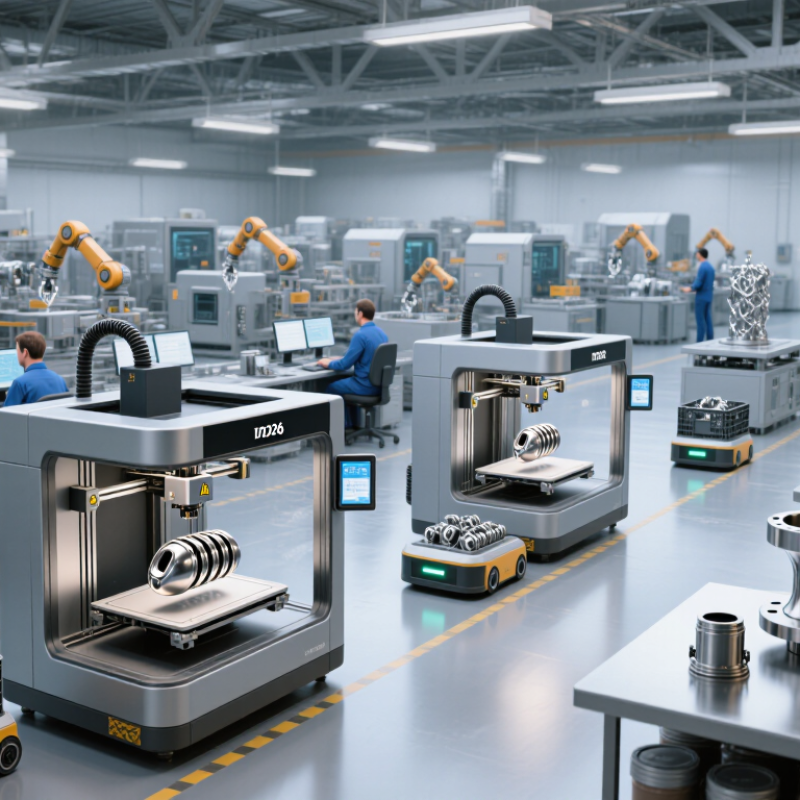
A metal 3D printing factory is more than a room filled with powder-bed machines. It controls each step, from powder receipt to final inspection. The Wohlers Report 2024 estimated the global additive manufacturing industry reached $20.035 billion in 2023. That figure covers all additive manufacturing, not metal alone, but it signals a maturing production field. Scale matters. So does repeatability.
A capable factory records powder supplier, alloy grade, reuse history, and moisture exposure. During production, it tracks build parameters and machine conditions. After printing, parts may need stress relief, support removal, machining, and heat treatment. Inspectors should connect results to each part’s build record. For aerospace or medical applications, customers may also require validated processes and documented quality controls. A polished sample part is not enough.
Look for evidence, not just equipment counts. Ask for dimensional inspection reports, material test results, and examples of how nonconforming builds are handled. A factory should explain its limits clearly, including achievable tolerances and lead times. This is where many claims deserve scrutiny. Powder reuse can reduce waste, but it needs controls. Fast delivery sounds attractive; rushed qualification can create problems. Even a mature process can have variation, so honest reporting matters.
A factory’s material capability is one useful evaluation point. This chart shows approximate melting ranges for common metal AM alloys; exact values vary with composition. Melting range alone does not determine printability or part quality—look for validated process parameters, traceable materials, and documented inspection.
Metal additive manufacturing factories choose a process based on part geometry, alloy, quantity, and required surface quality. Laser powder bed fusion spreads fine metal powder across a build plate, then melts selected areas layer by layer. It suits detailed parts with thin walls and internal channels. The chamber is controlled, and operators monitor oxygen levels, powder condition, and build data. Small details matter. A failed support or warped edge can affect the whole part.
Directed energy deposition feeds wire or powder into a focused heat source, making it useful for repairs and larger features. Binder jetting prints a liquid binder into a powder bed, followed by debinding and sintering. It can suit higher volumes, though shrinkage must be carefully managed. Metal material extrusion also appears in factory workflows, using bound feedstock that requires later thermal processing. No single method fits every job. Factories often combine printing with machining, heat treatment, and inspection. A printed surface may look ready, but critical holes and mating faces commonly need finishing. Process choice should be verified against test builds, material records, and measured part results. Even experienced teams learn through occasional rework. That is part of the process.
A practical comparison of metal additive manufacturing processes used in industrial production. The most suitable process depends on the part geometry, alloy, quality requirements, and production volume.
| Technology | How It Works | Common Materials | Typical Layer or Bead Scale | Typical Factory Applications | Key Advantages | Main Considerations |
|---|---|---|---|---|---|---|
| Laser Powder Bed Fusion (LPBF) | A laser selectively melts regions of a thin metal powder layer; the build platform lowers and the process repeats. | Stainless steel, aluminum alloys, titanium alloys, nickel-based alloys, and cobalt-chrome alloys. | Commonly about 20–60 µm per layer, depending on the machine, material, and build strategy. | Complex brackets, lightweight structures, conformal-cooling inserts, and small-to-medium precision parts. | High feature detail and the ability to make intricate internal channels and consolidated assemblies. | Usually requires support structures, powder handling, and post-processing such as stress relief or machining. Build size and rate can limit throughput. |
| Electron Beam Powder Bed Fusion (EB-PBF) | An electron beam selectively fuses metal powder in a vacuum chamber, generally with elevated powder-bed temperatures. | Most commonly titanium alloys; cobalt-chrome and selected other alloys are available for specific systems. | Often about 50–100 µm per layer; actual settings vary by alloy and equipment. | Porous or lattice structures, orthopedic components, and other parts where titanium properties and design freedom are useful. | Suitable for reactive alloys such as titanium and can produce complex structures with reduced residual stress in many builds. | Surface finish and fine-feature resolution are generally less refined than those of many laser powder-bed builds; vacuum processing and powder management are required. |
| Directed Energy Deposition (DED) | A focused energy source melts feedstock as it is delivered to the build area. Feedstock may be metal powder or wire. | Stainless steel, titanium alloys, nickel-based alloys, and other weldable engineering metals. | Typically coarser than powder-bed processes; bead and layer dimensions depend strongly on the energy source, feedstock, and setup. | Repair, feature addition, cladding, and manufacture of larger near-net-shape parts. | Can add material to existing components and is well suited to repair or localized deposition. | Usually needs finish machining to achieve precise dimensions and surface quality. Geometry and feature detail are more limited than in powder-bed fusion. |
| Wire Arc Additive Manufacturing (WAAM) | An electric arc melts metal wire and deposits it in successive weld beads to form a near-net-shape component. | Commonly weldable steels, stainless steels, aluminum alloys, and titanium alloys. | Coarse deposition, typically measured in millimeters rather than tens of micrometers; bead size depends on the welding setup. | Large structural preforms, tooling, and components that can be machined after deposition. | High material deposition rates and comparatively efficient use of wire feedstock make it attractive for large parts. | Requires substantial machining allowance and careful control of heat input, distortion, and build strategy; it is not intended for fine details. |
| Metal Binder Jetting | A printhead deposits binder into selected areas of a powder bed. The printed part is then cured, debound, and sintered. | Stainless steels, tool steels, and selected other alloys supported by the material and sintering process. | Often approximately 50–100 µm per layer, with settings varying by powder and equipment. | Batch production of relatively small parts, including components with complex shapes that can be sintered reliably. | No laser melting is needed during printing, and multiple parts can be arranged in a build for batch processing. | Debinding and sintering are essential. Shrinkage must be compensated for, and final density, dimensions, and properties depend on process control. |
| Metal Material Extrusion | A feedstock containing metal powder and a polymer binder is extruded layer by layer, then debound and sintered. | Commonly stainless steels and selected tool steels or other supported alloys. | Layer heights are generally in the hundreds-of-micrometers range and vary with nozzle and feedstock. | Small parts, prototypes, fixtures, and production components where the feedstock and sintering route meet requirements. | Uses a relatively straightforward extrusion step and can be suitable for smaller parts and lower-volume manufacturing. | Requires debinding and sintering, with shrinkage compensation and support or orientation planning as needed. Material and part-size choices are process-specific. |
Note: Layer heights and process capabilities are indicative industry ranges, not guaranteed specifications. Actual results vary by machine, material, part geometry, parameter set, and post-processing. Factories should verify mechanical properties, tolerances, and inspection requirements for the specific application.
Reliable metal printing starts with controlled inputs. Factories record powder supplier, batch number, particle condition, and storage history. During a build, operators monitor laser power, scan speed, chamber oxygen, and temperature. A small oxygen rise can change surface quality or increase defects. Each machine needs calibrated sensors and documented maintenance. The process is repeatable, not flawless.
The Wohlers Report 2024 estimates that global additive manufacturing revenue reached $20.035 billion in 2023, up 11.1% from 2022. That growth raises the stakes for traceable production. Strong factories link each part to its powder lot, machine, build file, and inspection results. They use test coupons, dimensional checks, and, where needed, computed tomography to find internal flaws. Statistical process control can reveal drift across builds, though a chart cannot explain every cause. Human review still matters.
Tips: Ask for a sample inspection report and the applicable acceptance criteria. Check whether powder reuse limits are documented. Request build-to-build data for a critical dimension, not just one showcase part. Look for gaps, too. A polished report does not guarantee a stable process.
Aerospace companies use metal 3D printing for lightweight brackets, ducts, and complex engine components. These parts can reduce weight and combine several assemblies into one. Medical manufacturers also benefit, especially when producing patient-specific implants or instruments with porous surfaces. Careful testing remains essential; a complex shape alone does not guarantee better performance. Not every part qualifies.
Tips: Choose parts with internal channels, unusual geometry, or low production volumes. Check material specifications, inspection methods, and post-processing needs before committing. These details can change cost and lead time.
Energy and industrial equipment makers use the process for heat-resistant components, replacement parts, and small production runs. Automotive teams may print prototypes or specialized tooling, then test fit and function before larger-scale production. In practice, the best results often come from redesigning a part for printing rather than copying a cast or machined version. That takes engineering time. It can also reveal assumptions that were missed during the first design review. Metal 3D printing is useful, but it is not automatically faster or cheaper; compare the full manufacturing route and required quality checks.
How to Evaluate and Compare Metal 3D Printing Factories
Comparing metal 3D printing factories takes more than checking machine lists. Ask how each supplier controls powder storage, machine calibration, and build records. These details affect repeatability. Request inspection reports for a part made with the same alloy and process you need. Check dimensional results, surface condition, and any documented defects. A polished sample can look convincing, but its measurements matter more. Ask how the factory handles support removal and heat treatment, too; those steps can change fit and strength.
Tips: Share one representative drawing with each factory. Ask for tolerances, lead time, post-processing details, and what the quote excludes. Look closely. A vague answer is worth noting.
Compare how clearly staff explain trade-offs, not just how quickly they reply. Ask whether they can review build orientation and flag thin walls or difficult features before production. Request a small sample or a suitable test coupon when the order warrants it. One common mistake is choosing the lowest quote before checking what inspection it includes. I would also leave room for uncertainty: a strong first sample does not prove every future batch will match. Confirm how changes are recorded and how issues are communicated.