2026 Best Sealed Wheel Bearing Types for Global Buyers

Choosing the right Sealed Wheel Bearing in 2026 requires more than comparing price, bore size, and brand names. Global buyers now face electric vehicles, heavier axle loads, dusty roads, water exposure, and stricter maintenance expectations. A bearing may look identical in a catalogue, yet differ greatly in seal design, grease fill, clearance, steel quality, and test validation.

Market evidence supports this growing complexity. Fortune Business Insights valued the global automotive bearing market at approximately USD 39.75 billion in 2023. Its report projects continued expansion through 2032, driven by vehicle production, electrification, and replacement demand. Grand View Research also identifies automotive applications as a major force within the broader bearings market. These figures cover automotive bearings generally, not every Sealed Wheel Bearing. That distinction matters. It is easy to overstate market numbers.

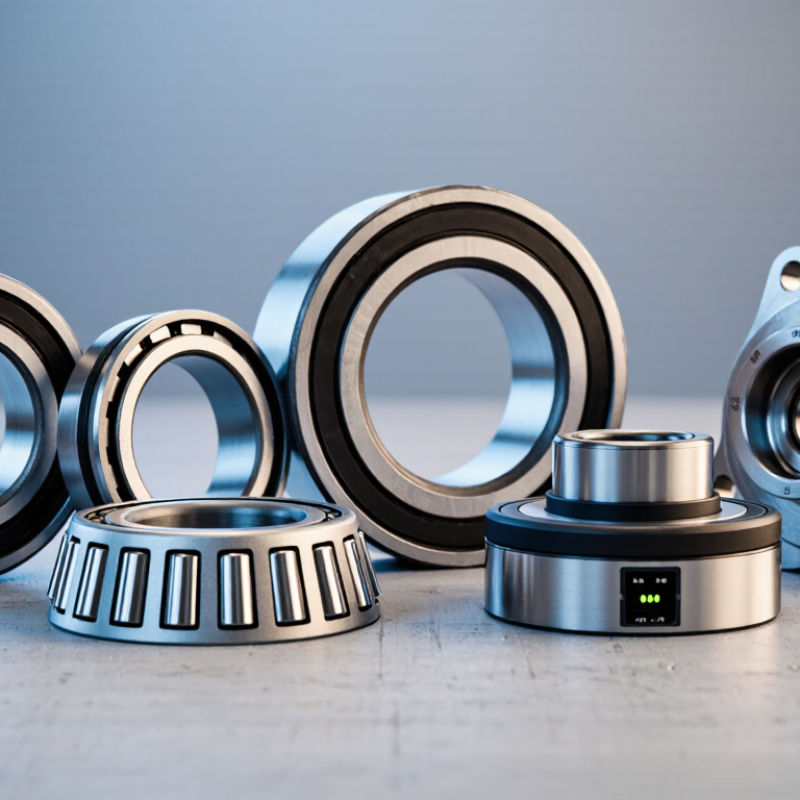
Dr. Peter Jost, a leading tribology authority, described tribology as “the science and technology of interacting surfaces in relative motion.” His principle remains practical here. A sealed wheel bearing must manage friction, heat, contamination, and misalignment simultaneously. The wrong seal can trap water. Poor grease can harden near a hot hub. Excessive preload can create noise before failure becomes visible. This 2026 guide compares deep-groove, tapered-roller, angular-contact, hub-unit, and sensor-ready designs for global purchasing teams. It considers load ratings, sealing systems, corrosion resistance, traceability, installation conditions, and supplier reliability. Some recommendations remain conditional. Road temperature, vehicle weight, and service quality can change the result. A cheaper bearing is not always economical. A premium bearing is not automatically suitable.
2026 Best Sealed Wheel Bearing Types for Global Buyers

Sealed Wheel Bearing Basics: 2RS, ZZ, and Contact-Seal Designs

For global buyers, sealed wheel bearing selection starts with understanding the suffix. A 2RS bearing uses rubber seals on both sides. These seals contact the inner ring and help block water, dust, and road grit. They suit trailer hubs, carts, and slow-to-medium speed wheels. However, contact creates friction and may increase heat at higher speeds.

ZZ bearings use metal shields on both sides. The shields protect against larger particles while allowing lower friction than contact seals. They work well in cleaner environments, such as warehouse equipment or indoor transport wheels. They are not a strong choice for repeated water spray.

Contact-seal designs offer tighter protection, but seal drag can reduce efficiency.

The naming is not perfectly universal, so buyers should confirm the drawing, seal material, grease, clearance, and operating temperature.

Tips: Match the seal to the environment, not only the price. Check wheel load, rotation speed, axle size, and expected moisture. Ask for dimensional reports and batch inspection records. A 2RS seal may still fail when installation is misaligned. ZZ may perform poorly beside muddy roads. Small details matter. It is also wise to test a sample under real load before placing a large order.

Load Ratings Explained: ISO 281 Life Calculations and C/P Ratios

2026 Best Sealed Wheel Bearing Types for Global Buyers

For sealed wheel bearings, load rating often matters more than the seal design. ISO 281:2007 defines basic rating life as L10, measured in millions of revolutions. It predicts a 90% reliability level under stated conditions. The core formula is L10 = (C/P)p. Here, C means dynamic load rating, while P means equivalent dynamic bearing load.

For ball bearings, ISO 281 uses an exponent of 3. A C/P ratio of 5 gives about 125 million revolutions. A ratio of 10 gives 1,000 million revolutions. Roller bearings use an exponent near 10/3, producing higher calculated life at the same ratio. The number looks impressive. Road shock can make it optimistic.

Global buyers should calculate radial, axial, and impact loads together. A wheel bearing facing a 4 kN equivalent load needs more than a nominal 4 kN capacity. ISO 281 also notes that reliability, lubrication, contamination, and material quality can modify basic life calculations. Seals reduce dirt entry, but they cannot correct excessive preload or poor installation.

A practical check uses service hours: L10h = 1,000,000L10 ÷ 60n, where n is rotational speed. At 600 rpm, 125 million revolutions equal roughly 3,472 operating hours. That is not a guarantee. Field conditions remain messier than laboratory assumptions. Cite ISO 281:2007 when comparing supplier data, and document every load assumption.

Precision Classes Compared: ABEC 1–9 and ISO 492 Tolerances

For global buyers, sealed wheel bearing precision should be compared through standards, not marketing labels. ABEC grades cover 1, 3, 5, 7, and 9; there is no standard ABEC 2, 4, 6, or 8 grade. ANSI/ABMA Standard 20 evaluates dimensional and running accuracy. However, ABEC does not measure load capacity, seal quality, grease life, or contamination resistance. A higher number is not automatically better for a dusty wheel hub.

ISO 492:2014 uses tolerance classes P0, P6, P5, P4, and P2. P0 is the normal production class, while P6 and P5 provide tighter dimensional control. P4 and P2 target high-precision applications. These classes are not perfectly interchangeable with ABEC grades. Industry comparison tables often suggest ABEC 1 near P0 and ABEC 5 near P5, but buyers should verify the manufacturer’s test method. Small differences can matter.

In practical sourcing, inspect bore diameter, outside diameter, radial clearance, seal drag, and grease specification. The 2023 World Bearing Association technical guidance also emphasizes traceability and controlled manufacturing data for reliable bearing selection. A wheel bearing with ABEC 9 marking may still fail early if its seal lip hardens or its clearance mismatches the axle. That detail is easy to overlook. Buyers should request ISO 492 inspection records, noise data, and endurance results before comparing quotations. Personal experience suggests that “precision” is often oversold, while sealing performance receives too little attention.

Material and Lubrication Choices: 52100 Steel, Ceramic, and Grease

For global buyers, material selection should begin with the operating environment, not marketing language. ASTM A295 commonly specifies 52100 bearing steel with about 0.98–1.10% carbon and 1.30–1.60% chromium. This composition supports high hardness and strong rolling-contact fatigue resistance. It remains a practical choice for moderate temperatures, clean loads, and cost-sensitive equipment. ISO 281 also reminds engineers that calculated L10 life is not guaranteed service life. Contamination, poor mounting, and lubricant starvation can dominate the result.

Ceramic hybrid bearings use silicon nitride balls, which have a density near 3.2 g/cm³, compared with roughly 7.8 g/cm³ for bearing steel, according to ASM material data. Lower ball mass can reduce centrifugal force at high speed. Ceramic balls also resist electrical current passage better. Still, ceramic is not automatically better. Raceway quality and preload may matter more. I have seen expensive ceramic assemblies underperform after incorrect fitting.

Grease is the quieter decision. A 2024 technical review from the National Lubricating Grease Institute emphasizes that consistency, base oil viscosity, temperature, and relubrication practice must match the application. NLGI 2 grease is common, but it is not universal. High-speed spindles may need lower-viscosity grease and a smaller fill volume. Dusty conveyors need stronger sealing and a stable thickener system. Mixing greases can cause softening or hardening. That mistake is easy to overlook. Check compatibility data before changing formulas, and validate performance through temperature, vibration, and torque measurements.

Global Buyer Selection Guide: Speed, Temperature, IP Ratings, and Cost

2026 Best Sealed Wheel Bearing Types for Global Buyers

Global buyers should match bearing speed with real operating conditions, not catalogue speed alone. A contact-sealed bearing handles dust and water better, but creates more friction than a shielded type. Calculate the DN value: bore diameter in millimetres multiplied by rotational speed. Then check the supplier’s limit for grease, seal design, and preload. ISO 281 defines L10 life as the point where 90% of identical bearings are expected to survive. That figure is useful, but contamination and poor alignment can reduce it sharply.

Temperature selection needs equal attention. Standard sealing materials often suit moderate heat, while high-temperature applications require compatible grease and cage materials. IEC 60529 rates IP protection for complete equipment, not every bearing alone. IP67 means dust-tight protection and temporary water immersion. It does not guarantee continuous underwater operation. The U.S. Department of Energy reports that motor-driven systems use about 60% of industrial electricity, so low-friction bearings can support energy control. Savings may be smaller than expected when loads are light.

Tips: Request speed, temperature, load, and contamination data before comparing prices. Compare total cost, including relubrication, downtime, and replacement labor. A cheaper bearing may create hidden costs. I have seen selections fail because buyers treated IP ratings as a substitute for proper sealing. Verify test conditions, certificate dates, and dimensional tolerances. Then review the choice with maintenance staff, not only purchasing teams.

CAMaster Logo