2026 Best Vegan Gelatine Powder for Bulk Buyers?

Bulk buyers comparing the 2026 best Vegan Gelatine Powder options need more than a plant-based label. They need a powder that performs consistently across production runs. A clear gel in a sample cup may behave differently in a filled confection, chilled dessert, or beverage. That difference can affect texture, yield, and customer acceptance.

Food colloid scientist David Julian McClements studies how ingredients interact in food systems. A fair paraphrase of his work is that ingredient performance depends on the structure and conditions of the finished food. That is a useful lens for evaluating vegan gelling powders. Ask suppliers for the recommended dosage, setting conditions, heat tolerance, and application-specific technical data. Then compare those details with your own process. A small pilot batch can reveal problems that a specification sheet will not.

Look closely at the powder, too. Does it disperse without stubborn clumps? Does the gel hold after cooling and handling? Is the texture clean, or slightly brittle? These are practical checks, not minor details. Reliable documentation, consistent lots, and realistic lead times matter just as much as price per kilogram. Still, no single ingredient suits every recipe. That deserves a second look. This guide explores the factors bulk buyers can use to compare Vegan Gelatine Powder options, test claims, and choose a product that fits their actual production needs.
2026 Best Vegan Gelatine Powder for Bulk Buyers?

What Vegan Gelatine Powder Is and How It Works

“Vegan gelatine powder” is a convenient buying term, not animal gelatin. It usually means a plant-based gelling agent, such as agar, carrageenan, or pectin. Their behavior differs. Agar is typically dissolved in hot liquid, then forms a gel as it cools. Carrageenan responds to salts and, in some recipes, proteins. Pectin needs the right balance of sugar, acidity, or calcium, depending on its type. The name can mislead. A direct one-to-one swap may fail.

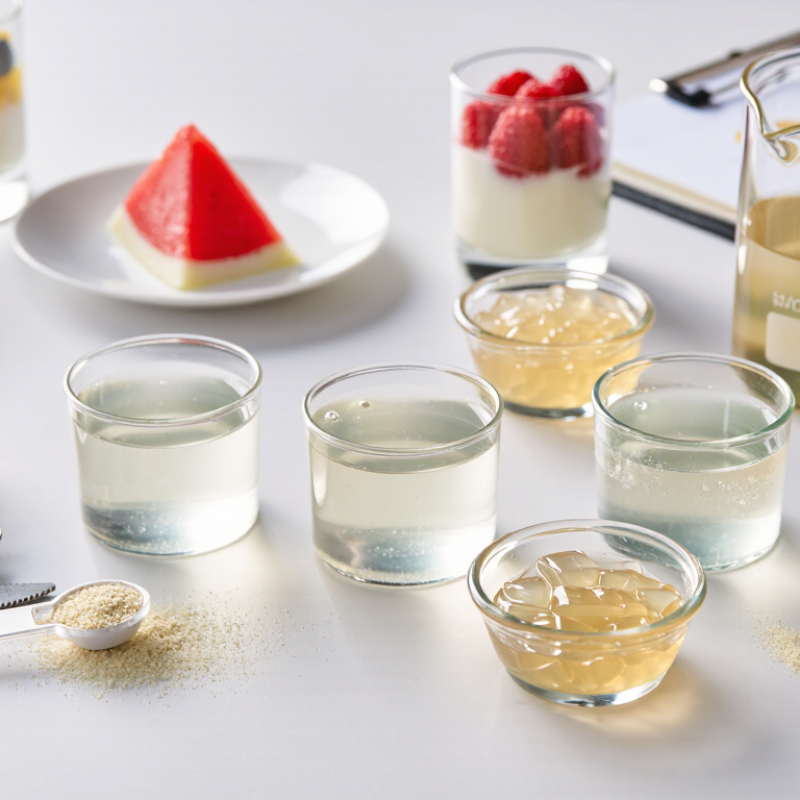
For bulk buyers, the useful question is how the powder performs in the actual recipe. Check setting temperature, texture, acidity tolerance, and whether the finished gel must survive reheating. FAO’s 2024 State of World Fisheries and Aquaculture reports 37.8 million tonnes of aquatic algae production in 2022, mostly from aquaculture. That figure signals a substantial seaweed supply base, but it does not guarantee a particular extract’s quality or consistency. Ask suppliers for specifications and batch testing. Then trial a small batch in the intended liquid, using the same heating and cooling steps as production. Small trials matter. A firm gel in a sample cup can still turn brittle, cloudy, or weak in a larger batch.

Plant-Based Gelling Ingredients and Their Key Differences

Plant-based gelling ingredients do not behave like animal gelatine, and they are not interchangeable. Agar, extracted from red seaweed, sets firmly as it cools and usually remains stable at room temperature. It needs heating to dissolve. In a test kitchen, a small agar batch can turn brittle if the dosage is too high. That detail matters when scaling a formula.

Pectin is a better fit for many fruit fillings and acidic mixtures. It often needs sugar, acid, or calcium to set, depending on its type. Carrageenan can create softer, more elastic textures in dairy-style or plant-based products, but its performance depends on the recipe and processing conditions. Konjac forms a strong, springy gel and is often paired with other hydrocolloids. Small changes can make a big difference.

For bulk purchasing, compare more than price per kilogram. Check gel strength, mesh size, setting temperature, permitted uses, and batch documentation. Ask suppliers for technical data and a sample before committing to a large order. Then test the powder in the actual recipe, not just in water. It sounds obvious, but it is easy to overlook. A gel that works in a cup may fail in a filled pastry or during transport. Allow time for repeat trials; plant-based systems can be less forgiving than expected.

How to Evaluate Vegan Gelatine Powder for Bulk Use

2026 Best Vegan Gelatine Powder for Bulk Buyers?

How to Evaluate Vegan Gelatine Powder for Bulk Use

Bulk evaluation starts with the intended application, not a generic “gelatine” claim. Vegan gelling powders may use agar, carrageenan, pectin, or blends; they do not behave like animal gelatine. Test the powder in your actual recipe and equipment. Record hydration temperature, mixing time, setting time, texture, and performance after refrigeration. A clear gel in a beaker can turn brittle in a dessert or weaken during transport. Small tests matter.

Check the specification sheet for gel strength, viscosity, recommended dosage, moisture, microbiological limits, and lot-to-lot tolerances. Ask for a certificate of analysis and traceability details.

FAO’s The State of World Fisheries and Aquaculture 2024 reports 37.8 million tonnes of algae production worldwide in 2022, with about 97% farmed. This signals a substantial raw-material sector, but it does not guarantee that a specific hydrocolloid meets your needs. Supplier data and application trials still count.

Compare samples across more than one production lot, if possible. The awkward part: a technically consistent powder may still produce a mouthfeel your customers dislike. Allow time for a pilot run, and document what fails, not just what works.

Comparing Suppliers, Specifications, and Total Purchase Costs

For bulk buyers, compare vegan gelatine powders by performance, not price per kilogram alone. Agar, carrageenan, and gellan behave differently in hot-fill, chilled, and acidic products. Request a specification sheet covering gel strength, setting temperature, moisture, particle size, and microbiological limits. Then test the powder in your own recipe. A clear gel in a supplier’s sample may turn brittle in your fruit filling.

FAO’s The State of World Fisheries and Aquaculture 2024 reports 37.8 million tonnes of algae production in 2022. That figure shows the scale of the wider algae supply chain, but it does not guarantee consistent food-grade powder availability. Compare suppliers’ origin, production capacity, batch documentation, and lead times. Calculate total purchase cost: product price, freight, duties, testing, storage, and expected use rate. A cheaper powder can cost more if it needs a higher dose or arrives with variable gel strength. One imperfect point in my own comparisons: freight estimates can shift quickly, so treat quotes as time-sensitive.

Tips: Ask for a recent certificate of analysis and a trial lot before committing. Compare the same recipe, batch size, and setting conditions across samples. Keep one detail in view: “vegan” does not mean interchangeable.

Storage, Handling, and Quality Checks for Large Orders

For large orders of vegan gelatine powder, storage conditions can protect quality before the product reaches production. Keep bags sealed in a cool, dry, well-ventilated area, away from direct sunlight, moisture, and strong odors. Use clean pallets rather than placing cartons on the floor. Damp packaging is a warning sign. Record delivery dates and lot numbers, then rotate stock using the oldest approved lots first.

Handling deserves equal care. Move bags gently to avoid tears and powder loss, and use clean, dry scoops when opening them. Reseal partially used packs promptly. Staff should follow the supplier’s handling instructions and avoid introducing water or other ingredients into stored powder. These steps sound basic. They are easy to skip during a busy shift.

Check each shipment against its specification before release. Review the certificate of analysis, lot identification, packaging condition, and stated best-before date. For a large purchase, take samples from several bags or cartons, not just the one on top. Compare color, odor, particle size, and performance in a small test batch. Keep a sealed reference sample with the receiving records. A tidy checklist helps, but it cannot replace a practical batch test; even careful checks may miss a difference that only appears during production.

CAMaster Logo