
China Best M8 Pico Connector Manufacturers and Suppliers

Selecting a reliable M8 Pico Connector manufacturer in China takes more than comparing unit prices. Buyers need to match connector design to the equipment, installation environment, and expected service life. Small details matter. Pin count, coding, contact material, cable length, shielding, and mounting style can affect fit and performance. A compact connector may look suitable in a product photo, yet still be wrong for a specific sensor or control system.

This guide introduces practical ways to assess M8 Pico Connector manufacturers and suppliers. It covers product specifications, customization options, sample evaluation, quality documentation, and communication during quotation and production. Ask suppliers for clear drawings and confirm key requirements, including operating temperature and ingress protection, before placing an order. Where possible, test samples in the intended assembly rather than relying on catalog descriptions alone. That sounds simple. It often isn’t. A supplier’s stated capability should be checked against evidence, such as inspection records, traceable specifications, and consistent responses to technical questions. Not every listing provides enough detail, and a low quote may leave important requirements unclear. Use the comparisons in this article to build a shortlist, identify questions worth asking, and choose a partner whose products suit your application—not just your budget.
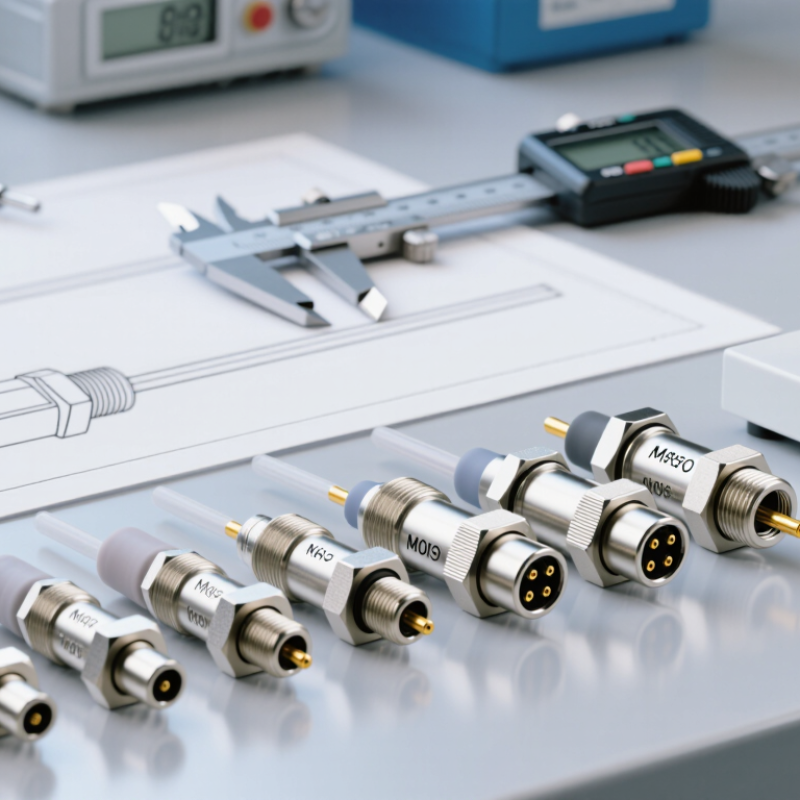
China Best M8 Pico Connector Manufacturers and Suppliers

Understanding M8 Pico Connectors and Their Industrial Applications

M8 Pico connectors provide compact connections for sensors, actuators, and other devices in industrial systems. Their small threaded interface can fit where larger connectors crowd a control cabinet or machine frame. M8 usually describes the coupling size, while “Pico” may be used differently across product ranges. Check the actual dimensions and pin layout.

These connectors are often used on packaging lines, conveyor equipment, and factory automation systems. A sealed connection can help resist dust and moisture near washdown areas, but protection depends on the assembled connector, cable, and installation.

Details matter.

Check the coding, contact count, voltage, current, and temperature limits against the device requirements. A connector that fits physically may still have the wrong electrical configuration. Tight bends and repeated vibration can also strain the cable behind the coupling. In practice, the specification sheet does not show every installation problem. Allow room for service access, and inspect the connection after installation. That small step is easy to overlook.

Key Design Features, Specifications, and Compatibility Factors

M8 pico connectors are compact, but their small size leaves little room for poor design choices. An 8 mm threaded coupling helps secure sensor connections in tight machine layouts. Many versions use three or four contacts, yet pin count alone does not confirm compatibility. Check the coding, pin assignment, male or female contact, cable diameter, and rated voltage and current. IEC 61076-2-104 covers M8 connector dimensions and interfaces; the exact product datasheet still determines its limits. Small details matter.

Sealing and mechanical retention deserve equal attention. Some M8 assemblies achieve IP67 when correctly mated, but an unmated connector may not provide the same protection. Match the cable jacket and connector materials to expected oils, vibration, temperature changes, and cleaning conditions. The International Federation of Robotics reported 4,281,585 industrial robots operating worldwide in 2023 in World Robotics 2024, underlining the scale of equipment that depends on reliable connections. That figure does not measure connector failure rates, so it should not be treated as proof that one design lasts longer. Not always. In sourcing, request mating-cycle, ingress-protection, and electrical test details, then check them against the application. A tight installation can still fail if the keying or wiring differs. That assumption deserves a second look.

How to Assess M8 Pico Connector Manufacturers in China

Assessing an M8 Pico connector manufacturer in China takes more than comparing unit prices. Request a current datasheet, dimensioned drawings, and the exact pin configuration for your application. Check contact material, cable options, sealing details, and stated mating-cycle limits. Ask how the supplier controls crimping, assembly, and final inspection. A neat factory report helps, but it cannot replace a sample test.

Samples matter. Mate each connector with the intended socket, then check insertion feel and locking stability. Inspect the threads, overmold, and cable exit under bright light; uneven edges or loose parts deserve questions. For damp or dusty installations, confirm the test method behind any ingress-protection claim. Also ask for batch traceability and how defects are handled. Specifications can look complete while leaving practical details unclear.

Tips: Send the same drawing and questions to several suppliers, then compare their replies line by line. Record sample results, including small inconsistencies. They may be harmless, but they should not be ignored.

China Best M8 Pico Connector Manufacturers and Suppliers - How to Assess M8 Pico Connector Manufacturers in China

Assessment Dimension What to Check Evidence to Request How to Assess
Product-standard knowledge Whether the supplier can specify the relevant M8 connector configuration, including locking style, pole count, contact arrangement, and cable or panel-mount format. Product drawings, dimensional specifications, pin-assignment diagrams, and applicable standard references. Check whether the proposed configuration matches the equipment interface. IEC 61076-2-104 covers M8 circular connectors with screw-locking or snap-locking mechanisms; confirm the exact product scope and edition with the supplier.
Electrical ratings Rated voltage and current, contact resistance, insulation resistance, and dielectric withstand values for the exact connector configuration. Datasheet and test records identifying the tested model, test conditions, and measurement limits. Compare the stated ratings with the application requirements. Do not assume ratings are identical across different pole counts, contact sizes, or product designs.
Ingress protection Whether the stated IP rating applies to the complete connector assembly and under which mating and installation conditions. Test report or certificate showing the model tested, mating state, cable or mounting arrangement, and test method. Check claims against IEC 60529 and the actual installation. An IP rating for a mated assembly should not be treated as a rating for an unmated connector unless explicitly tested and specified.
Materials and construction Contact and housing materials, plating, sealing materials, cable-jacket material, and resistance to the intended operating environment. Bill of materials or material specifications, plating details, and applicable material-compliance documents. Compare materials with the application’s temperature, chemical, moisture, and mechanical requirements. Request specific material grades rather than relying on general descriptions such as “industrial grade.”
Environmental performance Operating and storage temperature ranges, vibration or shock performance, and any stated resistance to oils, cleaning agents, or UV exposure. Datasheet limits and test reports that identify test methods, sample configuration, and acceptance criteria. Confirm that conditions reflect the intended use. Temperature and environmental limits are product-specific and should be stated for the offered model.
Manufacturing quality controls Controls for incoming materials, contact termination, molding, sealing, assembly, and final electrical inspection. Process flow, inspection plan, sample inspection records, and quality-system certificate with its current scope and validity. Check that inspection records are traceable to production lots and that the supplier can explain how nonconforming products are identified and handled.
Traceability and change control Whether products and materials can be traced by lot, and whether design or material changes are communicated before implementation. Sample labels or lot records, change-notification procedure, and document revision history. Confirm that the part number, drawing revision, and production lot can be linked to inspection and shipment records.
Sample validation Whether production-representative samples can be evaluated before a larger order. Samples, a controlled drawing, test specifications, and a written sample approval process. Test fit, mating and unmating, cable routing, sealing, and electrical performance in the intended assembly before approving production.
Supply and delivery capability Quoted minimum order quantity, production lead time, available capacity, packaging method, and shipment documentation. Written quotation, production schedule, packaging specification, and sample commercial documents. Compare lead time and order terms with project needs. Confirm whether quoted timing applies to samples, initial production, or repeat orders.
Technical communication and after-sales support Response quality for drawings, application questions, nonconformities, and engineering changes. Named technical contact, response and escalation process, warranty terms, and corrective-action procedure. Evaluate whether answers are specific, documented, and consistent with the product specifications and agreed requirements.

Note: M8 product ratings and features vary by design. Verify all specifications against the exact part number, current datasheet, test documentation, and intended installation before placing an order.

Types of M8 Pico Connector Suppliers and Their Capabilities

M8 Pico connector suppliers differ in what they can support. Connector specialists typically offer several pin counts, coding options, and mounting styles. Their engineers can check whether a straight or right-angle plug fits a crowded sensor housing. Ask for dimensional drawings and contact-plating details, not just a catalog page. Small parts leave little room for assembly errors.

Cable assembly suppliers add practical value when a connector must arrive prewired. They may offer custom cable lengths, molded strain relief, and continuity testing. A capable supplier should explain its test method and provide sample results. Still, datasheets do not tell the whole story. A short trial run can reveal whether the cable bends cleanly around a machine frame.

Distributors and engineering-focused suppliers can help compare options across multiple manufacturers. Their strength is often availability and technical coordination, rather than custom tooling. For demanding environments, ask about sealing tests, temperature limits, and vibration checks. Be cautious when claims lack test conditions; protection ratings depend on the assembled connection, not the connector alone. One detail gets missed. Confirm that the mating socket matches the selected coding before approving production.

Sourcing, Quality Assurance, and Customization Considerations

Sourcing an M8 pico connector in China starts with the application, not the quotation. Share the required pin count, cable length, mounting space, and operating conditions. A clear drawing helps suppliers check dimensions and avoid costly assumptions. Ask whether the quoted connector is straight or angled, and confirm its mating interface. Small differences matter.

Quality assurance should cover more than a visual inspection. Request material details, dimensional records, and test results for continuity and insulation. For outdoor equipment, discuss sealing performance under the actual installation conditions. A sample run can reveal issues that drawings miss, such as a stiff cable or difficult coupling. Check how production lots are identified and how defects are handled. These details can take time to verify. They are worth asking about.

Tips: Send a marked-up photo of the installation space, then compare samples against the same checklist. For customization, confirm wire color, cable jacket, labeling, and packaging in writing. Keep one open question in the review: did the sample match the final specification? A rushed answer is not proof.

CAMaster Logo