
China Top 10 Canned Motor Pump Manufacturers

Canned Motor Pump technology serves demanding duties where leakage control, compact installation, and dependable operation matter. Its motor and pump share a sealed assembly, removing the conventional shaft seal. That design can be valuable in chemical processing and other applications involving hazardous or costly fluids. It is not a universal answer, though. Fluid properties, operating temperature, system pressure, and maintenance access all affect the right choice.

The U.S. Department of Energy’s Improving Pumping System Performance: A Sourcebook for Industry reports that pumping systems can account for 25–50% of energy use in some industrial facilities. This figure describes pumping systems broadly, not Canned Motor Pump installations alone. It still explains why efficiency deserves close attention when buyers compare manufacturers. A few percentage points can matter across long operating hours.

Reliability deserves equal scrutiny. Rotating-equipment authority Heinz P. Bloch’s published work emphasizes the role of equipment selection, installation, and maintenance in dependable service. The practical lesson is simple: a sealed design cannot compensate for poor application matching. For this China Top 10 Canned Motor Pump Manufacturers guide, we compare product scope, engineering capabilities, quality controls, and after-sales support. Company rankings can only offer a starting point; specifications and service conditions need careful review. Details matter.

Readers should verify current certifications, materials, performance curves, and service coverage directly with each supplier. Published company information may not reveal every limitation. That is worth remembering before making a shortlist.
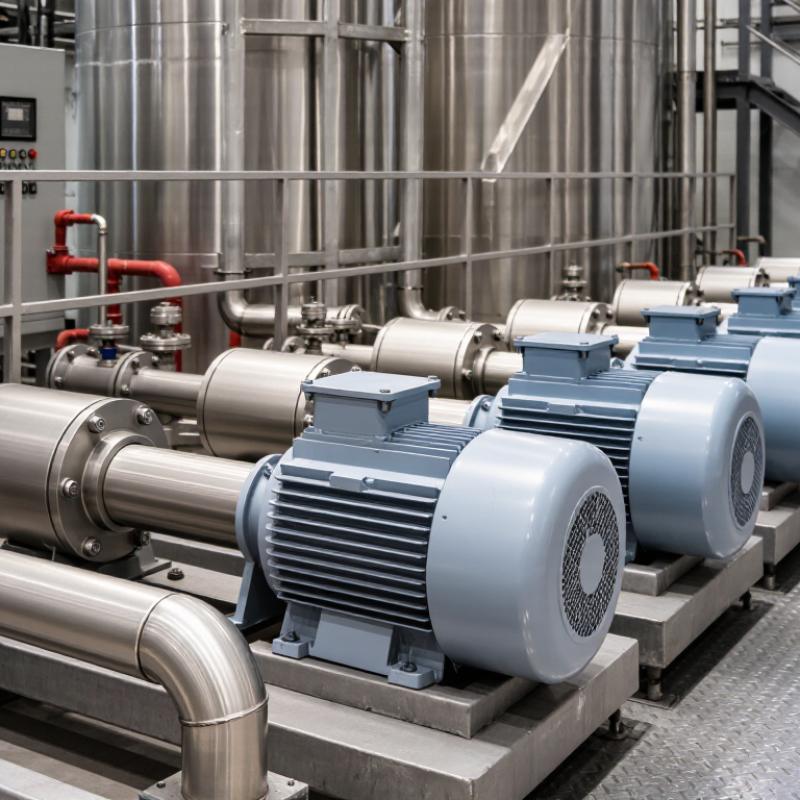
China Top 10 Canned Motor Pump Manufacturers

What Canned Motor Pumps Are and How They Work

A canned motor pump combines the pump and motor in one sealed unit. Its rotor sits inside the pumped liquid, while a thin metal can separates it from the stator windings.

Electrical power creates a magnetic field through the can, turning the rotor and impeller without a conventional shaft passing through the casing. Fewer external seals mean fewer potential leak paths. That matters when handling hot, corrosive, or valuable process fluids.

The arrangement is compact, too. In a plant room, that can save space around pipes and equipment.

The pumped liquid often cools the motor and lubricates its internal bearings. This makes fluid properties important: viscosity, temperature, and cleanliness can affect performance and service life.

A pump selected only by flow rate may disappoint. Dry running is a concern because bearings may lose lubrication quickly, and trapped gas can interrupt circulation.

Operators should check operating limits and follow the manufacturer’s maintenance instructions. There is a trade-off. The sealed design reduces routine seal work, but internal components can be less accessible.

A careful application review is still needed. The can looks like a small detail; it does not make poor installation harmless.

China’s Canned Motor Pump Industry and Its Key Applications

China’s canned motor pump industry serves chemical processing, building services, refrigeration, and other fluid-handling sectors. These pumps place the motor rotor and impeller inside a sealed casing. This design removes the conventional rotating shaft seal, helping limit external leakage. It does not make every fluid harmless or every installation maintenance-free. Chinese manufacturers offer varied capacities and materials, while buyers still need to verify operating limits and test documentation for each model.

In chemical plants, canned motor pumps can move heat-transfer liquids and compatible process fluids where leakage control matters. In HVAC and refrigeration systems, they circulate chilled water, hot water, or refrigerants when the pump is designed for those conditions. Compact assemblies can fit tight equipment rooms. Yet temperature, viscosity, pressure, and solids content affect performance. Choosing by flow rate alone may lead to poor efficiency or premature wear. This is easy to overlook.

Tips: Confirm fluid compatibility with wetted materials, and check minimum flow and dry-running limits. Ask for performance curves at the intended operating point. Leave access for inspection; sealed construction does not eliminate bearing or motor checks.

Criteria for Evaluating Chinese Canned Motor Pump Manufacturers

China Top 10 Canned Motor Pump Manufacturers

Criteria for Evaluating Chinese Canned Motor Pump Manufacturers

When assessing manufacturers for a China top 10 shortlist, look beyond catalog specifications. Match the pump’s flow rate and head to your actual operating conditions. Ask whether the stated performance uses the same liquid temperature and viscosity as your process. Check wetted-part materials, motor insulation, and allowable pressure. These details affect service life. Request test records for the proposed model, not just a general product sheet. A clear report should identify test conditions and measured results.

Tips: Share your duty point and fluid data in writing. Ask for a dimensional drawing and a parts list. Small details matter.

Evaluate quality controls and technical support, too. Ask how each unit is inspected before shipment, and whether inspection records can be supplied. Confirm how the manufacturer handles installation questions, spare parts, and troubleshooting across time zones. Compare energy use at your normal operating point, rather than relying only on a best-case efficiency figure. I would still treat a checklist as imperfect; site conditions can expose gaps that documents miss. A video call to review a pump cross-section may clarify construction, but it cannot replace a properly scoped performance test. Review the evidence against your project needs, not a ranking claim alone.

Profiles of 10 Leading Canned Motor Pump Manufacturers in China

Profiles of ten leading canned motor pump manufacturers in China should help buyers compare engineering capability, product range, and service—not just factory size. These suppliers commonly serve chemical processing, building services, water systems, and other applications where leak control matters. Their designs place the motor rotor inside the pumped liquid, so material compatibility, cooling, and operating limits deserve close attention. A stainless-steel casing may suit one fluid, yet fail another. Check the stated temperature, pressure, and viscosity ranges against your actual process.

A useful profile examines manufacturing scope, testing practices, customization, and after-sales support. Ask whether each supplier can provide performance curves, material specifications, and a clear explanation of dry-running protection. Look for documented inspection steps, such as pressure testing and vibration checks, rather than relying on broad quality claims. Also compare lead times and spare-part availability. Details can vary by model, and a polished catalog is not proof of application fit. This comparison is not a perfect ranking; buyers should verify claims directly.

Tips: Share fluid properties, operating temperature, flow rate, and head requirements before requesting a quotation. Ask for references from similar installations. Check the fine print.

How to Compare Manufacturers, Products, and Services

Comparing China’s canned motor pump manufacturers requires more than matching flow and head. Start with the duty point: fluid composition, temperature, viscosity, suction conditions, and required flow. Request pump curves at the specified speed, efficiency data, NPSH requirements, and motor ratings—not only a best-efficiency-point figure. Check wetted-part materials, containment design, operating limits, and documented pressure and performance tests. A pump may fit the catalog but perform poorly when operated far from its intended duty point. Small details matter.

Service capability deserves equal scrutiny. Ask about installation guidance, commissioning records, spare-part lead times, failure analysis, and warranty terms. Review sample inspection reports and maintenance schedules; vague promises are difficult to verify. The U.S. Department of Energy’s 2006 Improving Pumping System Performance sourcebook estimates that pumping systems account for nearly 20% of global electricity demand. This broad estimate is not specific to canned motor pumps, but it shows why lifecycle efficiency merits attention alongside purchase price. Compare energy use under identical operating conditions and check each supplier’s assumptions. Their documents may not align neatly. Ask for clarification.

China Top 10 Canned Motor Pump Manufacturers - How to Compare Manufacturers, Products, and Services

Use these ten criteria to compare shortlisted manufacturers. This is a buyer’s evaluation framework, not a ranked list; actual pump limits, materials, certifications, and services vary by model and supplier.

No. Comparison Criterion What to Compare Evidence to Request Why It Matters
1 Containment design Confirm that the offered pump is a canned motor design. Compare the containment shell, pressure boundary, and monitoring features for the proposed configuration. Sectional drawing, design description, pressure-rating information, and applicable inspection or test records. Canned motor pumps are sealless designs, but the complete system and its operating conditions still require a suitable containment and safety assessment.
2 Hydraulic performance Compare flow and head at the specified duty point, the full performance curve, operating range, and any minimum-flow requirement. Certified or project-specific performance curve showing the requested operating point and impeller or configuration details. A pump should be selected for the actual system duty, rather than by nominal connection size or maximum flow alone.
3 Fluid and materials compatibility Check wetted-material options against the fluid’s composition, concentration, temperature, corrosion potential, and any abrasive content. Bill of materials, material specifications, and written compatibility review based on the fluid data provided. Material suitability depends on the specific fluid and service conditions; a generic material description is not enough to confirm compatibility.
4 Operating envelope Compare allowable temperature, pressure, viscosity, vapor pressure, solids content, and suction conditions for the quoted model. Model-specific operating limits, suction requirements, and written confirmation that the stated duty falls within those limits. Operating outside a pump’s specified envelope can affect performance, reliability, and safe operation.
5 Motor and electrical requirements Verify voltage, frequency, phase, rated power, starting method, motor protection, and hazardous-area requirements where applicable. Motor datasheet, wiring diagram, nameplate information, and certificates applicable to the exact supplied model and destination market. Electrical suitability and any required hazardous-area approvals must be checked for the installation, not assumed from a product-family description.
6 Cooling and bearing arrangement Compare the pump’s cooling and lubrication method, bearing materials, operating restrictions, and any auxiliary piping or monitoring needs. Cross-sectional drawing, operating instructions, auxiliary-system requirements, and maintenance guidance. Internal cooling and bearing arrangements differ by design and can influence allowable operating conditions and maintenance planning.
7 Efficiency and operating cost Compare power demand and efficiency at the actual duty point, along with expected operating hours and electricity costs. Performance data at the proposed duty point and the basis used for any energy or lifecycle-cost estimate. Comparing power consumption at equivalent operating conditions gives a more useful energy-cost comparison than comparing motor ratings alone.
8 Standards and quality controls Check which design, manufacturing, inspection, and testing standards apply to the project and the specific pump configuration. Applicable standards list, valid certificates within their stated scope, inspection plan, and test documentation. Consider API 685 where relevant to the service and project specification. Standards and certificates have defined scopes; verify that they apply to the offered product and the intended application.
9 Engineering and customization Compare the supplier’s ability to review the duty, select materials, address site conditions, and provide project-specific options. Technical proposal, compliance schedule, general arrangement drawing, and a list of deviations or exceptions to the inquiry. Clear engineering documentation helps identify design differences before purchase and installation.
10 Service and spare-parts support Compare commissioning assistance, troubleshooting support, spare-parts availability, warranty terms, and stated response arrangements. Written service scope, spare-parts list, warranty conditions, recommended maintenance guidance, and support contact process. Documented support arrangements make it easier to plan installation, maintenance, and potential downtime.
CAMaster Logo