
Top 10 Submersible Drainage Pump Manufacturers in China
Urban growth puts steady pressure on stormwater and wastewater systems. The World Bank’s World Development Indicators report that roughly 56% of the world’s population lived in urban areas in 2022. UN DESA’s World Urbanization Prospects 2022 projects that share will reach about 68% by 2050. More paved streets and crowded drainage networks make dependable pumping equipment important during heavy rain and local flooding.
A Submersible Drainage Pump must handle more than water. Buyers need to consider suspended solids, discharge head, flow rate, motor protection, seal design, and access for maintenance. A pump moving clear seepage from a basement may not suit a muddy construction site. Small details matter. The IEA’s 2011 report, Energy-Efficiency Policy Opportunities for Electric Motor-Driven Systems, estimates that motor-driven systems use 43–46% of global electricity. That makes motor efficiency a practical purchasing consideration, not just a brochure claim.
This Top 10 guide introduces Chinese manufacturers through criteria such as product range, stated performance, quality systems, export experience, and service support. Specifications should be checked against test conditions and the actual pumping task. A ranking cannot replace that work. Nor does a polished catalog prove long-term reliability; buyers should verify documentation and discuss spare-parts availability before ordering.
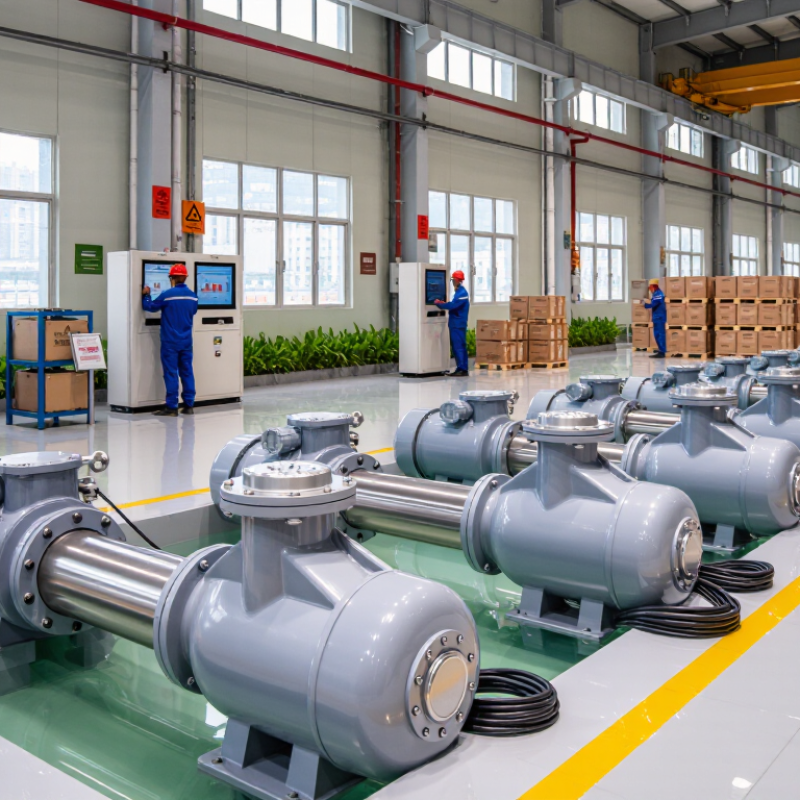
Submersible Drainage Pumps: Types, Design, and Applications
Submersible drainage pumps are designed to work below the water surface, where a sealed motor drives an impeller to move water through a discharge pipe. Common types include clear-water dewatering pumps, models for wastewater with solids, and heavy-duty units for abrasive slurry. Their impellers differ: vortex designs can reduce clogging, while channel impellers may handle larger particles more efficiently. No single type suits every site.
A reliable design depends on more than motor power. Check the required flow rate, total head, solids size, and expected operating hours. Double mechanical seals help protect the motor from water ingress, while thermal protection can reduce damage during overheating. A float switch may start and stop the pump as water levels change. Small details matter. Cable length and discharge-hose diameter can affect installation and performance.
These pumps are used in construction pits, flooded basements, municipal drainage systems, and agricultural water management. At a muddy job site, for example, a pump may need to pass grit without frequent blockage. Match the pump to the water conditions, not just the quoted capacity. A common mistake is choosing extra power without checking the system head. Specifications can look reassuring, yet real conditions are rarely perfect. Inspect seals, impellers, and cables regularly, especially after handling sediment-heavy water.
| No. | Common Pump Configuration | Typical Hydraulic Design | Solids Handling | Typical Applications | Key Selection Consideration |
|---|---|---|---|---|---|
| 1 | Clean-water drainage pump | Compact submersible centrifugal pump, commonly with a single-channel or semi-open impeller | Designed mainly for water with little or no suspended solids; allowable particle size is model-specific | Basements, rainwater tanks, clean-water transfer, and flooded areas with low debris content | Check the minimum water level, required flow and head, and whether the pump can operate continuously at the intended duty point. |
| 2 | Dirty-water drainage pump | Open or semi-open impeller with a larger hydraulic passage than a clean-water design | Can pass limited amounts of soft suspended solids; maximum particle size varies by model | Construction-site drainage, pits, sumps, and water containing small amounts of sediment | Match the documented solids-passage size to the debris expected; abrasive sand can accelerate wear. |
| 3 | Vortex-impeller pump | Impeller creates a vortex in the pump chamber, reducing direct contact between solids and the impeller | Often selected for fibrous or irregular solids; efficiency and solids passage depend on pump geometry | Wastewater sumps, drainage containing debris, and applications where clogging resistance is important | Consider the trade-off between clogging resistance and hydraulic efficiency; verify the manufacturer’s solids-passage rating. |
| 4 | Non-clog channel-impeller pump | One or more broad impeller passages carry liquid and solids through the pump | Suitable for wastewater with solids within the specified free passage | Wastewater collection, industrial drainage, and sewage-transfer installations | Check the free passage, discharge-pipe diameter, and risk of long fibers catching at the impeller or inlet. |
| 5 | Agitator-equipped slurry pump | Submersible centrifugal pump with an agitator that stirs settled solids into suspension | Handles suspended abrasive solids within the pump’s specified concentration and particle limits | Slurry pits, sediment removal, mineral-processing drainage, and settled-solids transfer | Assess particle hardness, concentration, and settling behavior; abrasive service may require wear-resistant materials. |
| 6 | High-head drainage pump | Multi-stage or high-speed centrifugal design intended to generate greater discharge pressure | Usually intended for relatively clean or lightly contaminated water; solids tolerance is model-dependent | Deep excavation, mine drainage, and sites where water must be lifted through a substantial vertical distance | Calculate total dynamic head, including elevation and pipe losses, rather than selecting by vertical lift alone. |
| 7 | High-flow dewatering pump | Large-passage centrifugal design optimized for moving substantial water volumes at moderate head | Solids capacity depends on the impeller and inlet design; not all high-flow pumps are suitable for debris-laden water | Flood control, large construction sites, reservoirs, and temporary water diversion | Confirm the required operating point and discharge-pipe size; excessive pipe losses can reduce delivered flow. |
| 8 | Automatic float-switch drainage pump | Submersible pump controlled by a float switch that starts and stops the motor as the water level changes | Solids handling is determined by the pump’s hydraulic design, not by the float switch | Automatic sump drainage, residential basements, and unattended water collection pits | Allow adequate space for the float to move freely and check the start/stop levels against the pit dimensions. |
| 9 | Cutting or grinder pump | Uses a cutting mechanism or grinder before the impeller to reduce suitable soft solids in size | Designed for specified sewage solids; it is not intended to grind every material or replace proper screening | Wastewater systems with small-diameter pressure pipelines and sewage containing fibrous waste | Confirm the permitted waste type, cutter maintenance requirements, and compatibility with the pipeline and system design. |
| 10 | Corrosion-resistant drainage pump | Submersible centrifugal design using materials selected for the fluid’s chemical environment | Solids passage depends on the chosen impeller and pump configuration | Industrial drainage, mildly corrosive liquids, and selected chemical-process sumps | Check chemical compatibility at the actual concentration and temperature; no single material is suitable for all corrosive fluids. |
| This table summarizes common pump configurations and selection factors; it is not a ranking of manufacturers or a comparison of specific products. Actual performance, materials, solids-passage limits, and operating conditions vary by model. Select a pump using its published performance curve and the requirements of the installation. | |||||
BUSINESSES USING CAMASTER