China Top 10 Track Chain Link Manufacturers 2026
Choosing a reliable supplier for undercarriage components takes more than comparing prices. Excavators and bulldozers work through mud, gravel, and uneven ground, where a weak chain link can disrupt an entire job. This guide introduces ten China-based manufacturers to consider in 2026. It focuses on product range, manufacturing capabilities, quality controls, and support for international buyers. Track Chain Link products may look similar in a catalog, but material quality, heat treatment, dimensions, and fit can differ. Small differences matter.
The manufacturers featured may serve different needs. Some focus on replacement parts for specific machine models, while others provide broader undercarriage ranges or custom production. Buyers can use the list as a starting point, not as a guarantee of performance. Check model compatibility, request drawings or samples, and ask how suppliers inspect materials and finished components. Where available, review relevant quality certificates and seek clear warranty terms. Details count. A smooth sales process does not prove that a part will withstand demanding site conditions.
Company rankings also have limits. Public information may not reveal production consistency, lead times, or how a supplier handles a difficult claim. These points deserve direct questions and, where practical, independent checks. A careful comparison should consider the full cost of ownership, including fit, service life, and replacement downtime—not just the unit price. Use this overview to narrow the field and guide further research. The final choice should reflect your machine, working conditions, and evidence gathered from the manufacturer.
Understanding Track Chain Links and Their Role in Undercarriage Systems
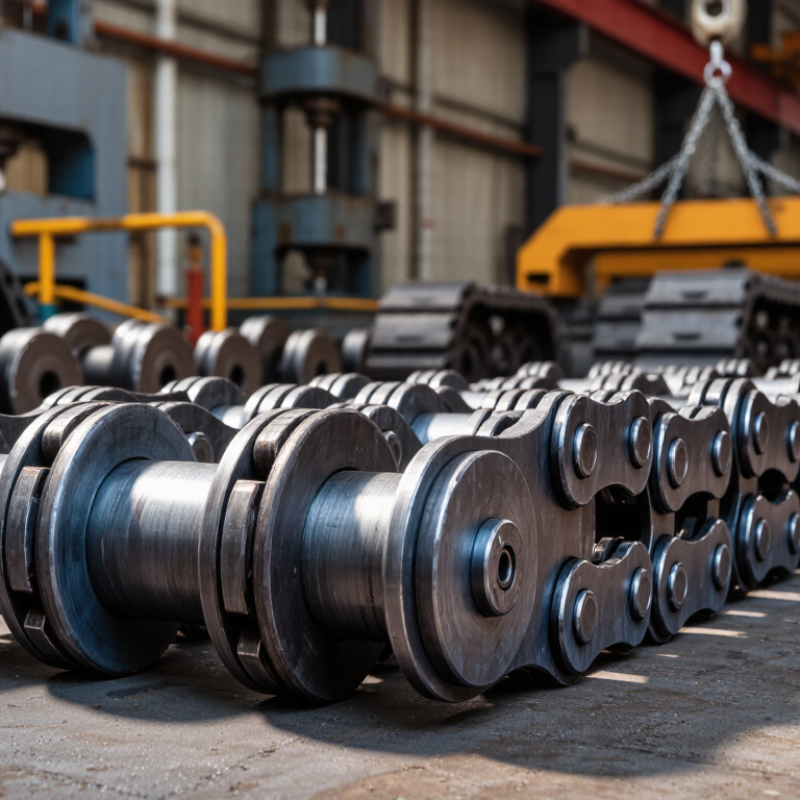
Track chain links join individual track shoes into a continuous chain that carries a machine across the ground. They also work with sprocket teeth, rollers, and idlers to guide movement and support the undercarriage. Each link faces repeated impact, tension, dirt, and abrasive grit. Small wear can become costly.
Pins and bushings connect neighboring links and allow them to pivot around the sprocket and idler. Their dimensions and fit affect chain pitch, alignment, and wear. On a working machine, check for uneven link wear, loose joints, damaged seals, and packed debris. Measure pitch against the service limit, rather than judging only by appearance. That matters. A chain may look usable while internal wear has already increased.
Track conditions change the right maintenance approach. Rocky ground can strike links sharply, while fine sand works into moving joints and accelerates abrasion. Correct tension matters too: an overly tight chain adds load to the undercarriage, while excessive slack can contribute to poor tracking. Follow the machine’s service procedure and record measurements over time. Not every worn link points to a chain problem alone; sprocket wear, alignment, and operating habits deserve inspection. Even experienced technicians can miss a pattern when they check only one section.
China Top 10 Track Chain Link Manufacturers 2026 — Understanding Track Chain Links and Their Role in Undercarriage Systems
A typical track-chain pitch assembly connects two track links with one pin and one bushing, and supports one track shoe. The links articulate around the sprocket and idler; actual designs can vary by machine and undercarriage system.
Typical component counts per pitch assembly; shown as a general arrangement, not a manufacturer ranking or product specification.
How China’s Track Chain Link Industry Is Organized
China Top 10 Track Chain Link Manufacturers 2026
How China’s Track Chain Link Industry Is Organized
China’s track chain link industry is organized around a production chain, not a single type of factory. Steel suppliers provide alloy materials; forging and machining workshops shape links, pins, and bushings. Heat-treatment lines then control hardness and wear resistance. Assemblers match components to pitch and fit, while distributors serve equipment makers and replacement-part buyers. Small details matter. A slight pitch mismatch can cause uneven sprocket wear, so buyers commonly check dimensions, hardness records, and sample fit before placing repeat orders.
Demand is tied to tracked machinery, especially excavators, but equipment sales are only a proxy for track-link demand. The China Construction Machinery Association reported 201,131 excavator sales in 2024: 100,543 domestically and 100,588 for export. That figure helps explain why suppliers serve both domestic assembly and overseas replacement channels. It does not measure track-chain output directly. Not a perfect proxy. Supplier comparisons also need care: some firms make links in-house, while others outsource forging or heat treatment. This can affect consistency between batches, even when catalog specifications look similar. Factory audits should therefore examine process control, traceability, and finished-chain inspection—not just production capacity.
Criteria for Evaluating Track Chain Link Manufacturers in 2026
When evaluating track chain link manufacturers in 2026, begin with material control and heat treatment. Ask how steel grades are verified and how hardness is checked across each production batch. A link that looks flawless may still wear unevenly if its surface and core are poorly balanced. Details matter.
Review dimensional tolerances, pin and bushing fit, and the consistency of assembled chain pitch. Even small variations can cause rough movement, faster sprocket wear, or installation problems. Request inspection records and, where practical, sample parts for measurement. Ask for evidence, not only a polished specification sheet.
Manufacturing experience also shows in traceability and testing. A dependable supplier should connect batch numbers to material certificates, process records, and inspection results. Ask what load, fatigue, or wear tests are used, and whether the methods reflect your machine’s working conditions. Field feedback can help, but it should be documented rather than offered as a vague promise.
Compare production capacity, lead times, repair support, and communication during technical reviews. A low quotation may exclude packaging details, quality checks, or replacement-part planning. Not every factory will present information perfectly; unclear answers deserve follow-up. The best choice is usually the one that can explain its process plainly and support claims with verifiable records.
Profiles of China’s Top 10 Track Chain Link Manufacturers
China’s track chain link manufacturers serve construction, mining, agriculture, and other tracked-equipment markets. A useful 2026 profile compares more than catalog size. It looks at link-forming methods, heat-treatment control, machining accuracy, and documented inspection practices. Some producers specialize in standard excavator chains; others handle heavy-duty or made-to-order assemblies. Their strengths are not interchangeable.
The ten profiles can be read through practical differences: forging capacity, hardness consistency, pin-and-bushing fit, custom sizing, and replacement-part availability. Ask how samples are measured and how batch records are maintained. A clear answer is more useful than a broad quality claim. Export experience and responsive technical support also matter, especially when equipment operates far from the factory. Still, a profile cannot prove field life. That needs evidence.
Tips: Match chain dimensions to the machine’s service manual. Request material and inspection records, then compare sample measurements with your existing links. Ask about wear expectations under your working conditions. Details matter. A small mismatch can mean uneven wear, and supplier descriptions may leave important questions unanswered.
Comparing Product Range, Manufacturing Capabilities, and Support
China Top 10 Track Chain Link Manufacturers 2026
Comparing Product Range, Manufacturing Capabilities, and Support
Comparing track chain manufacturers means looking beyond catalog size. Check whether each supplier covers your machine class, chain pitch, shoe width, and operating conditions. Ask how links are forged, heat-treated, machined, and inspected. Request sample hardness results and traceability records; polished brochures are not test evidence. World Steel Association’s World Steel in Figures 2025 reports global crude steel production of about 1.88 billion tonnes in 2024. This indicates the scale of the materials sector, but steel availability alone cannot prove chain durability.
Manufacturing capacity matters when orders involve multiple link sizes or tight delivery windows. Confirm monthly output, heat-treatment controls, inspection frequency, and documented corrective actions. Support deserves equal scrutiny. Can the supplier check fitment from machine details, provide clear installation guidance, and supply replacement links when needed? Compare warranty terms and response times in writing. Small gaps matter.
Tips: Send the same machine specifications to every candidate. Compare drawings, test records, delivery commitments, and spare-part support side by side. A low quote may still leave unanswered questions; I would not treat price as a durability measure.