
How to Choose the Best Cold Brew Coffee Maker

Cold brew looks effortless: add coarse grounds, pour in cool water, and wait. Yet the brewer you choose affects cleanup, storage, strength, and consistency. Grand View Research estimated the global cold brew coffee market at about $1.37 billion in 2023, with continued growth projected through 2030. That figure describes a market, not proof that every device improves your cup. Still, it helps explain why more home brewers are comparing dedicated equipment with a simple jar and filter.

A good Cold Brew Coffee Maker should fit your routine, not just your countertop. Check its usable capacity, filter design, materials, and ease of cleaning. A narrow pitcher may slide neatly beside the milk, while a wide filter basket can make spent grounds easier to remove. Consider whether you want ready-to-drink coffee or a stronger concentrate, since recipes and dilution vary. Small details matter. Taste comes first. In this guide, we’ll look at those practical trade-offs and explain how to compare makers without relying on flashy claims. One caveat: a larger carafe is not automatically better, especially if it sits half-full in the fridge. Your preferred serving size, available space, and patience for steeping should shape the choice. There is no perfect model for every kitchen, and that is worth keeping in mind.
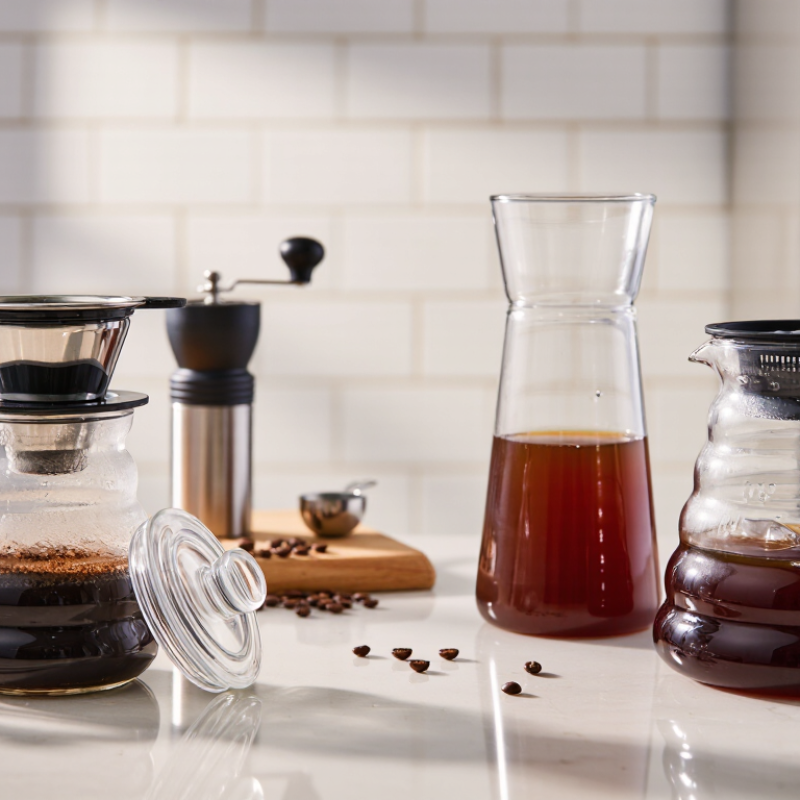
How to Choose the Best Cold Brew Coffee Maker

Set Batch Needs: NCA Found 67% of U.S. Adults Drank Coffee Yesterday

The National Coffee Association’s 2024 National Coffee Data Trends report found that 67% of U.S. adults drank coffee the previous day. That broad demand does not mean every household needs a large cold brew maker. Estimate your own routine: count the glasses poured on a normal morning, then allow room for an occasional refill. A 1-liter batch makes roughly four 250-milliliter servings before dilution. Check the maker’s stated capacity, since some measurements include grounds or leave little room for water.

Compare that estimate with your fridge space and steeping schedule. A compact pitcher can suit one or two daily drinkers; larger households may prefer a vessel that holds several servings without crowding a shelf. The NCA’s 2023 report recorded 63% of adults drinking coffee the previous day, rising to 67% in 2024. These figures describe national habits, not your household. Even careful estimates miss. Start with a smaller batch if you are unsure, and note how much remains after two days. Also check whether the filter lifts out easily: fine grounds can cling to mesh and make cleanup slower than expected. A maker’s listed capacity is useful, but usable concentrate may be less.

Compare Capacity and Decide Whether You Need Concentrate or Ready-to-Drink Brew

How to Choose the Best Cold Brew Coffee Maker

Compare Capacity and Decide Whether You Need Concentrate or Ready-to-Drink Brew

Capacity should match how much coffee you actually drink, not how large the pitcher looks. A compact maker may yield only a few glasses after grounds are removed. Check its usable liquid capacity, then consider your fridge space. A tall carafe can be awkward on a crowded shelf. If you brew for one, a smaller batch may taste fresher and create less waste. For a household, a larger vessel can save time, provided everyone likes cold brew.

Decide whether you want concentrate or ready-to-drink coffee. Concentrate takes less storage space and can be diluted with water or milk. But the strength varies with the recipe, so measure your first servings rather than guessing. Ready-to-drink brew is more convenient; pour it over ice and go. Remember that melting ice can soften its flavor. A common miscalculation is choosing by batch size alone. Think about how you serve coffee each morning, too.

Tips: Check whether the filter basket holds enough grounds for your preferred recipe. Leave room for water and grounds to expand, and note the maker’s suggested steeping range. Small details matter. If you are unsure, choose a capacity that fits one or two days of drinking rather than an ambitious weekly batch.

Assess Filters and Ratios; SCA’s 55 g/L Benchmark Applies to Hot Brewing

When choosing a cold brew maker, inspect the filter before judging its capacity. A fine paper filter usually traps more sediment, while a reusable metal mesh lets more oils and tiny particles through. That can mean a fuller cup, or grit at the bottom. The Specialty Coffee Association’s Golden Cup guidance sets 55 grams of coffee per liter of water, with a 10% tolerance, for hot brewing. It is not a universal cold brew recipe: cooler water and longer steeping change extraction. That distinction matters.

For a practical starting point, try a 1:8 to 1:10 coffee-to-water ratio by weight if you want concentrate. Weigh the grounds and water; “one scoop” varies too much. Research by Fuller and Rao, published in Scientific Reports in 2017, examined how grind size and steeping time affect compounds in cold brew. Use that as a reason to keep both variables consistent when comparing makers. A wide filter basket can help grounds wet evenly, but an overfilled basket may leave dry pockets. Taste it tomorrow. I still find that a slightly weaker first batch is easier to adjust than an overly bitter one.

How to Choose the Best Cold Brew Coffee Maker — Assess Filters and Ratios; SCA’s 55 g/L Benchmark Applies to Hot Brewing

Dimension What to Assess Practical Guidance
Filter material Fine mesh, paper, or a cloth filter affects clarity, oils, sediment, and cleanup. Mesh is reusable and allows more oils and fine particles through. Paper generally produces a cleaner, less gritty cup but requires replacement filters. Cloth can offer a middle ground and needs thorough cleaning and drying.
Filter fit and capacity Check whether the filter stays securely in place and holds enough grounds for the intended batch. Choose a filter that is easy to remove without spilling grounds. Confirm the maker’s usable water capacity and whether its filter basket leaves room for grounds to expand.
Coffee-to-water ratio Ratios are usually expressed as grams of dry coffee per litre of water; recipes vary with taste and intended serving style. As a starting point, try about 60–80 g/L for ready-to-drink cold brew or about 125–200 g/L for a concentrate intended to be diluted. Adjust to taste; these are practical starting ranges, not universal standards.
Batch measurement Look for clear volume markings, and measure coffee and water consistently. A kitchen scale makes ratios easier to repeat than scoops. For example, 75 g of coffee with 1 L of water gives a 75 g/L brew ratio.
Grind size Consider whether the filter can retain the grind size you plan to use. A coarse, relatively even grind is a common starting point for immersion cold brew. Very fine grounds can pass through some mesh filters and make the brew harder to filter.
Steeping conditions Cold brew is typically made by steeping grounds in cool or room-temperature water for an extended period. Start with roughly 12–24 hours, then adjust based on taste, grind, and recipe. Steeping in a refrigerator slows the process compared with steeping at room temperature; use a covered, food-safe vessel.
Ease of cleaning Check whether the basket, lid, and vessel can be taken apart and washed thoroughly. Removable components make it easier to discard wet grounds and clean away coffee oils. Follow the maker’s care instructions, especially for reusable cloth or fine-mesh filters.
SCA 55 g/L reference The Specialty Coffee Association’s commonly cited 55 g/L figure is a hot-brewing reference, not a required cold-brew recipe. Do not treat 55 g/L as a cold-brew standard. Cold-brew recipes often use different ratios, depending on whether the result is meant to be served directly or diluted.
Serving and storage Consider how the finished brew will be poured, stored, and served. A sealed vessel helps limit exposure to air and fridge odors. Keep prepared cold brew refrigerated and use clean equipment; dilution at serving time lets you adjust strength in the cup.

Selection tip: Prioritize a well-fitting, easy-to-clean filter and a vessel sized for your usual batch. Record the coffee mass, water volume, grind, and steep time so you can repeat a recipe you enjoy.

Check Materials, Cleaning, and Replacement Parts Before Buying

Before comparing capacity or appearance, check what touches the coffee. A glass carafe makes it easy to spot residue and odors, but it can chip if knocked against a sink. Stainless steel is tougher and blocks light, though dark interiors can hide leftover oils. Look for smooth seams and a fine-mesh filter that sits securely. Small parts matter.

Cleaning should fit your routine, not an ideal version of it. Check whether the filter, lid, and carafe can be washed separately, and whether any part is dishwasher-safe according to its care instructions. Narrow necks can make scrubbing awkward; a long-handled brush may help, but it is one more tool to store. Rinse the filter soon after pouring, before grounds dry into the mesh. It is easy to forget.

Before buying, search the maker’s support information for replacement filters, lids, seals, and carafes. Confirm that parts are sold separately and match the model number; similar-looking components may not fit. A silicone seal should be removable for cleaning and easy to inspect for cracks or lingering smells. If replacement parts are hard to identify, that is worth weighing against a lower purchase price. I would not assume every component will remain available indefinitely. Repairs can be simple, but only when the right piece can be found.

Verify Storage Needs: FDA Recommends Refrigerators at 40°F (4°C) or Below

A cold brew maker should fit your refrigerator, not just your countertop. Before buying, measure the shelf where you plan to store the finished coffee. Check the pitcher’s height with its lid on, and consider whether the door or nearby containers will block it. A slim vessel may be easier to store than a wide one, even if both hold the same amount.

Temperature matters. The FDA recommends keeping refrigerators at 40°F (4°C) or below. Use a refrigerator thermometer rather than trusting a dial; settings do not always reflect the temperature on each shelf. Chill brewed coffee promptly in a clean, covered container. A tight lid helps prevent spills and keeps the coffee from absorbing food odors. Keep it cold.

Capacity deserves a second look. A large maker can produce more coffee, but it can also take up valuable shelf space. If you share a crowded refrigerator, a smaller batch may be more practical. I would check the actual storage footprint before choosing; product dimensions can be easy to overlook. Labeling the container with the brew date is a simple habit, though it is easy to forget. A little planning helps keep cold brew safely stored and easy to reach.

CAMaster Logo