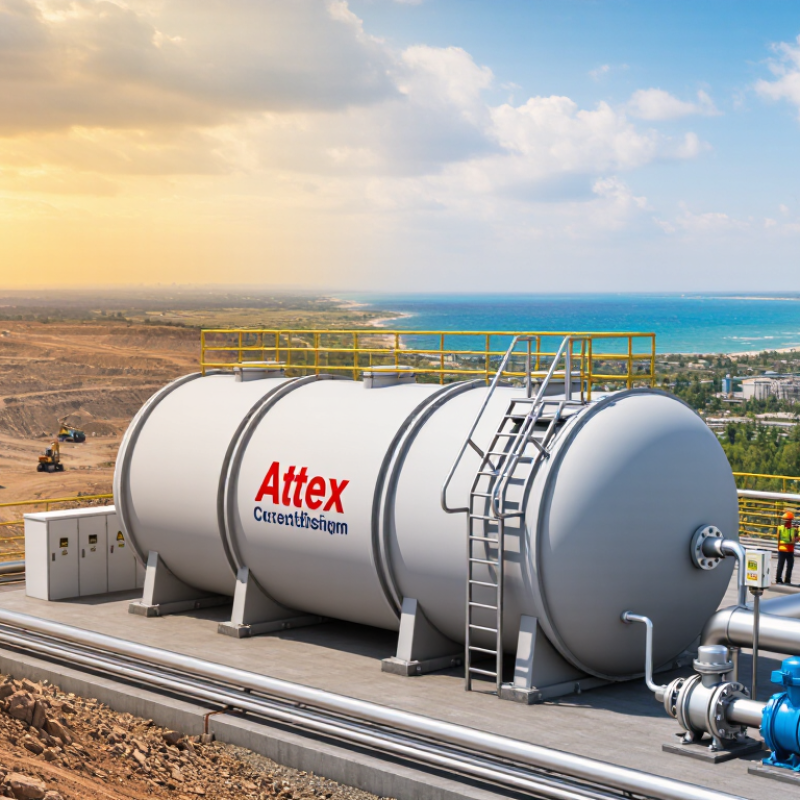
Selecting an Atex Water Tank for a global project requires more than checking volume and price. The tank must suit the site’s risks, climate, water quality, and operating conditions. A remote mining site needs different planning from a coastal processing plant. Temperature, humidity, wind, and transport routes can change the specification.
This guide explains how to compare tank materials, capacity, fittings, coatings, and monitoring systems. It also examines ATEX classifications, hazardous zones, and equipment interfaces. The tank itself may not contain ignition sources, but pumps, sensors, mixers, and electrical accessories can require careful assessment. Certification documents must match the actual configuration. Generic paperwork is not enough.
Project teams should confirm requirements with competent engineers, manufacturers, and local authorities. Relevant standards and conformity obligations can vary between countries. That difference matters. A reliable supplier should provide traceable materials, drawings, test records, installation guidance, and maintenance instructions. Ask difficult questions early. Where will replacement parts come from? Can technicians inspect the tank safely? Will the coating survive ultraviolet exposure and chemical contact?
A checklist helps, but it cannot replace site knowledge. It is easy to over-specify a tank and increase costs unnecessarily. It is also easy to choose a cheaper model that creates problems later. This article offers a practical framework for balancing safety, compliance, durability, logistics, and lifecycle value. Some project assumptions may still need revision after a detailed risk assessment.
How to Choose an Atex Water Tank for Global Projects?
ATEX certification shows that equipment is designed for potentially explosive atmospheres. It does not mean every water tank is automatically ATEX-approved.
Water itself is normally non-flammable. The surrounding process may not be. Wastewater can release methane, hydrogen sulfide, or other combustible gases. Cleaning chemicals may also create vapors. A tank installed near pumps, dosing units, or enclosed treatment areas needs a careful risk assessment.
The correct selection starts with the hazardous-area classification. Confirm the zone, gas group, temperature class, and required equipment category. These details should come from the site’s explosion protection document, not a supplier’s assumption. Small differences matter.
Check which parts carry certification. The tank shell may be passive equipment, while mixers, sensors, valves, heaters, and electrical controls require separate compliance. Review the declaration of conformity, technical file references, marking, material specifications, and installation limits. Ask how earthing, static control, inspection, and maintenance will be managed.
Documentation matters.
Global projects often involve different national approval systems. ATEX compliance may support European installations, but other markets can require additional local certification. Do not treat one certificate as universal permission.
A practical mistake is choosing the tank first and checking the hazardous zone later. That approach can create costly redesigns. Certification is not a magic shield. It only works when the equipment, installation, and operating conditions match. Even experienced teams should revisit their assumptions when process chemistry changes.
How to Choose an Atex Water Tank for Global Projects?
Choosing an ATEX water tank starts with the hazardous-zone assessment. ATEX applies to equipment used in potentially explosive atmospheres under Directive 2014/34/EU. Workplace zoning follows Directive 1999/92/EC. IEC 60079-10-1 defines gas and vapor zones, while IEC 60079-10-2 addresses combustible dust. Record the zone, gas group, temperature class, and ambient temperature. Do not rely on a general “ATEX compliant” statement. It is too vague.
Project demand matters just as much. The 2024 UN World Water Development Report states that agriculture uses about 72% of global freshwater withdrawals. This may require large storage volumes, but water quality and refill reliability still control the design. The WHO and UNICEF Joint Monitoring Programme reported that 2.2 billion people lacked safely managed drinking water in 2022. Remote projects therefore need stronger inspection access, backup supply, and clear maintenance intervals. Small details matter.
Check every connected component, not only the tank shell. Pumps, level sensors, vents, mixers, cables, and access equipment can introduce ignition risks. Confirm materials, pressure ratings, grounding, ventilation, seismic loads, and transport limits. ATEX certification does not automatically approve the complete site installation. I would request zone drawings, conformity documents, inspection records, and a practical maintenance plan. Some specifications look complete but hide uncertain assumptions. That deserves a second review.
| Assessment Dimension | Typical Project Data | Selection Guidance | Relevant ATEX / IEC Reference | Required Evidence or Check |
|---|---|---|---|---|
| Tank Function | Fire-water storage, process-water buffer, utility-water storage, emergency reserve, or treated-water storage. | Define whether the tank is purely passive or includes powered equipment such as mixers, level instruments, heaters, pumps, valves, or ventilation devices. | ATEX Directive 2014/34/EU may apply to equipment and protective systems intended for potentially explosive atmospheres. | Approved process description, equipment list, and hazardous-area classification drawing. |
| Hazardous Gas Zone | Zone 0: explosive gas atmosphere is present continuously, for long periods, or frequently. Zone 1: likely during normal operation. Zone 2: not likely during normal operation and, if it occurs, exists only briefly. | Use equipment suitable for the actual zone and for the gas group and temperature class specified by the site classification. | EN IEC 60079-10-1 for gas-area classification; EN IEC 60079-14 for electrical installation design and selection. | Zone classification report, hazardous-area plot plan, gas group, and temperature-class requirements. |
| ATEX Gas Equipment Category | Zone 0 normally requires Category 1G; Zone 1 normally requires Category 2G or higher protection; Zone 2 normally requires Category 3G or higher protection. | Select the category based on the zone, while also checking the equipment protection level, protection concept, gas group, and temperature class. | ATEX 2014/34/EU; equipment marking commonly includes categories such as 1G, 2G, or 3G. | EU Declaration of Conformity, certificate information where applicable, and complete equipment marking. |
| Hazardous Dust Zone | Zone 20: combustible dust cloud is present continuously, for long periods, or frequently. Zone 21: likely during normal operation. Zone 22: not likely during normal operation and, if it occurs, exists only briefly. | For dust areas, evaluate dust layers, dust-cloud ignition risk, enclosure protection, surface temperature, and cleaning methods. | EN IEC 60079-10-2 for dust-area classification; EN IEC 60079-14 for installation requirements. | Dust classification report, minimum ignition temperature data, dust group information, and housekeeping procedures. |
| ATEX Dust Equipment Category | Zone 20 normally requires Category 1D; Zone 21 normally requires Category 2D or higher protection; Zone 22 normally requires Category 3D or higher protection. | Confirm that electrical and mechanical accessories are suitable for the identified dust zone and for conductive or non-conductive dust where relevant. | ATEX 2014/34/EU; marking commonly includes categories such as 1D, 2D, or 3D. | Dust-zone compliance documents, equipment marking, and installation inspection records. |
| Equipment Protection Level | Gas: Ga, Gb, or Gc. Dust: Da, Db, or Dc. The required level depends on the probability and duration of the explosive atmosphere. | Match the protection level to the zone: Ga/Da for the highest protection requirement, followed by Gb/Db and Gc/Dc for lower-risk zones. | EN IEC 60079-0 and the applicable protection-concept standards in the EN IEC 60079 series. | Verify EPL on the nameplate, certificate, technical file, and project hazardous-area schedule. |
| Gas Group and Temperature Class | Common gas groups include IIA, IIB, and IIC. Temperature classes range from T1 to T6, with T6 imposing the lowest maximum surface-temperature limit. | The selected equipment must be rated for the identified gas group and have a maximum surface temperature below the ignition temperature of the gas or vapor. | EN IEC 60079-0; the final requirement is established by the site hazardous-area study and process safety documentation. | Gas or vapor safety data, temperature-class schedule, and equipment nameplate review. |
| Tank Construction Material | Carbon steel, stainless steel, coated steel, or engineered polymer systems may be used depending on water chemistry, structural loads, and operating conditions. | Select materials based on corrosion allowance, chloride level, pH, temperature, UV exposure, fire-water requirements, and compatibility with stored water. | Project material specifications, applicable structural codes, and water-contact requirements defined by the destination market. | Material certificates, coating system data, weld procedures, corrosion assessment, and lining compatibility statement. |
| Static Electricity and Bonding | Potential electrostatic charging may occur on insulated tank surfaces, coatings, plastic components, flexible hoses, or non-conductive accessories. | Provide equipotential bonding and earthing where required. Avoid unverified insulating materials in classified areas. | EN IEC 60079-14 and IEC 60079-32-1 provide guidance on electrostatic hazards and control measures. | Earthing design, continuity test results, bonding layout, and inspection records. |
| Instrumentation and Controls | Typical devices include level transmitters, high-level switches, temperature sensors, pressure indicators, flow meters, and remote monitoring units. | Use suitably certified equipment or locate non-ATEX equipment outside the classified area with appropriate isolation and installation controls. | EN IEC 60079-11 for intrinsically safe apparatus; EN IEC 60079-25 for intrinsically safe systems. | Instrument certificates, loop diagrams, entity parameters, cable-gland data, and inspection schedule. |
| Pumps, Mixers, and Motors | Rotating equipment may introduce ignition sources through electrical faults, hot surfaces, friction, bearings, mechanical seals, or static discharge. | Specify hazardous-area certification, motor protection, temperature monitoring, seal arrangement, and maintenance requirements for each item. | EN IEC 60079 series; mechanical equipment may also require assessment under ATEX depending on its ignition-risk potential. | Certificates, ignition-hazard assessment, motor data sheets, protection settings, and maintenance instructions. |
| Ventilation and Breathing System | Atmospheric tanks may require screened vents, pressure-vacuum protection, flame-arresting devices, or controlled ventilation depending on the stored liquid and surrounding process. | Evaluate whether vapors can accumulate inside or around the tank. Vent outlets should be located to prevent hazardous vapor collection near ignition sources. | Project process-safety requirements, EN IEC 60079-10-1, and applicable tank design standards. | Vent sizing calculation, vapor assessment, relief-device specification, and hazardous-location review. |
| Capacity and Hydraulics | Capacity is determined by demand rate, required reserve duration, refill time, fire-water demand, process variability, and emergency operating philosophy. | Calculate usable volume rather than gross volume, allowing for dead volume, freeboard, sediment allowance, thermal expansion, and required emergency reserve. | Project hydraulic calculations and the applicable local or international tank design standard. | Design basis, hydraulic profile, flow-demand calculation, refill analysis, and nozzle schedule. |
| Climate and Environmental Conditions | Temperature, altitude, humidity, solar radiation, wind, snow, seismic activity, salt spray, flooding, and corrosive atmospheres vary significantly by project location. | Design the shell, foundation, coatings, insulation, instrumentation, and electrical enclosures for the complete site environmental range. | IEC 60529 for enclosure ingress protection where applicable; structural and environmental requirements are project-specific. | Site environmental data, wind and seismic parameters, coating specification, and enclosure IP assessment. |
| Fire and Emergency Requirements | Fire-water tanks may require dedicated volume, reliable suction conditions, automatic refill, low-level alarms, and separation from process hazards. | Do not reduce emergency reserve because of normal process consumption. Confirm independent availability, access, and inspection provisions. | Applicable fire-protection rules, authority requirements, and project fire-water philosophy. | Fire-water demand calculation, emergency operating procedure, alarm matrix, and authority approval records. |
| Installation and Maintenance | Access platforms, ladders, inspection openings, drainage, cleaning points, spare parts, and safe isolation may be required. | Ensure maintenance activities do not introduce ignition sources. Define inspection intervals for ATEX equipment and bonding systems. | EN IEC 60079-17 covers inspection and maintenance of electrical installations in explosive atmospheres. | Maintenance manual, inspection checklist, permit-to-work requirements, spare-parts list, and training records. |
| Global Compliance and Documentation | Projects outside the European Union may require local certification, statutory inspection, electrical approvals, pressure-equipment review, or authority-specific documentation. | Separate mandatory legal requirements from voluntary design standards. Confirm the governing law before procurement. | ATEX requirements apply within their legal scope; IECEx and local regulations may be required for other jurisdictions. | Compliance matrix, certificates, drawings, calculations, inspection and test plans, manuals, and final documentation dossier. |

Choosing an ATEX water tank starts with the surrounding hazard, not the tank volume. Water is non-flammable, but pumps, mixers, sensors, and electrical panels may create ignition risks. Confirm the site zone, temperature range, ventilation, and chemical exposure with a qualified engineer.
Material selection affects durability and static control. HDPE tanks resist many chemicals and remain lightweight, but their electrical properties need careful assessment. GRP offers strength and corrosion resistance, although resin performance can change under heat or chemical contact. Stainless steel provides robust cleaning and inspection surfaces. Coated carbon steel may suit large installations, but coating damage can expose the substrate.
Design details matter just as much. Use grounded or suitably conductive components where static accumulation is possible. Specify appropriately protected instruments, sealed cable entries, and safe pump arrangements. Include visible level indication, high-level protection, overflow routing, drain points, and access for inspection. A bund can limit accidental release. Venting must handle filling and emptying without creating unsafe pressure differences.
A common mistake is treating the tank as an isolated product. It is part of a complete installation. A perfect specification rarely exists. Cost, corrosion resistance, access, and compliance can conflict. Review drawings, maintenance routines, and conformity documents before ordering. Keep the design practical for the people who will inspect it.
Choosing an ATEX water tank for global projects requires more than checking volume. Start with the hazardous-area classification around pumps, sensors, vents, and electrical controls. IEC 60079-10-1:2020 requires zones to reflect the likelihood and duration of explosive atmospheres. The tank itself may be non-electrical, but connected equipment still needs suitable protection.
Capacity should follow actual demand, not a convenient catalogue size. NFPA 22, 2023 edition, links fire-water storage to flow requirements and required duration. Calculate peak flow, emergency reserve, refill reliability, and local climate effects. A neat capacity formula can mislead. Long pipelines, freezing conditions, or weak municipal supply may change the result. A 500-cubic-metre tank can be inadequate if pumps cannot deliver the required pressure.
Installation needs deserve equal attention. Review foundation loads, seismic data, wind exposure, transport limits, earthing, bonding, overflow routing, inspection access, and safe separation from ignition sources. EN 1127-1 supports an ignition-control approach, including static electricity and hot surfaces. Local authorities may also impose stricter fire-water rules than international references.
Tips: Request the zone drawing and hazardous-area equipment list before selecting accessories. Confirm tank material compatibility with treated water and ambient temperatures. Ask for inspection records, welding documentation, and pressure or leak-test evidence. Leave room for maintenance; this detail is often underestimated. Verify every assumption with a qualified local engineer.
Use this indicative planning matrix to compare safety readiness, storage capacity flexibility, and installation simplicity. Scores range from 1 to 5; final selection must be verified against the hazardous-area classification, applicable ATEX requirements, fire-water demand, local codes, and site conditions.
Compliance verification should begin with the hazardous-area classification, not the tank’s capacity. ATEX Group II uses three equipment categories, corresponding broadly to Zones 0, 1, and 2 for gas atmospheres. Dust areas use Zones 20, 21, and 22. Confirm the zone, gas or dust group, temperature class, and required Equipment Protection Level before reviewing construction details.
A tank may be passive, but its level sensor, mixer, pump, heater, cable gland, and bonding system can change the compliance assessment.
Request the EU Declaration of Conformity, technical file reference, notified-body details where applicable, and installation instructions. Verify certificate numbers through the IECEx online certificate database when IECEx certification is specified. The certificate scope must match the actual component, ambient temperature, protection method, and intended zone. A certificate for a sensor does not certify the complete tank assembly.
International deployment needs another layer of discipline. ATEX applies within the European regulatory framework; other markets may require IECEx, local hazardous-area approval, pressure-equipment assessment, or electrical registration.
The International Labour Organization estimated 2.93 million work-related deaths and 395 million non-fatal injuries annually in its 2023 global report. Documentation gaps can create real exposure.
Ask for material traceability, weld records, earthing resistance results, inspection intervals, and a country-specific conformity matrix. In practice, suppliers sometimes provide excellent certificates but incomplete installation data. That weakness deserves scrutiny.