How to Choose Galvanized Nails for Your Projects?
Choosing the right galvanized nails for your projects can be challenging. Many people often overlook the importance of the right materials. Galvanized nails offer durability and resistance to rust, making them suitable for various applications.
When selecting galvanized nails, consider the size and type for your specific needs. For instance, smaller nails are ideal for delicate tasks, while larger ones provide strength for heavy structures. One must also reflect on the finish. A smooth finish may work well for certain projects, yet a ring-shank nail is superior for stronger hold.
Remember to check the coating thickness. Thicker coatings resist corrosion better, especially in humid areas. It’s easy to get lost in details, but thinking through these choices can significantly impact your project’s success. Keep in mind that not all galvanized nails are created equal. Make informed decisions to avoid potential mishaps down the line.
Understanding Galvanized Nails: Definition and Benefits
Galvanized nails are coated with zinc to resist rust and corrosion. This coating improves durability, making them ideal for outdoor projects. According to industry reports, galvanized nails can last up to seven times longer than regular steel nails in wet conditions.
Using galvanized nails comes with many advantages. They provide better holding power due to their surface treatment. Furthermore, their resistance to moisture prevents premature failures in construction. However, not all galvanized nails are made the same. Some have a thin coating that may wear off quickly, especially in high-stress applications. This can lead to unintended issues in structural integrity over time.
While selecting galvanized nails, consider the type of project. For instance, roofing and decking typically require stronger, more durable options. Keep in mind that using the wrong type of galvanized nail can compromise a project’s longevity. A well-researched choice makes a significant difference in performance and safety outcomes.
Types of Galvanized Nails: Choosing the Right Kind for Your Project
When choosing galvanized nails, understanding the types available is crucial. Galvanized nails are coated with zinc to resist rust, ensuring durability. Common types include common, finish, and roofing nails. Each serves a specific purpose. For instance, Common Nails are ideal for framing. Finish nails work well for trim projects. Roofing nails have a wider head for securing shingles.
Tips: Consider your project requirements. Think about the material you're joining. The right nail can improve stability. Wrong choices may lead to loose structures.
Another factor is the nail size. Length and gauge affect strength. Thicker nails provide better holding power. However, they can split softer woods. Finding a balance is key. Test different options if unsure.
Remember, not all galvanized nails are equal. Some may have a thinner coating. This affects rust resistance over time. Researching specifications is necessary. It may take a bit of effort, but it pays off. Avoid rushing this decision; the right nails can make all the difference in your project's success.
Types of Galvanized Nails for Various Projects
Assessing Nail Size and Length for Optimal Performance
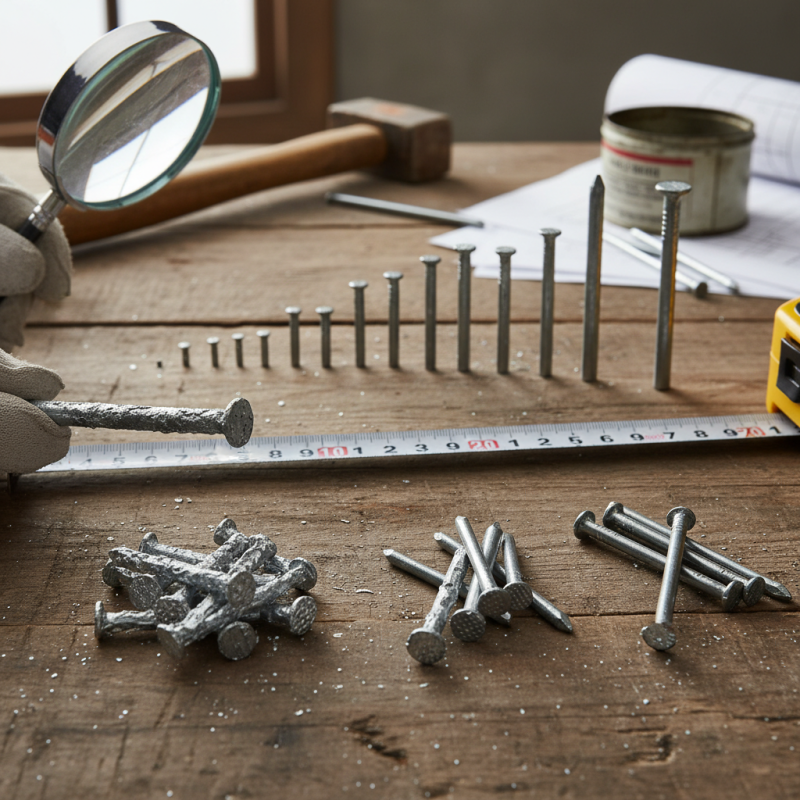
When choosing galvanized nails, the size and length matter greatly. Proper selection ensures durability in various projects. The nail length must match your material thickness. For example, a general rule is to use nails that are at least twice as long as the thickness of the materials being joined. If you’re attaching thin boards, shorter nails should suffice. However, overestimating nail length can lead to damage.
Tips: Consider using a nail length chart for quick references. It's efficient to have this information handy. Also, smaller projects may not need large nails. Using oversized nails can cause splitting, especially in softwoods.
Additionally, consider the gauge of the nail. Nails with a higher gauge are thinner. If your project requires strength, opting for lower gauge nails is better. However, don't ignore the potential for visible holes. Also, think about the corrosion resistance. Think about the environment your projects will face. High humidity or wet conditions can lead to rusting.
Tips: Test a few nails before committing to your project. It’s easier to find the right fit this way. Remember, the right size enhances both performance and aesthetics.
Identifying Suitable Applications for Galvanized Nails
When considering galvanized nails, it's crucial to identify their most suitable applications. These nails are coated with zinc, providing resistance to rust. This makes them ideal for outdoor projects. Wood decks, fences, and siding commonly use galvanized nails. Exposure to moisture in these areas can lead to corrosion. Choosing the right nail ensures your project remains intact over time.
However, not all projects require galvanized nails. For indoor applications, regular nails might suffice. In places with low humidity, their added corrosion resistance is unnecessary. Using galvanized nails in these scenarios can increase costs without real benefit. Reflecting on your project’s environment is key to making the best choice.
Some may overlook nail length and gauge. It's essential to select the correct size for the material thickness. A poorly chosen size can compromise structural integrity. This can lead to future problems. Understanding your specific requirements is vital for success.
Tips for Proper Installation and Maintenance of Galvanized Nails
When installing galvanized nails, attention to detail is essential. Start by selecting the appropriate size and type for your project. Consider the materials you will use. Thicker materials need longer nails to ensure a secure hold. Avoid rushing; proper placement matters. A crooked nail can weaken the structure.
After installation, maintaining galvanized nails is crucial. Inspect them regularly for signs of rust or corrosion. Look closely at the surrounding materials, too. Ensure there’s no moisture buildup, which can lead to deterioration. If you notice any issues, replace the damaged nails promptly. Sometimes, we overlook minor signs, thinking they’re not a big deal. Don't make that mistake.
Proper installation can improve longevity. Hammer the nails straight and at a consistent angle. Pre-drilling may be necessary for harder materials. It's okay if the results aren’t perfect. Learning from mistakes can lead to better techniques. Reflect on your process to enhance future projects.