How to Choose the Right CNC Industrial Machine for Your Needs?
Choosing the right CNC industrial machine is a crucial decision for any business. The right machine can significantly enhance productivity and precision. With various options available, it may feel overwhelming to select the best fit for your specific requirements. Understanding your needs is the first step in this process.
CNC industrial machines come in several types, including milling, routing, and engraving. Each type serves different purposes. For example, a milling machine might be ideal for complex shapes, while a router is better for softer materials. This diversity means there is no one-size-fits-all solution. Businesses often encounter challenges when determining which machine will yield the best results.
Researching different models and manufacturers is essential. Consider the machine's specifications, capabilities, and support options. A reliable vendor should provide adequate after-sales support and maintenance services. While it is easy to get lost in technical jargon, focusing on practical applications will guide your choice effectively.
Factors to Consider When Choosing a CNC Industrial Machine
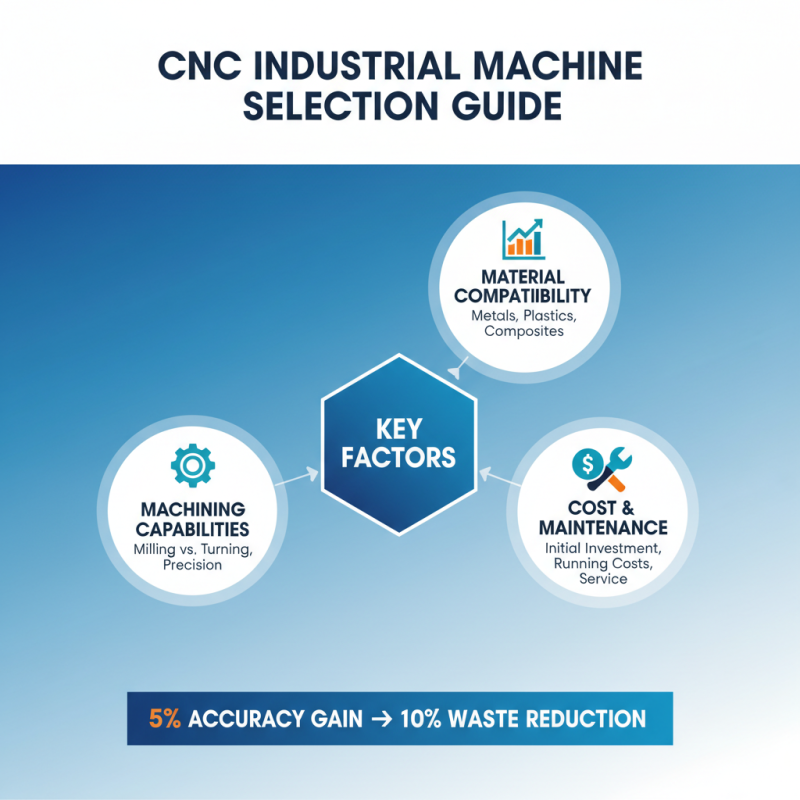
Choosing the right CNC industrial machine requires careful consideration of several key factors. First, evaluate the machining capabilities. Different machines offer distinct features. For instance, some machines excel in precise milling, while others are better suited for turning operations. Industry reports suggest that precision can greatly impact the final product quality, with a 5% increase in accuracy leading to a 10% reduction in waste.
Next, consider the size and workspace of the machine. Ensure it fits your production requirements. A larger machine may handle bigger components but could require more floor space and power. Advanced CNC machines fulfill diverse manufacturing tasks, often accommodating complex designs. Understanding your workspace limitations can prevent costly mistakes.
Tips: Always analyze your primary operations. If you're focused on specific parts, a tailored machine might be more beneficial. Don't overlook the ease of maintenance. Machines that are difficult to maintain can lead to downtime, affecting overall productivity.
Another critical factor is the software compatibility. Modern CNC machines often rely on sophisticated software for operation. Ensure that the machine can integrate well with existing systems. Reports indicate that around 30% of machine malfunctions stem from software issues. Regular training for operators can also enhance efficiency, which is vital in fast-paced production environments.
Types of CNC Machines and Their Specific Applications
When selecting a CNC machine, understanding the types and their applications is crucial. CNC milling machines are versatile and excel in producing intricate parts. They can handle metals, plastics, and composites, making them suitable for diverse industries, from aerospace to automotive. The global CNC milling machine market is projected to grow at a CAGR of 6.1% through 2025, reflecting their rising importance.
CNC lathes specialize in shaping materials by rotating them. They are ideal for creating cylindrical parts like shafts and bolts. As reported by industry analysts, the demand for CNC lathes continues to surge, driven by manufacturing's shift towards precision engineering. CNC plasma cutters provide efficient metal cutting solutions, particularly for thick materials. Their speed and accuracy have made them integral in metal fabrication.
Tips: Always match your machine selection to your specific production needs. Consider materials, part complexity, and production volume. Assess your machine's capability to avoid underutilization. Remember, a machine that seems perfect on paper may not fit your workflow. Re-evaluate your options based on real-world performance and user feedback.
Understanding CNC Machine Types and Their Applications
This chart displays the applications count for different types of CNC machines. CNC Milling and CNC Turning are the most widely used, reflecting their importance in industrial manufacturing processes.
Assessing Your Production Volume and Budget Constraints
When assessing production volume and budget constraints, it’s crucial to define your needs clearly. Reports suggest that 70% of companies overestimate their production requirements. This often leads to purchasing machines that are too advanced or costly for their actual needs. Understanding your production demands helps you make a more informed decision.
Consider your daily output. If your target is 100 units a day, a machine supporting that volume is essential. However, if your output is only 20 units daily, investing in high-capacity machinery can drain resources. The same report revealed that companies can save up to 30% of costs by selecting machines aligned with their true production levels.
Budget constraints also play a significant role in your choice. Many manufacturers spend over 20% of their total capital on equipment. It's vital to analyze not just the purchase price, but also operational costs. Look into energy efficiency and maintenance needs. Sometimes, a lower upfront cost can lead to higher long-term expenses. Balancing initial investment with ongoing costs ensures better profitability in production.
Evaluating Material Compatibility and Machine Specifications
Choosing the right CNC machine involves understanding material compatibility and specifications. Different materials, like metals, plastics, or wood, require specific machine capabilities. For instance, aluminum typically demands machines with higher spindle speeds and torque. Steel machined on CNC requires robust machines with a considerable weight capacity.
Recent studies show that nearly 70% of production failures stem from mismatched materials and machine specifications. This highlights the importance of an informed choice. When evaluating CNC machines, consider their cutting speed, feed rate, and tool compatibility. Some machines may excel in speed but fall short in precision, which can be critical for intricate designs.
Machine stability is another essential factor. A machine lacking rigidity may introduce vibrations, compromising the final product’s quality. Additionally, the adaptability of the machine to various materials is vital. Not all CNC machines suit every application. A lack of a versatile machine may limit future projects and impede growth.
Understanding Maintenance and Support Options for CNC Machines
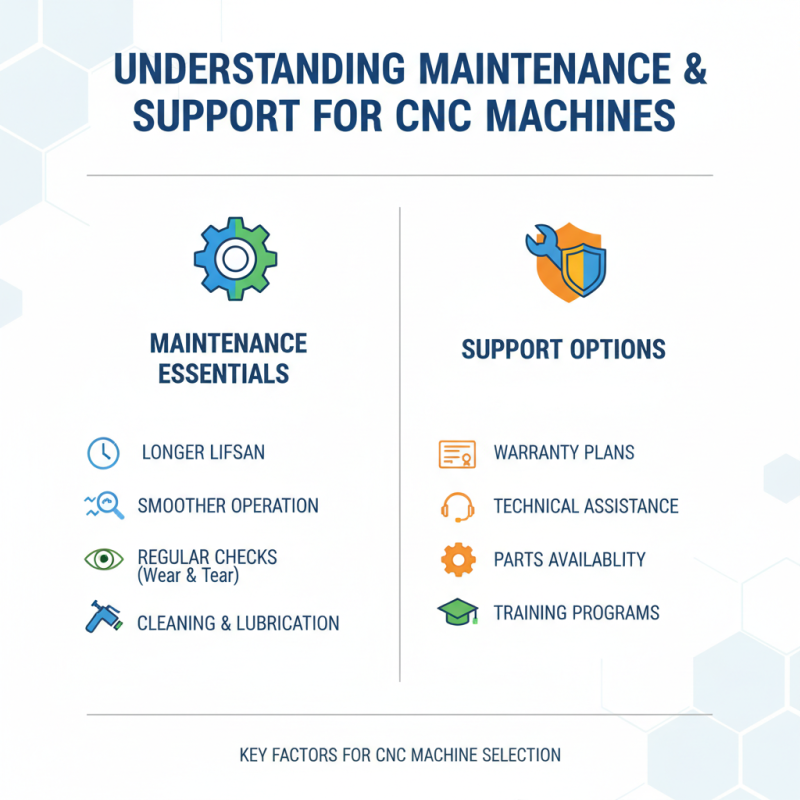
When choosing a CNC machine, maintenance and support are critical factors. Proper maintenance ensures smoother operation and longer lifespan. Regularly checking for wear and tear is essential. Simple tasks, like cleaning and lubrication, can make a significant difference.
Tips: Schedule routine maintenance checks. This helps catch issues early. Document maintenance history for better tracking. Regular training for operators on basic troubleshooting can save time and reduce costs.
Support options should also be considered. Some manufacturers offer extensive technical support. Investigate whether 24/7 support is available. Access to online resources can also be beneficial. User forums might provide practical solutions. Sometimes, the most reliable support comes from a community of experienced users.
Consider the location of support services. If they are far away, service delays can happen. Proximity can lead to quicker response times and less downtime. It’s worthwhile to reflect on how often you might require assistance. Choosing a machine with solid support options is as important as the specs.