How to Choose the Right Riding Mower Rake for Your Lawn?
Choosing the right Riding Mower Rake can greatly enhance your lawn care routine. It’s essential to understand which features matter most. A quality rake helps you clear leaves, grass clippings, and debris efficiently. However, not all mowers are compatible with every rake.
Consider the size of your lawn. Bigger lawns may require a wider rake for efficiency, while smaller spaces can benefit from compact models. Think about the terrain too. Uneven or steep areas may need special design rakes. It's also crucial to evaluate the construction material for durability. Metal rakes often last longer than plastic ones.
Learning from others’ experiences can guide your decision. Some users found certain rakes ineffective on tough debris. Reading reviews can uncover patterns. Your choice should align with your specific needs and lawn condition. Take your time to reflect on what will truly meet your needs. The right Riding Mower Rake can transform lawn maintenance from a chore into a more enjoyable task.
Understanding the Different Types of Riding Mower Rakes Available
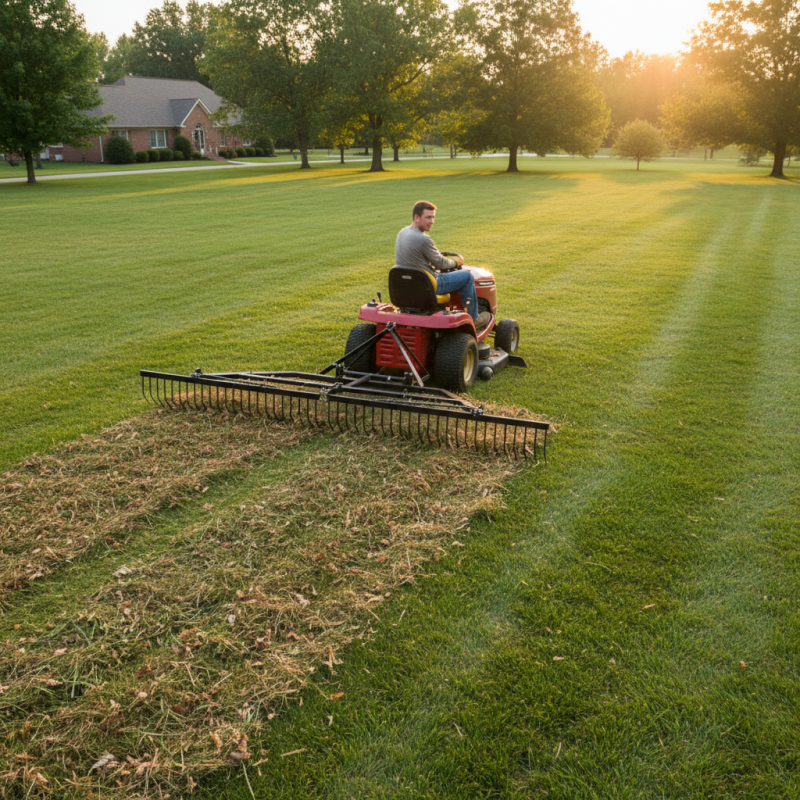
When choosing a riding mower rake, understanding the various types can significantly impact your lawn care routine. Riding mower rakes generally fall into three categories: tow-behind, front-mounted, and combination rakes. Each type serves a different purpose and can optimize your lawn maintenance.
Tow-behind rakes are excellent for large areas. They connect easily to your mower and effectively gather grass clippings or leaves. However, they may require additional adjustments for different terrains.
Front-mounted rakes generally provide better visibility and control. They attach at the front of your mower, allowing precise maneuvering. However, they can limit the mower's weight distribution, which might affect performance on uneven ground.
Combination rakes offer the best of both worlds but can be somewhat complex to operate. They allow you to switch between attachment types, yet this versatility comes with a learning curve.
Consider your lawn's specific needs and your mowing habits. Are you dealing with rough terrain or a flat landscape? Reflect on how easy it is to change attachments. Ease of use can greatly affect your overall experience. Good planning and thoughtful choices can lead to a well-maintained lawn.
Evaluating the Size and Terrain of Your Lawn for Rake Selection
When selecting the right riding mower rake, the size and terrain of your lawn are crucial. A small, flat yard may require a different rake than a sprawling, uneven landscape. If your lawn is compact, a narrower rake can maneuver easily around obstacles. Conversely, larger areas benefit from wider rakes, allowing for quicker debris collection.
Consider the terrain as well. Rough, hilly, or rocky grounds may necessitate a more robust rake design. A lightweight rake might not suffice on such terrain. It could bend or break under pressure. Think about the materials too. Some rakes are made of durable metal, while others are plastic. The choice affects performance and longevity.
Evaluate how often you maintain your lawn. Frequent upkeep might demand a more efficient tool. However, if you tend to your lawn less often, the utility of a basic rake could be sufficient. Always reflect on your specific needs to find what works best for you. Adjust your choice based on your lawn's unique characteristics, as every detail matters.
Key Features to Look for in a Riding Mower Rake
When choosing the right riding mower rake, it’s essential to focus on key features. One significant aspect is the rake's width. A wider rake, typically between 48 and 60 inches, can cover more ground quickly. According to industry reports, an adequate width can reduce mowing time by up to 30%. This efficiency is vital for larger lawns, where every minute counts.
Adjustability is another crucial feature. A good riding mower rake should allow users to change the height and angle. This flexibility is important because different grass types require different treatment. A study from the Landscape Management Association indicates that improper height settings can lead to uneven grass growth. It’s also wise to consider the material of the rake. Steel rakes tend to be more durable, but plastic rakes are often lightweight and easier to handle.
The ease of attachment is a feature that cannot be overlooked. Some rakes come with quick-release systems. This functionality allows for seamless transitions between tasks. However, not all attachments fit every mower model perfectly. This discrepancy can lead to compatibility issues that waste time and resources. Identifying your lawn’s specific needs will help to ensure you choose the right rake efficiently.
Key Features to Look for in a Riding Mower Rake
Comparing Price vs. Quality: Finding the Best Value
When selecting a riding mower rake, balancing price and quality is crucial. Many products claim to offer the best of both worlds, but reality can be different. Cheaper options may lead to poor performance and durability. Often, users find themselves replacing low-cost equipment sooner than expected. This not only affects your wallet but also your lawn maintenance routine.
Quality rakes typically come with better materials and design features. These products often save time and effort in the long run. However, they can come with a $higher price tag. Make sure to assess what your lawn needs. Investing a bit more initially can ultimately enhance your lawn-care experience. Look for reviews and experiences from other users. Their insights can reveal the value over time.
Challenges arise when weighing features against cost. It’s easy to get drawn into flashy designs and promotions. Often, simple is better. A reliable rake should meet your specific needs without unnecessary extras. Reflect on how often you will use it and the size of your lawn. In the long run, the right choice should blend functionality with cost-effectiveness.
Maintenance Tips for Keeping Your Riding Mower Rake in Top Shape
Maintaining your riding mower rake is essential for optimal performance. Regular cleaning after each use is crucial. Grass clippings, dirt, and debris can accumulate, reducing efficiency. It’s recommended to clean your rake with water and a brush. For stubborn residues, a mixture of soap and water works well.
Lubrication plays a key role in keeping moving parts functioning smoothly. Use a high-quality lubricant on hinges and joints. According to data from the Lawn Equipment Research Institute, proper lubrication can enhance the lifespan of your rake by 30%. Check the manufacturer’s guidelines for specific recommendations.
Inspecting your rake for wear is also vital. Look for worn-out tines or rust. Replacing tines can prevent further damage and improve performance. A study from the National Lawn Care Association indicates that consistent maintenance can save up to 15% in repair costs over time. Remember, neglecting minor repairs can lead to major issues. Prioritize maintenance to ensure your lawn care equipment remains reliable.