How to Choose the Right Steel Light Pole?
Choosing a steel light pole is not just a matter of matching height to a fixture. The pole must suit its location, lighting needs, and expected environmental loads. A six-meter pole in a sheltered parking area faces different demands from one beside an open road. Small details matter. Fixture weight, mounting style, wind exposure, and access for maintenance can all affect the right specification.
Start by considering where the pole will stand and what it must support. Check the pole height, shaft shape, base plate, anchor bolts, and compatibility with the luminaires. Corrosion protection also deserves attention, especially near coastlines or in areas where road spray is common. Galvanized finishes are widely used, but the best choice depends on the site and maintenance plan. There is no universal answer. Product data and qualified engineering review should guide decisions about structural capacity and installation. A catalog description alone may leave out important limits. It is easy to focus on price or appearance and miss a practical concern, such as whether a service vehicle can reach the foundation. This guide explains how to compare a steel light pole’s materials, dimensions, finish, and mounting requirements, while identifying questions to raise with the supplier. A careful choice can improve durability and simplify upkeep, though site conditions still deserve a second look.
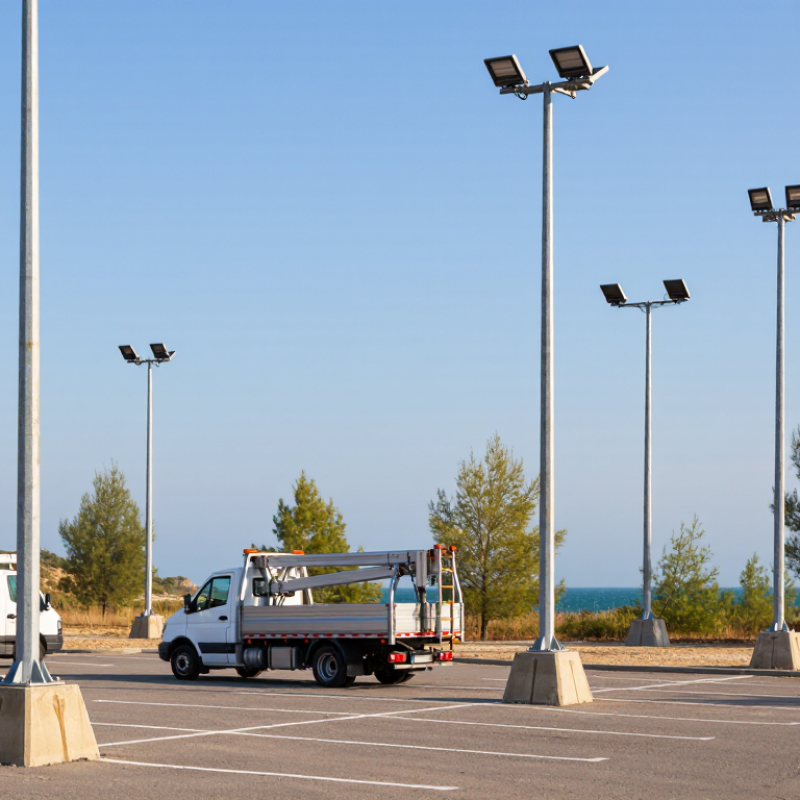
Assess the Site Conditions and Lighting Requirements
Before specifying a steel light pole, walk the site after dark. Note dark patches, glare on wet pavement, tree canopies, signs, and nearby windows. NHTSA’s 2022 Traffic Safety Facts reports that about half of traffic fatalities occurred in dark conditions. That figure makes nighttime visibility worth careful assessment, though lighting alone cannot prevent crashes. Check the actual task: a road, parking area, and pedestrian path need different light distribution. IES RP-8-22 provides recommended roadway lighting criteria; use its applicable category to set target illuminance and uniformity. Measure pole spacing and mounting height, too. Small layout changes can leave a conspicuous dark gap.
Then assess what the pole must withstand. Record local wind exposure, open terrain, slope, soil conditions, and nearby structures. ASCE/SEI 7-22 gives design criteria for wind loads, but the project location and pole configuration determine the values used. Salt spray, de-icing chemicals, and standing water also affect corrosion risk and foundation details. Look closely at the base area. A drawing can miss a drainage channel or soft shoulder. It happens. Note cable routes, maintenance access, and the reach of service vehicles before choosing pole height and placement; replacing a pole in a tight landscape can be awkward.
Choose the Pole Height, Shape, and Mounting Configuration
Pole height should follow the area being lit, not a guess based on nearby poles. Consider the mounting height, fixture output, street width, and spacing together. A pole that is too short can create dark patches; one that is too tall may spread light beyond the target. Measure twice. Review a lighting layout and confirm wind and structural loads with a qualified professional.
Shape affects both appearance and practical handling. Round tapered poles offer a clean profile, while octagonal poles can provide broad, flat faces for certain fittings. Compare wall thickness, finish, access openings, and lifting requirements, not just the silhouette. Details matter. A slim design may look right on a drawing but prove difficult to service or unsuitable for the site’s exposure.
Choose the mounting configuration to match the ground and future maintenance needs. A base-plate pole can be easier to replace, but it depends on a properly designed foundation, anchor bolts, and accurate installation. Direct burial may suit some locations, yet soil conditions and corrosion protection need careful review. Check the fixture’s tenon or bolt pattern, arm position, and cable entry before ordering. I have seen small interface details overlooked; they can delay installation even when the pole itself is sound.
Compare Steel Grades, Wall Thickness, and Structural Capacity
Steel grade sets the starting point, not the pole’s full capacity. ASTM A572/A572M Grade 50 steel has a specified minimum yield strength of 345 MPa. ASTM A36/A36M specifies 250 MPa. That difference can support a lighter design, but only when the complete pole is engineered for its site loads. Stronger steel is not a shortcut.
Wall thickness matters alongside shaft diameter, taper, pole height, welds, base plate, and anchor bolts. AASHTO’s LRFD Specifications for Structural Supports of Highway Signs, Luminaires, and Traffic Signals provide design methods for wind, fatigue, and other structural effects. Ask for calculations using the project’s wind exposure and luminaire area, not just a generic capacity figure. Look closely at the base. A thick shaft cannot compensate for an underdesigned connection. More steel may add weight and cost without resolving the actual weak point. I have seen thickness treated as a simple safety score; that is an easy assumption to make, and a poor one. Request material certificates, wall-thickness details, and stamped calculations before comparing quotations.
Select Corrosion Protection and Surface Finish
Start with the pole’s actual exposure, not its color. A roadside pole near coastal spray faces salt, wind-driven rain, and trapped moisture. Inland sites may still have wet soil, industrial residue, or de-icing salts. Hot-dip galvanizing provides a zinc barrier, while protective paint or powder coating can add another layer. For severe exposure, a duplex system may be worth considering. Check the specified coating thickness and how edges, welds, and drilled openings are protected. These details often matter more than a glossy finish.
The surface finish affects appearance, maintenance, and how well the coating system performs. A smooth powder-coated surface can suit public spaces, but good preparation and curing are essential. Ask how the finish is applied over galvanized steel, and confirm that scratches can be repaired with compatible materials. A sample can look excellent and still disappoint outdoors. That is easy to overlook. Inspect the pole after installation, especially around base plates and fasteners, where water can collect. Choose a finish that suits the site and the maintenance available; the most attractive option is not always the most practical.
Verify Standards, Installation Needs, and Maintenance Requirements
Before choosing a steel light pole, verify the standards listed in the project documents and applicable local requirements. Ask for documentation showing the pole’s material, dimensions, coating, and design loads. Wind exposure matters. A coastal site or open parking lot may need a different design from a sheltered walkway. Check that the stated load accounts for fixtures, banners, and other attachments. Standards vary.
Installation conditions can change which pole is suitable. Confirm the foundation design, anchor-bolt layout, soil conditions, and available lifting equipment before ordering. Check underground utilities and leave enough clearance for a truck or lift to reach the installation point. I would not assume a site sketch tells the whole story; it can miss uneven ground or tight access. Small errors matter. Have qualified personnel confirm structural and electrical details against the approved plans.
Maintenance deserves attention before the pole goes up. Ask how the coating should be inspected and repaired, especially near the base, where moisture and road salt can collect. Plan safe access for checking fasteners, wiring, and the pole’s finish. Access matters, too. A pole that is difficult to inspect may be overlooked, even when its maintenance instructions are clear. Keep inspection records, and note any dents, corrosion, loose hardware, or water entry for timely evaluation.
How to Choose the Right Steel Light Pole
Verify applicable standards, site and installation requirements, and long-term maintenance needs.
Reading the chart: ASTM A123/A123M specifies minimum average hot-dip galvanized coating thicknesses that vary by steel thickness and product category. The values shown are for structural steel categories; confirm the applicable standard edition and product category for the pole specification. Also verify site-specific wind loads, pole height and attachments, foundation and anchor-bolt design, access for installation, and a practical inspection and maintenance plan.