What Are the Different Types of Wooden Window Frames?
Wooden Window Frames differ in timber species, construction, and finish, and those choices shape how a window looks and performs. A pine frame can feel warm and traditional, while oak brings a denser grain and a more substantial appearance. Accoya and other modified woods offer another route, changing how timber responds to moisture and decay. The details matter.
Historic-window specialist John Leeke’s guidance, paraphrased, is practical: maintain sound wood before replacing it. That principle is useful for older homes, where a painted frame may look worn but still have solid timber beneath the surface. A careful inspection can reveal soft spots near the sill, loose joints, peeling paint, or water trapped around the glazing. Small clues count.
This guide compares common wooden frame types, from softwood and hardwood to engineered and modified timber. It considers durability, maintenance, appearance, insulation, and cost, while noting that results depend on design, workmanship, and exposure to rain and sun. A sheltered window faces different demands from one exposed to driving weather. There is no single best choice. A low-maintenance promise can also obscure the need for regular checks, so it deserves a closer look. The aim is to help homeowners and renovators match frame material to the building, local conditions, and realistic upkeep—not simply choose the most expensive option.
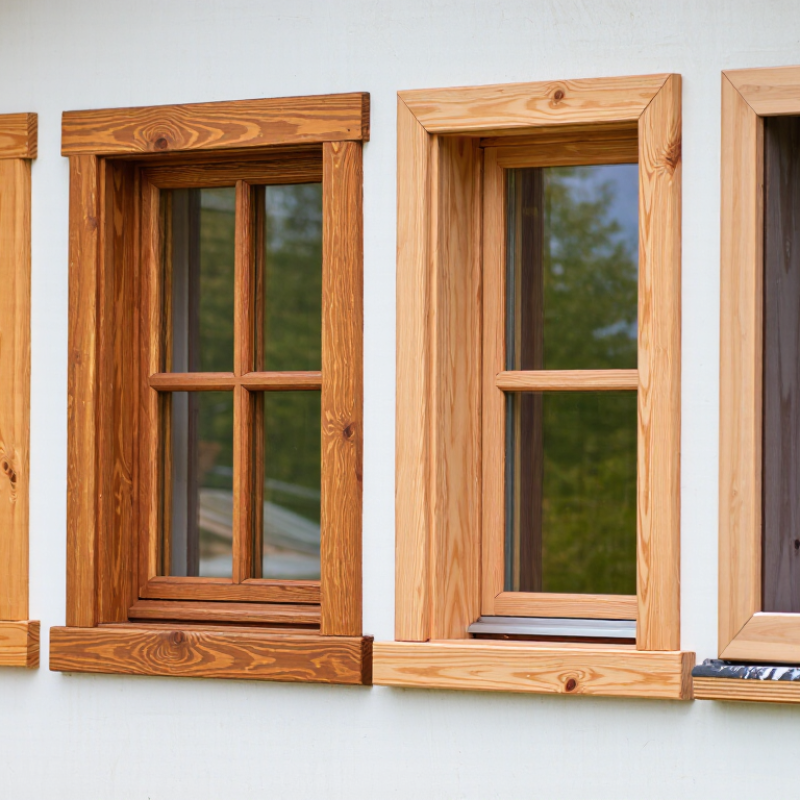
How Wooden Window Frames Are Classified
Wooden window frames are classified by construction, exterior protection, and opening style. These categories can overlap. Solid-timber frames use joined wood sections, while engineered-wood frames bond or laminate layers for more consistent strength. Wood-clad frames pair a timber interior with a protective outer layer. “Casement” and “sash” describe how a window opens, not what its frame is made from. That distinction matters.
Performance depends on more than the frame label. The U.S. Department of Energy’s Energy Saver guidance estimates that windows account for about 25%–30% of residential heating and cooling energy use. Check the whole window’s U-factor and solar heat gain coefficient, not just the timber species. Glazing, seals, installation, and local climate all affect results. In practice, categories are not perfectly neat: a frame may be engineered timber and wood-clad at once. Inspect corners, joints, and the finish near the sill, where moisture damage can be easy to miss.
Solid-Wood Window Frames
Solid-wood window frames are made from lumber throughout the frame members, rather than a wood-look surface over another material. The USDA Forest Products Laboratory’s Wood Handbook (FPL-GTR-282, 2021) reports that wood’s thermal conductivity varies with species, density, moisture, and grain direction; many common woods fall around 0.1–0.2 W/(m·K). This relatively low conductivity can help limit heat transfer through the frame. It does not guarantee an efficient window. Glazing, seals, frame design, and installation all affect whole-window performance.
Wood has a tactile warmth that is easy to notice on a cold morning. It can also be cut, repaired, and refinished, which helps when a sill gets nicked or paint begins to peel. But solid wood responds to moisture. A poorly sealed lower corner may swell, while prolonged dampness can invite decay. Inspect joints, coatings, and drainage paths regularly, especially on weather-exposed sides. A practical detail: keep the frame’s bottom edge clear of standing water.
The trade-off is maintenance. Paint or a suitable finish needs periodic attention, and the interval depends on exposure and product condition. That can be inconvenient. It is also easy to overstate wood’s insulating benefit: a well-made frame cannot compensate for leaky glazing or careless installation. Check the complete window’s rated performance, not just the frame material, before comparing options.
Engineered-Wood Window Frames
Engineered-wood window frames use bonded veneers, laminated strands, or finger-jointed timber rather than one solid piece. Their layered construction can limit warping as humidity changes, although performance depends on the materials, adhesive, and manufacturing quality. The USDA Forest Products Laboratory’s Wood Handbook—Wood as an Engineering Material (FPL-GTR-282, 2021) explains that wood changes dimension as its moisture content shifts. Engineered wood helps manage that movement. Not eliminate it.
Look closely at corners, joints, and finish during inspection. A neat coating can hide weak edge sealing, where rainwater may enter. “Engineered” is not a performance grade. The U.S. Department of Energy reports that heat gain and loss through windows account for about 25–30% of residential heating and cooling energy use. That figure applies to windows as a whole, not frames alone. Glazing, seals, installation, and frame design all affect the result. Compare whole-window ratings, and ask how exposed edges are protected. One detail is easy to miss: even a stable frame can underperform if water collects on the sill.
Wood-Clad Window Frames
Wood-clad window frames pair a wood interior with a protective exterior layer, often aluminum or vinyl. The interior can be stained or painted to suit a room, while the outer cladding shields much of the wood from rain and sun. Run a hand along the indoor sill, and the natural grain feels warmer than a fully metal frame.
That outer layer reduces routine exposure, but it does not make the window immune to water. Pay attention to the sill corners, joints, and drainage paths, where trapped moisture can damage the underlying wood. I would not call these frames maintenance-free; that label feels too neat. Check seals and finishes periodically, especially after harsh weather. A small crack or peeling patch is easier to address early.
Installation matters, too. Proper flashing and a clear route for water to drain help protect the frame and the surrounding wall. Inside, changing humidity can affect wood, so ventilation and stable indoor conditions are useful. Before choosing a frame, compare the cladding material, glass performance, and care instructions—not just the interior finish. One drawback is cost: the layered construction can be more expensive than simpler frame options, and the exact upkeep varies by material and exposure.
What Are the Different Types of Wooden Window Frames? - Wood-Clad Window Frames
| Frame type | Typical construction | Exterior surface | Maintenance considerations | Common advantages and considerations |
| Solid wood | Frame and sash components are made primarily from solid timber. | Usually painted or stained wood, exposed to outdoor conditions. | Inspect finishes and joints regularly; repainting or restaining may be needed as the finish wears. | Offers a natural appearance and can be repaired or refinished. Requires ongoing protection from moisture and weather. |
| Wood-clad aluminum | Wood is typically used on the room-facing side, with an aluminum covering on the exterior. | Factory-finished aluminum cladding protects the exterior wood from direct exposure. | Generally needs less exterior painting than exposed wood; check cladding, joints, and drainage paths for damage or debris. | Combines a wood interior with a weather-resistant exterior covering. The metal finish can be scratched or dented, and repairs may be more involved than repainting wood. |
| Wood-clad fiberglass | A wood interior is paired with a fiberglass exterior shell or cladding. | Fiberglass exterior, often factory-finished. | Usually requires limited exterior finish upkeep; clean periodically and follow the manufacturer’s care instructions. | Provides a wood interior with an exterior material that does not rust or rot. Finish options, repair methods, and performance vary by construction. |
| Engineered wood | Made from bonded or laminated wood layers or fibers; some products have a wood veneer or protective exterior covering. | Depends on the product: it may be painted, veneered, or protected with cladding. | Keep exposed surfaces sealed and inspect edges and joints; care requirements depend on the covering and construction. | Layered construction can help provide dimensional consistency. It is not one uniform frame type, so moisture resistance and repairability depend on the specific product. |
| Traditional or historic wood | Often built from solid wood, with profiles and joinery suited to the original building style. | Typically exposed, painted, or stained wood; original details may be retained during repair. | Needs routine finish and condition checks; repairs should address water entry and damaged wood while preserving sound material. | Can preserve a building’s original character and may be repairable in sections. Older windows can differ substantially in condition, glazing, and energy performance. |
Note: Frame construction, finish, maintenance needs, and performance vary by window design, installation, climate, and product specifications.
Comparing Frame Types by Performance and Use
Solid-wood frames are made from a single piece or joined sections of timber. They offer a natural finish and can be repaired when scratched or dented. Softwoods such as pine are often lighter and less costly, while denser woods can resist wear well. Species, finish, and upkeep matter as much as the label. A practical distinction.
Engineered-wood frames use bonded layers to reduce movement as temperature and humidity change. That can help windows stay aligned, though quality and construction vary. Wood-clad frames pair a timber interior with a protective exterior layer, which can reduce routine painting outdoors. The trade-off is less exposed wood to refinish, and repairs may be more involved if the exterior covering is damaged.
Performance also depends on exposure and installation. A shaded bedroom window may suit a different frame than one facing driving rain or strong afternoon sun. Check that drainage paths are clear, seals fit evenly, and the finish is maintained according to the maker’s guidance. In a renovation, I would compare expected upkeep with the room’s conditions, not just the initial price. There is no perfect frame. Even a durable choice can disappoint if water collects at the sill or the frame is fitted poorly.