
Irrigation Parts are the components that move water from its source to the plants that need it. A typical system may include a controller, pipes, valves, filters, pressure regulators, and sprinklers or drip emitters. Each part has a specific job. The controller sets watering times, while valves open and close sections of the system. Pipes carry water, and filters catch grit that could block small outlets. Pressure regulators help keep flow within a suitable range. It is a connected system, not just a collection of fittings.
Picture a garden bed on a warm, breezy afternoon. Water travels through a main pipe, branches into smaller lines, and reaches the soil through emitters near the roots. Small parts matter. A clogged filter can reduce flow; a loose connector may leave a wet patch beside a dry plant. These signs are useful, but they do not always reveal the cause. Soil type, slope, water pressure, and plant needs all affect performance. A setup that works in sandy soil may behave differently in clay.
This guide explains what common irrigation components do and how water moves between them. It also considers how parts work together, what to inspect during routine maintenance, and where problems can begin. Product specifications and site conditions matter, so a general explanation cannot replace checking the equipment instructions. Irrigation can look straightforward. The details are sometimes less so.
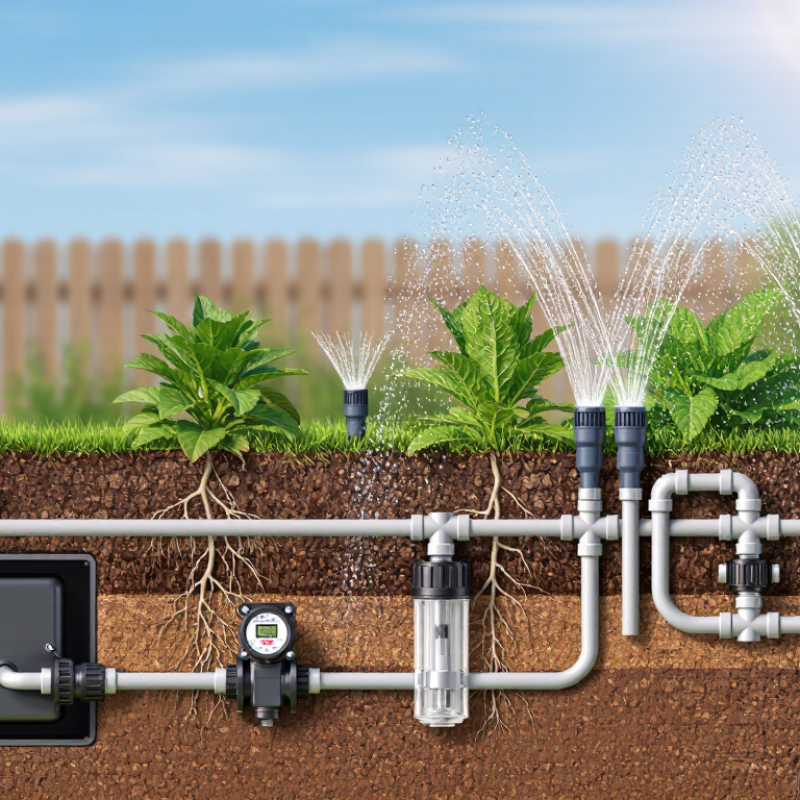
An irrigation system moves water from its source to plant roots through connected, controlled parts. The source may be a municipal line, well, or storage tank; a pump helps when pressure is insufficient. A backflow preventer keeps reverse-flowing water from entering drinking-water lines. Filters trap grit, especially before drip tubing, where small outlets clog easily. Small details matter. Pipes or flexible tubing carry water to valves, which open separate zones. Sprinkler heads cover wider areas, while drip emitters release water near roots.
U.S. EPA WaterSense guidance estimates outdoor use accounts for about 30% of household water use. It also warns that up to half of outdoor water may be lost to evaporation, wind, or runoff. Controllers and sensors can help reduce waste. Timers set watering schedules; soil-moisture or weather sensors can pause irrigation when conditions do not call for it. Still, a controller cannot fix a misplaced sprinkler or leaking joint. Walk each zone. Look for puddles, dry edges, and spray on pavement. Adjust coverage and timing as plants grow; even careful systems need seasonal checks.
Pressure at the outlets affects how irrigation water is delivered. These approximate ranges vary by equipment and installation; check the specifications for each system.
An irrigation system begins at a source: a well, pond, canal, or storage tank. When the pump starts, its inlet pressure drops and water moves through a screened intake or foot valve. The screen catches debris; it cannot make dirty water safe. Small leaks on the suction side can pull in air, so the pump may lose its prime. A practical check is to listen for a steady hum and look for a smooth, bubble-free flow. Real installations are rarely perfect.
Inside a common centrifugal pump, a rotating impeller adds energy to the water. The casing converts much of that motion into pressure, pushing water toward filters, valves, and pipes. A pressure gauge near the pump helps reveal clogged filters or leaks; compare readings during operation, not just at rest. The USDA’s 2015 irrigation survey documents the scale of this work: US farms applied 83.4 million acre-feet of water. Globally, FAO reports agriculture accounts for about 70% of freshwater withdrawals. These figures describe very different scales, but both show why stable flow and pressure matter. Too little pressure can leave distant emitters dry; too much can damage fittings. A modest pressure fluctuation is easy to miss.
Filters and valves manage two different parts of irrigation flow. A filter catches sand, grit, and other particles before they enter narrow tubing or sprinkler nozzles. Common options include screen and disc filters; the right choice depends on water quality and the system’s flow rate. As a filter collects debris, pressure can drop downstream. A filter does not remove dissolved salts, so cloudy or salty water may need a different treatment approach.
Valves start, stop, or direct water to irrigation zones. A manual valve turns by hand, while an electrically controlled valve opens when its controller sends a signal. Some systems also use pressure-regulating valves to keep flow steadier across uneven ground. If a zone runs weakly, the cause may be a clogged filter, a partly closed valve, or a leak—not necessarily a faulty component. It is easy to overlook the filter when troubleshooting. Small details matter.
Tips: Check the filter after the first few watering cycles, then inspect it regularly during dusty or muddy conditions. Clean it according to its instructions, and note the pressure before and after the filter if gauges are installed. Check both sides. A persistent pressure difference can signal a blockage, but readings vary with flow and equipment.
Irrigation pipes form the delivery network, carrying water from a pump or supply line to valves and emitters. Mainlines move larger volumes across a site; smaller lateral pipes feed sprinklers or drip tubing. Water loses pressure as it travels, especially through long runs, narrow pipe, sharp bends, and partially clogged filters. That can leave distant plants with weaker flow.
Pipe sizing and layout help keep pressure and flow balanced. The USDA Natural Resources Conservation Service’s National Engineering Handbook, Part 652, uses pressure, flow, and friction loss as key irrigation design factors. Its guidance places well-managed trickle irrigation near 90% application efficiency. That figure is a benchmark, not a guarantee: leaks, poor filtration, and uneven terrain can reduce performance. A layout may look tidy on paper and still disappoint in the field.
Tips: Check for wet spots, loose joints, and uneven emitter flow while the system runs. Compare pressure near the source and at the farthest outlet. If the difference is large, inspect filters and pipe sizing before increasing pump pressure. Small details matter. A kinked lateral or one blocked screen can quietly starve a row.
Sprinklers and emitters turn pressurized water into droplets, but they place those droplets differently. A sprinkler nozzle throws water across a broad area, like a brief, controlled rain shower. Heads need enough overlap to avoid dry rings between them. Wind can push the spray off course, while excessive pressure may create fine mist that evaporates before reaching the soil. Small details matter. Check the pattern on a calm day, and look for puddles or dry patches rather than assuming every head performs alike.
Emitters release water slowly through small outlets in tubing, usually near plant roots. Their spacing should match the crop and soil: sandy ground may need closer outlets because water spreads less sideways. Filters help prevent clogging, and pressure regulation helps keep flow more even along a line. FAO’s Irrigation Water Management training materials cite approximate planning efficiencies of 75% for sprinkler irrigation and 90% for drip irrigation. These are general estimates, not guarantees for every garden or field. A layout can look tidy on paper and still deliver uneven moisture; checking soil near several plants can reveal what the schedule misses.
| Irrigation Part | What It Does | How It Applies or Controls Water | Typical Use or Practical Note |
|---|---|---|---|
| Sprinkler head | Distributes water over a defined area above the soil. | A nozzle releases water as a spray or rotating stream, simulating rainfall over lawns, garden beds, or other planted areas. | Coverage depends on the head, nozzle, water pressure, spacing, and wind. Heads should be arranged so their spray patterns provide adequate overlap. |
| Drip emitter | Delivers a small, measured flow of water near an individual plant. | A small outlet or internal flow path releases water slowly into the soil near the root zone. | Commonly used for trees, shrubs, containers, and vegetable rows. Emitter flow rates vary; many garden systems use rates around 0.5–2 gallons per hour. |
| Micro-sprinkler | Waters a small area with a low-flow spray or stream. | A small nozzle or rotating mechanism spreads water over a limited radius close to the ground. | Useful for beds, orchards, and groups of plants. Its application area is generally smaller than that of a lawn sprinkler. |
| Irrigation tubing and pipe | Transports water from the source to valves, sprinkler heads, or emitters. | Mainlines and branch lines carry water through the system; smaller tubing commonly supplies drip emitters. | Pipe size and layout affect flow and pressure. Tubing should be protected from damage and installed to suit the system design. |
| Filter | Captures particles that could obstruct small water outlets. | Water passes through a screen or other filter element before reaching drip lines or micro-irrigation components. | Particularly important for drip systems because emitter openings can clog. The filter requires inspection and cleaning according to system conditions. |
| Pressure regulator | Reduces incoming pressure to a level suitable for downstream components. | It limits outlet pressure so emitters, tubing, or sprinklers operate within their intended pressure range. | Use a regulator matched to the irrigation equipment. The required pressure varies by component and system design. |
| Control valve | Starts or stops water flow to a zone. | A manual or electrically operated valve opens to supply a section of the system and closes to stop its flow. | Separate zones allow areas with different plant needs, sun exposure, or irrigation equipment to be watered independently. |
| Controller or timer | Sets when and for how long irrigation zones operate. | It sends a signal to automatic valves according to a programmed schedule; some controllers also use weather or soil data. | Schedules should be adjusted for plant needs, soil, weather, and local watering restrictions. |
| Backflow-prevention device | Helps prevent irrigation water from flowing back into the potable water supply. | It uses a protective mechanism to reduce the risk of reverse flow caused by changes in water pressure. | Requirements depend on local plumbing rules and the water connection. Installation and testing may need to follow local codes. |
| Rain sensor | Pauses or adjusts scheduled irrigation when sufficient rainfall is detected. | A sensor communicates with the controller so a watering cycle can be skipped or delayed. | It can help avoid unnecessary watering, but it does not replace checking soil moisture and plant conditions. |