How to Use Isothermal Amplification for Effective Testing?
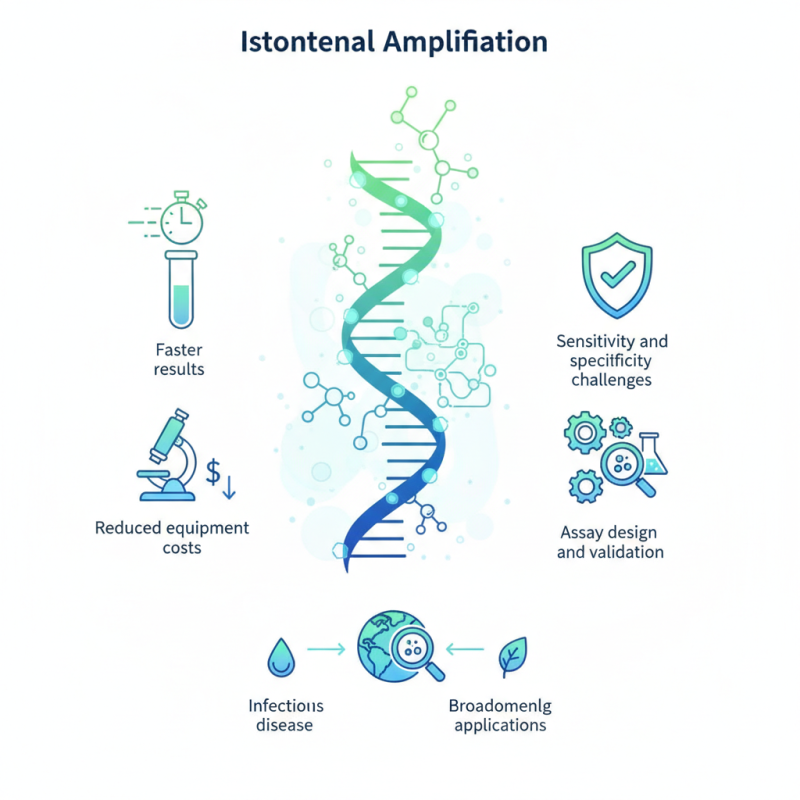
Isothermal Amplification (IA) has emerged as a powerful tool in molecular diagnostics, particularly in the detection of infectious diseases. Reports indicate that the global market for nucleic acid amplification technologies is projected to exceed $8 billion by 2025, highlighting the increasing demand for efficient and rapid testing methods. IA offers significant advantages over traditional PCR, such as faster results and reduced equipment costs. For instance, tests utilizing IA can provide results within a short time frame, sometimes in under an hour, making it a game-changer in clinical settings.
Despite these benefits, there are still challenges to address. The sensitivity and specificity of Isothermal Amplification assays must be thoroughly validated for diverse pathogens. In certain instances, cross-reactivity issues can arise, leading to false positives. Continuous improvements in assay design and validation protocols are critical. Researchers and healthcare professionals must collaborate to refine these techniques, ensuring accuracy while broadening their application in various fields, including infectious disease surveillance and environmental monitoring.
As we explore the practical implementation of Isothermal Amplification, it is essential to recognize these complexities. A clear understanding of both its potential and limitations will be crucial for effective testing and disease management in the future.
Introduction to Isothermal Amplification Techniques
Isothermal amplification techniques have transformed the landscape of molecular diagnostics. Unlike traditional methods, these techniques operate at a constant temperature, simplifying the process of amplifying nucleic acids. Recent reports indicate that isothermal methods can reduce test times significantly, sometimes to less than an hour, making them ideal for point-of-care testing.
These techniques, such as LAMP and NASBA, show promising specificity and sensitivity. A study highlighted that LAMP can achieve a detection limit of 10 copies per microliter, making it effective for early-stage detection of pathogens. However, the simplicity of these tests also raises concerns about potential false positives, which could impact public health efforts.
Moreover, the scalability of isothermal amplification presents both opportunities and challenges. While the technology is suitable for rapid testing scenarios, it requires rigorous quality controls to ensure reliability. In environments with limited resources, maintaining these standards can be difficult, leading to variability in results. Thus, while isothermal amplification is a powerful tool, careful implementation is crucial for effective testing.
Isothermal Amplification Techniques Effectiveness
Principles of Isothermal Amplification in Molecular Biology
Isothermal amplification is a vital technique in molecular biology, particularly for gene testing and diagnostics. Unlike traditional PCR, it doesn't require temperature cycling. This method operates at a constant temperature, enhancing the efficiency of nucleic acid amplification. Often, enzymes are utilized to facilitate this process. This simplicity leads to quicker results with minimal equipment.
Tips for effective isothermal amplification include ensuring the accuracy of your target sequence. Any errors at this stage can lead to false results. Also, consider optimizing reaction conditions such as pH and salt concentration. These factors significantly influence the efficiency of the process.
A common issue arises from contamination during sample preparation. To avoid this, practice stringent aseptic techniques. Despite the effectiveness of isothermal amplification, it is essential to remain cautious about the reliability of your results. Continuous validation against standard methods can help ensure accuracy. Emphasizing meticulous protocols will enhance the overall outcome of your testing efforts.
Step-by-Step Process for Implementing Isothermal Amplification
Isothermal amplification (IA) is a powerful method for amplifying DNA or RNA at a constant temperature. This technique simplifies the process, making it accessible for various applications like diagnostics. To implement IA effectively, follow these steps.
Begin by preparing your samples. Ensure they are clean and free from contamination. Contamination can result in misleading results. Choose appropriate primers that will target specific sequences in your sample. The selection process requires careful consideration to enhance specificity.
Next, set up the amplification reaction. Combine the sample with a buffer, enzymes, and primers in a reaction tube. Maintaining the right temperature is crucial. It allows enzymes to work optimally, ensuring efficient amplification. Monitor the process closely. Sometimes, adjustments are necessary to improve yield. Finally, analyze the results accurately. Evaluate the amplification using gel electrophoresis or other methods. This step is vital to confirm the success of your experiment.
This process highlights the importance of precision and adaptability. Often, adjustments are needed based on sample type and other conditions. Reflecting on these steps can lead to better results in future tests.
How to Use Isothermal Amplification for Effective Testing?
| Step | Description | Time Required | Equipment Needed |
| 1 | Prepare sample collection. | 15 minutes | Sterile containers |
| 2 | Extract nucleic acids from the samples. | 30 minutes | Nucleic acid extraction kit |
| 3 | Set up the isothermal amplification reaction. | 10 minutes | Thermal cycler or incubator |
| 4 | Incubate the reaction mixture at a constant temperature. | 30-60 minutes | Thermal cycler or incubator |
| 5 | Analyze the amplification results. | 15 minutes | Gel electrophoresis equipment |
Applications of Isothermal Amplification in Pathogen Testing
Isothermal amplification has emerged as a powerful tool in pathogen testing, especially for infectious diseases. This method offers rapid and sensitive detection capabilities. According to a study published in *Nature Reviews Microbiology*, isothermal amplification techniques can achieve sensitivity comparable to traditional PCR methods. They can detect as low as 10 copies of nucleic acids per reaction. This level of sensitivity is crucial for early diagnosis and control of outbreaks.
Its applications extend across various pathogens. For instance, studies have demonstrated successful amplification for bacteria like *Escherichia coli* and viruses such as SARS-CoV-2. In a specific evaluation, isothermal amplification resulted in positive detection rates exceeding 90% within minutes. Fast results are vital in clinical settings, where timely decisions can affect patient outcomes. However, challenges remain in optimizing reaction conditions for different samples, especially in complex biological matrices.
Moreover, standardization and validation of these techniques need attention. Variance in results from different laboratories highlights the need for improved protocols. Ensuring reliability and reproducibility is essential for widespread adoption. This technology, while promising, still requires thorough testing and refinement to address these issues effectively.
Advantages and Limitations of Isothermal Amplification Methods
Isothermal amplification methods have gained popularity for their efficiency in nucleic acid testing. Their primary advantage is the speed of results. These methods can produce results within an hour, making them invaluable in urgent clinical settings. The simplicity of the process is another key strength. Unlike traditional PCR, isothermal amplification is less sensitive to temperature fluctuations. This often means fewer specialized instruments are needed.
However, there are notable limitations. Sensitivity can vary significantly based on the target nucleic acid. In some situations, the specificity of amplification may lead to false positives. This necessitates careful optimization and validation. Additionally, the depth of knowledge required to apply these techniques effectively can be a barrier. Practitioners need thorough training to mitigate risks associated with potential contamination and interpretation errors. Achieving consistent results often demands a level of precision that can be challenging.
Despite these hurdles, isothermal amplification remains a valuable tool in diagnostics. Researchers continue to seek improvements and innovations. As they refine these methods, their reliability and applications in various fields are likely to expand, making this technology one to watch closely.