What Is a Kraft Paper Tape Laminating Machine?
A Kraft Paper Tape Laminating Machine is a converting system designed to bond kraft paper with adhesive, film, tissue, or another functional layer. It creates a stronger, more stable tape structure for sealing, bundling, labeling, and industrial packaging. The machine usually combines unwinding, adhesive coating, laminating, drying, slitting, and rewinding functions. Each stage matters.
Dr. Susan Selke, a respected packaging materials researcher, has stated, “Packaging performance is always a system question, not merely a material question.” This principle explains why machine selection cannot depend on speed alone. A reliable Kraft Paper Tape Laminating Machine must control web tension, coating weight, drying temperature, and alignment. Even a small tension variation can produce wrinkles across a wide kraft paper roll. Excess adhesive may create blocking during rewinding. Insufficient adhesive can cause edge lifting after application.
In real production, operators watch the web closely. They check roll hardness, surface smoothness, and bond consistency. The machine may run quietly, yet hidden defects can appear later. That is the difficult part. A faster line is not always a better line.
Manufacturers should also evaluate substrate thickness, adhesive type, working width, heating method, and required output. Energy use deserves attention too. Some specifications look impressive but provide little practical value. A thoughtful evaluation includes trial runs with the actual kraft paper and adhesive. This reveals problems that brochures often miss. The final choice should balance productivity, material quality, maintenance access, and operator experience. Reliability is built through controlled details.
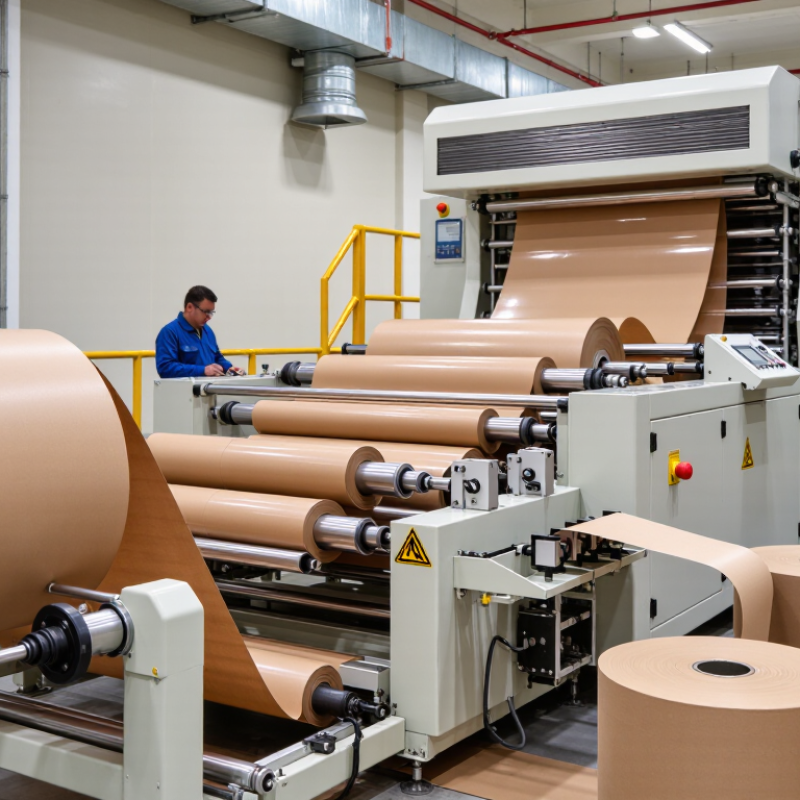
Definition and Purpose of a Kraft Paper Tape Laminating Machine
A kraft paper tape laminating machine is industrial equipment that bonds kraft paper to another material. The second layer may include adhesive film, tissue, or a thin strengthening substrate. The machine combines these layers under controlled pressure and temperature.
Its purpose is to produce stable, usable tape rolls for sealing, packaging, labeling, and surface protection. During operation, unwinding units feed the materials at a measured speed. A coating or adhesive station applies the bonding layer evenly. Heated rollers can activate the adhesive, while pressure rollers remove small air pockets. Rewinding units then form finished rolls with consistent tension.
Good machines support accurate alignment and reliable output. Operators usually check bond strength, paper moisture, coating weight, roll hardness, and edge quality. A practical inspection might involve cutting a short sample and pulling the layers apart by hand. This simple test can reveal weak adhesion quickly. It is not perfect, though.
Machine performance depends on paper quality, adhesive behavior, humidity, and operator settings. Excessive heat may curl the kraft paper. Low pressure can create loose layers or visible bubbles. Even advanced equipment needs regular cleaning and calibration. A precise definition should therefore include both the machine’s structure and its working conditions. That detail is often overlooked.
Main Components and Their Functions
A kraft paper tape laminating machine combines several working sections to create strong, reliable adhesive tape. The unwinding stand holds the kraft paper roll and releases it at a controlled speed. Tension rollers prevent wrinkles, edge shifts, and sudden web breaks. Small errors here can affect the entire roll.
The coating or adhesive unit applies a measured layer to the paper surface. Depending on the product design, a laminating station joins kraft paper with another paper layer or backing material. Pressure rollers remove trapped air and improve contact. A drying tunnel then removes moisture or solvents from the adhesive. Temperature, airflow, and web speed must work together. Excessive heat may weaken the paper. Insufficient drying can cause blocking during rewinding. The slitting section cuts the wide web into accurate tape widths, while the rewinding unit forms firm, even rolls. Sensors and a control system monitor alignment, speed, and tension throughout production. I have found that clean rollers matter more than many operators expect.
Tips: Check the unwind tension before increasing speed. Inspect the adhesive coating across the full width, not only at the edges. Keep rollers free from dried adhesive. A simple sample test can reveal poor bonding early. Do not trust a perfect-looking roll immediately; storage temperature may expose hidden defects. Some settings still require careful adjustment, because paper moisture changes with the workshop environment.
How the Laminating Process Works Step by Step
A kraft paper tape laminating machine bonds kraft paper with another functional layer, such as tissue, film, or adhesive backing. The line usually includes unwinding, tension control, coating, lamination, drying, and rewinding units. Market research from Future Market Insights reports that the paper tape market is expected to grow at about 6% annually through 2033. This growth reflects demand for recyclable-looking packaging materials, but appearance alone does not prove sustainability.
The process begins when large kraft rolls enter the unwind station. Sensors regulate web tension and prevent wrinkles. The adhesive is then applied at a controlled thickness. Too much adhesive creates squeeze-out; too little causes weak bonding. The second web meets the kraft paper inside a heated or pressure-controlled nip. Roll pressure removes trapped air and improves contact. Drying or curing follows, depending on the adhesive chemistry. Operators check temperature, line speed, coat weight, and moisture during this stage.
The laminated web is rewound before slitting. Blades divide it into narrow tape rolls with consistent edges. ASTM and ISO-based testing can measure peel strength, tensile strength, tack, and aging performance. A 2024 Smithers packaging report also identifies material efficiency and fiber-based formats as continuing industry priorities. Real production is less tidy than the diagram. Humidity changes, uneven paper formation, and slight tension drift can still create defects. That is why experienced operators inspect roll edges and adhesive transfer, not only the machine display.
Key Materials and Operating Parameters
What Is a Kraft Paper Tape Laminating Machine?
A kraft paper tape laminating machine combines kraft paper with adhesive, reinforcement, or a release layer. It uses controlled pressure, heat, and tension during continuous production. The main materials include kraft paper, water-based or hot-melt adhesive, fiberglass scrim, tissue, and silicone-coated release paper. Material selection affects tear strength, surface feel, moisture resistance, and converting performance.
Operators must match machine settings to each material. Web tension commonly starts between 20 and 50 newtons, then changes after observing wrinkles or stretching. Nip pressure should hold the layers together without crushing the paper fibers. For water-based adhesive, drying temperature often ranges from 60°C to 100°C. Excessive heat can curl the tape or weaken the adhesive. Hot-melt systems may require higher temperatures, often between 120°C and 160°C, depending on the formulation.
Line speed also matters. A practical starting range is 30 to 80 meters per minute. Faster production reduces drying time and may create wet spots, bubbles, or poor bonding. In my experience, a small test roll reveals more than a long machine run. I check peel strength, edge alignment, coating weight, and winding hardness. The first trial is rarely perfect. Sometimes the paper looks smooth but separates after storage. That result deserves investigation, not a quick setting change. Humidity, roll temperature, and adhesive age can quietly affect the final tape.
Common Applications and Selection Considerations
What Is a Kraft Paper Tape Laminating Machine?
A kraft paper tape laminating machine bonds paper layers with adhesive, pressure, and controlled heat. It can create stronger, smoother tape webs for carton sealing, bundling, edge protection, and lightweight packaging. Some lines also coat, dry, slit, and rewind the material in one continuous process.
Demand deserves attention. FAO forestry data recorded global paper and paperboard production above 400 million tonnes in 2022. Smithers’ paper packaging outlook also identifies continued growth in fiber-based packaging. This creates opportunities for converters, but demand alone should not drive equipment purchases. A machine must match the intended tape structure. Water-activated tape needs different adhesive control from pressure-sensitive tape. Recycled kraft paper may also vary in porosity, moisture, and surface strength.
Tips: Check actual samples before selecting a machine. Test paper grammage, adhesive viscosity, drying temperature, web tension, and peel strength. Ask for production data at your target speed, not only the maximum speed. Consider roll width, changeover time, dust control, energy use, and operator access. In practice, no laminator performs perfectly with every paper grade. That is easy to overlook. A short pilot trial can reveal wrinkles, edge lifting, or uneven coating before installation. Choose measurable quality controls, such as coating weight, bond strength, and roll hardness. Also review spare-part availability and maintenance training, because small alignment errors can quickly become large material losses.
Typical Kraft Paper Tape Formats by Application
The chart shows practical finished-tape width ranges commonly used when selecting a kraft paper tape laminating machine. Wider products require suitable web handling, coating, slitting, and rewinding capacity.