Screw Type Terminal Blocks What You Need to Know for Global Sourcing
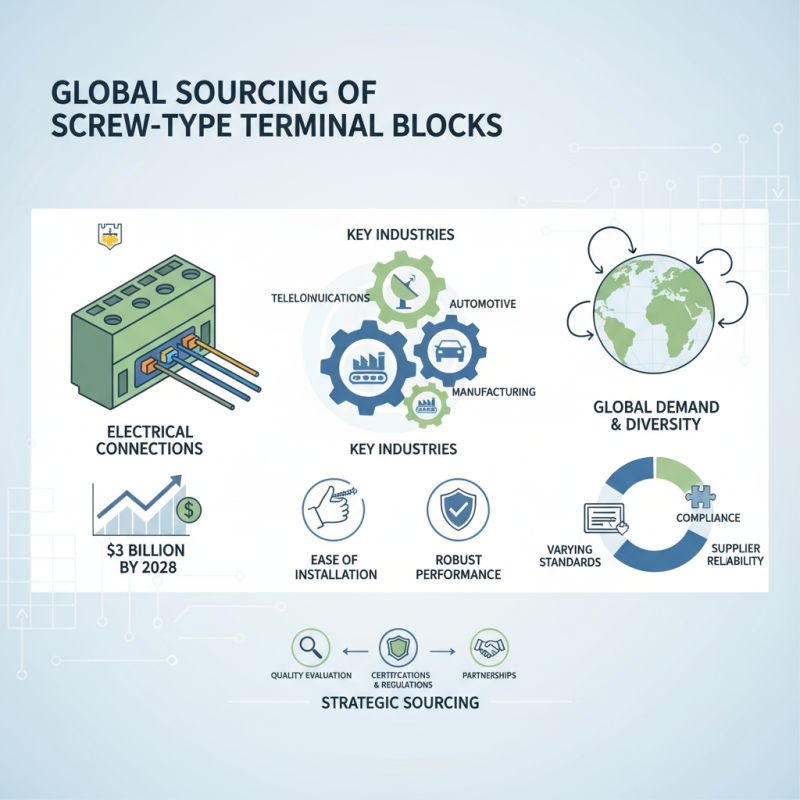
Screw-Type Terminal Blocks are essential components in electrical connections. They provide secure and reliable connections in various applications. The global demand for these blocks is growing, with the market expected to reach USD 3 billion by 2028, according to industry reports.
In a world driven by increasing automation, the need for reliable electrical components is paramount. Screw-Type Terminal Blocks offer advantages such as ease of installation and robust performance. They are widely used across industries including telecommunications, automotive, and manufacturing. However, sourcing the right blocks can be challenging. Quality and compliance standards vary significantly across different regions.
Manufacturers and suppliers must navigate these complexities while creating solutions that meet diverse needs. Selecting quality products from reputable sources enhances reliability and performance. It is vital to consider industry-specific certifications and local regulations when sourcing Screw-Type Terminal Blocks. This process can be overwhelming, as not all suppliers provide consistent quality. Addressing these issues requires careful evaluation and strategic partnerships.
Understanding Screw Type Terminal Blocks and Their Applications
Screw type terminal blocks play a crucial role in the electrical connection landscape. They provide reliable solutions for various applications, including industrial machinery, automotive systems, and control panels. According to industry reports, the global terminal block market is projected to reach USD 4.3 billion by 2025, growing at a CAGR of 5.4%. This highlights the increasing reliance on such components in modern electrical setups.
These terminal blocks offer flexibility in wiring connections and maintenance. Their design allows for easy installation and replacement, thereby reducing downtime. Additionally, they facilitate secure connections that ensure safety and efficiency. Some key applications include power distribution systems and electronic devices. However, selecting the right terminal block requires a nuanced understanding of environmental conditions and electrical specifications. A poor choice can lead to inefficiencies or safety hazards.
Tips: Always consider the current and voltage ratings of terminal blocks. Match them carefully with your application requirements. It can be tempting to opt for lower-priced options, but this may compromise reliability. Regular inspections can also identify wear or damage before they lead to significant issues. Prioritize quality to ensure long-term performance.
Key Features and Specifications of Screw Type Terminal Blocks
Screw-type terminal blocks are essential in electrical connections. They are known for their robust design and reliable performance. When sourcing these components globally, understanding their key features and specifications is vital.
One significant aspect is the conductor size. Most screw-type terminal blocks accommodate a wide range of wire diameters, typically from 0.5mm² to 10mm². Reports show that connectors supporting larger sizes often provide better conductivity and less heat generation. Another critical specification is the maximum voltage and current ratings. Commonly, these blocks are rated at 600V and 35A, making them suitable for various applications.
Material choice also affects performance. Terminal blocks are often made from thermoplastic materials that resist high temperatures. This durability is crucial in industrial settings. Reports suggest that nearly 80% of electrical failures can be traced back to poor connections. Hence, sourcing high-quality screw-type terminal blocks can prevent operational issues. However, it is essential to consider regional compliance and certification standards when sourcing globally. Knowledge of these features can help ensure the right choice.
Global Sourcing Considerations for Screw Terminal Block Suppliers
When considering screw terminal blocks for global sourcing, multiple factors come into play. The global market for terminal blocks is projected to grow significantly, with reports estimating a compound annual growth rate (CAGR) of 5.1% from 2022 to 2028. This growth is largely driven by increasing automation and expanding infrastructure projects. Suppliers need to assess regional demands keenly, as preferences can vary widely across markets.
Logistics can be a challenge. Shipping costs and lead times directly affect procurement efficiency. An analysis from an industry report highlights that 30% of suppliers face delays in international shipments, impacting production schedules. It’s crucial for sourcing teams to build relationships with local and reliable logistics providers to mitigate these risks. Evaluating suppliers based on their logistical capabilities should be a priority.
Quality assurance is another vital aspect. The certification process for terminal blocks can differ from one region to another. Compliance with local and international standards is non-negotiable. Statistics indicate that nearly 20% of returned products are due to quality inconsistencies. Regular audits and clear communication with suppliers can help improve product consistency. It is essential to incorporate feedback loops to identify and rectify recurring quality issues.
Screw Type Terminal Blocks - Global Sourcing Considerations
Quality Standards and Certifications in Terminal Block Procurement
When sourcing screw type terminal blocks, understanding quality standards and certifications is crucial. The International Electrotechnical Commission (IEC) outlines relevant standards such as IEC 60998, which governs connections, and IEC 61076 for connectors. These standards ensure reliability and safety in electrical applications. In a recent industry report, 78% of procurement specialists emphasized that compliance with these standards is non-negotiable.
In a global market, quality certifications like UL and CE play a significant role. They provide assurance that products meet safety regulations. Certain regions may require specific certifications due to local regulations. For instance, certifications can impact how products are accepted in Europe versus North America. This complexity requires sourcing teams to stay well-informed.
Tips for successful sourcing: always verify certification authenticity before purchase. Review supplier history to ensure a consistent compliance record. Consider potential language barriers in documentation that may lead to misinterpretation. Remember that while standards exist, not all suppliers may adhere strictly to them. Keep an eye on evolving regulations and be prepared to adjust your sourcing strategy accordingly.
Screw Type Terminal Blocks - Quality Standards and Certifications
| Dimension | Standard/Certification | Description | Importance |
| Wire Size Range | UL 1059 | Defines the wire size specifications for terminal blocks. | Ensures compatibility with various wire gauges. |
| Current Rating | IEC 60947-7 | Specifications for safe current carrying capabilities. | Safety and reliability during operation. |
| Material Composition | RoHS Compliant | Regulations restricting hazardous substances. | Environmental safety and compliance. |
| Voltage Rating | IEC 60950 | Standards for electrical safety in devices. | Prevents electrical hazards and ensure safe usage. |
| Temperature Rating | UL 94 | Standards for flammability of plastics. | Safety in thermal conditions during operation. |
Common Mistakes to Avoid When Sourcing Screw Type Terminal Blocks
When sourcing screw type terminal blocks, many buyers overlook critical aspects that can lead to costly mistakes. One common error is neglecting to verify the specifications. Data from the International Electrotechnical Commission shows that 30% of sourcing failures stem from mismatched specifications. Buyers can face increased returns and delays due to incompatibility with existing systems.
Another frequent pitfall is the lack of supplier audits. Inadequate research can lead to partnerships with unreliable manufacturers. A report by the Electronics Industry Association indicates that 25% of suppliers fail to meet basic quality standards. This situation can result in significant operational disruptions and financial losses.
Buyers should also be cautious about pricing. While low costs can be tempting, they may indicate corners being cut in quality or compliance. According to industry benchmarks, a 15% increase in sourcing costs often correlates with a 40% drop in failure rates. This trade-off is crucial for long-term stability and reliability. Ensuring due diligence will pave the way for better outcomes in sourcing screw type terminal blocks.