
Choosing a Float Glass Machine manufacturer in China takes more than comparing prices or factory photos. A float line is a chain of demanding stages: melting, refining, tin-bath forming, annealing, cutting, and handling. Weak coordination between stages can create visible defects, unstable output, or costly downtime. Small details matter. A burner’s control range, a lehr’s temperature uniformity, and the reliability of edge inspection can shape daily performance.
Manufacturing-quality expert W. Edwards Deming wrote, “Quality comes not from inspection, but from improvement of the production process.” That principle offers a useful lens for assessing equipment suppliers. This guide introduces ten Chinese manufacturers and considers their capabilities, product focus, engineering support, and suitability for different project scales. It is not an official ranking, and company information can change. Buyers should verify technical specifications, references, commissioning support, and spare-parts availability directly. Ask for evidence from operating lines, not only polished brochures. Look closely. A strong quotation may still leave gaps in automation scope, energy performance, or after-sales service. No list can remove that uncertainty. It can, however, help readers ask sharper questions before choosing a supplier.
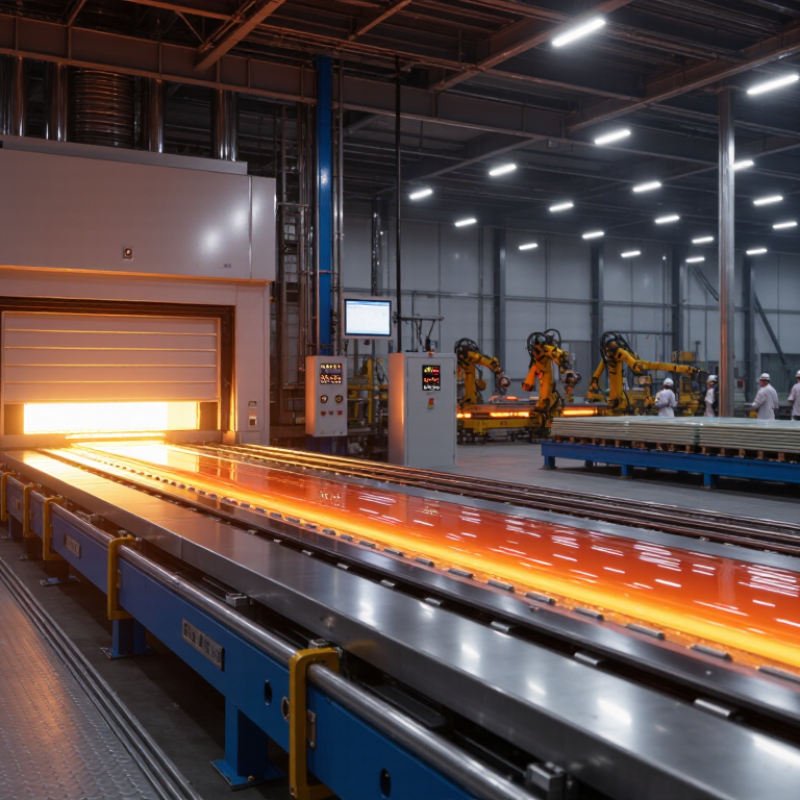
A float glass line transforms a measured blend of silica sand, soda ash, limestone, and recycled glass into a continuous sheet. In the furnace, intense heat melts the batch and helps bubbles rise out. The refined glass then flows onto a bath of molten tin. It spreads evenly because glass is less dense than tin. Small changes matter. A controlled nitrogen-hydrogen atmosphere protects the tin surface from oxidation while the glass ribbon forms.
Machine controls regulate temperature, ribbon speed, and thickness. Edge rollers can guide the ribbon, while sensors monitor its dimensions as it travels. The hot sheet then enters an annealing lehr, a long tunnel with carefully managed cooling zones. This gradual cooling reduces internal stress and helps prevent cracking during cutting. Cameras and gauges can identify bubbles, stones, or uneven thickness, but inspection is not infallible. A drifting temperature or worn refractory lining may affect quality before a clear defect appears. Automation improves consistency; operators still need to interpret unusual changes in the process.
Float glass production depends on a coordinated line, not one standalone machine. Batch-house equipment weighs and blends silica sand, soda ash, limestone, and recycled cullet. Conveyors carry the mix into a furnace, where controlled heat melts it into a uniform glass melt.
Temperature stability matters. Even small fluctuations can affect viscosity and sheet quality.
The molten glass then flows across a bath of liquid tin, forming a flat ribbon. Protective gas controls help limit oxidation, while rollers regulate ribbon thickness and speed. At the lehr, gradual cooling relieves internal stress and reduces the risk of breakage during handling.
Cooling must be even. Downstream inspection systems detect bubbles, stones, and surface defects before cutting equipment divides the ribbon into sheets.
Process sensors and control systems help operators track temperatures, flow rates, and line speed. Yet automation cannot correct every unstable batch or worn component.
Equipment selection should reflect target thickness, output, maintenance capacity, and the quality of incoming raw materials. A line may look efficient on paper, but actual performance depends on careful commissioning and steady operating discipline.
Assessing China’s float glass machine manufacturers requires more than comparing quoted prices. Examine the proposed line as a complete process, from batch feeding and melting to the tin bath, annealing lehr, and inspection systems. Ask for capacity figures alongside glass thickness, width, fuel use, and expected operating hours. Check whether these figures describe a real installation or only a design target. The difference matters. Request process drawings, equipment specifications, and references from plants producing comparable glass. A polished brochure is not proof.
During technical discussions, ask how temperature variation, ribbon stability, and product defects are monitored. Confirm which components are made in-house and which depend on outside suppliers. Review commissioning plans, operator training, spare-parts availability, and response times for remote support. If possible, inspect a running line and look closely at control screens, maintenance access, and the condition of high-temperature areas. No checklist is perfect. Even a factory visit may reveal only one operating shift, so ask how performance changes over time. Compare answers in writing, and note unclear assumptions before signing any technical agreement.
China’s float-glass equipment makers serve a large production base. The National Bureau of Statistics reported 969.01 million weight cases of flat-glass output in 2023. That figure indicates scale, but it does not measure machine quality or supplier performance. The ten manufacturer profiles are more useful when read as capability snapshots, not a strict ranking.
Their strengths can be compared across ten practical areas: batch preparation, furnace design, tin-bath control, annealing lehrs, cutting lines, inspection systems, automation, heat recovery, commissioning, and retrofit support. On site, details matter: stable ribbon temperature, clean edges, and fewer unplanned stops. Small details matter. A supplier’s engineering drawings and commissioning records can reveal more than broad capacity claims.
The figures need context. National output data is not a direct measure of equipment orders, efficiency, or service quality. A factory visit can clarify these points, though one visit cannot represent every operating condition. Buyers should examine energy use per tonne, line availability, spare-part lead times, and the precision of temperature controls. The comparison may still be imperfect. Publicly available information rarely supports identical, side-by-side checks across all ten profiles.
Comparing ten float glass machine manufacturers requires more than checking quoted furnace output. Product scope matters: batch preparation, melting, tin bath, annealing, cutting, inspection, and handling must operate as one coordinated line. The European Commission’s 2013 Best Available Techniques Reference Document for the Manufacture of Glass reports float-furnace capacities broadly around 300–1,000 tonnes per day. That is a wide range. Buyers should check whether a supplier’s stated capacity matches their glass thickness, product mix, and expected yield. A larger figure alone proves little.
Compare technical capability through measurable items: line speed, thickness control, defect detection, energy use per tonne, and commissioning support. The UNEP and GlobalABC 2023 Global Status Report says buildings account for 34% of global energy demand and 37% of energy- and process-related carbon emissions. That makes furnace efficiency and reliable process control commercially relevant, not just environmental claims. Ask for test results, operating assumptions, and references from comparable lines. Service matters too: spare-parts lead times, remote diagnostics, operator training, and on-site response can decide whether a small fault becomes costly downtime. One caveat: brochures rarely show the full learning curve. Compare evidence, not promises.
Standard float-glass product thicknesses provide a useful reference for comparing equipment capabilities. The chart shows nominal thickness options in millimeters; it does not represent verified specifications or rankings for individual manufacturers.
Common nominal thickness options include 2, 3, 4, 5, 6, 8, 10, 12, 15, and 19 mm. Actual product ranges depend on the production line and manufacturer.