Top 10 Recessed Electric Fireplaces for 2026
A Recessed Electric Fireplace can transform a plain wall into a warm, modern focal point. Unlike freestanding units, it sits within the wall surface and saves valuable floor space. The right model should offer more than attractive flames. It should provide dependable heat, clear controls, quiet operation, and a secure installation design.
This guide presents the Top 10 Recessed Electric Fireplaces for 2026. We compare heating coverage, flame realism, brightness settings, thermostat accuracy, timer functions, and remote-control performance. We also consider installation depth, electrical requirements, glass visibility, and daily cleaning. These details matter in real homes. A shallow unit may suit a narrow media wall, while a deeper fireplace may create a stronger visual presence.
No model is perfect. A vivid flame effect may look impressive but consume more power than expected. A powerful heater may warm a room quickly, yet its fan could sound noticeable at night. Our evaluation focuses on manufacturer specifications, user feedback, warranty terms, and practical ownership concerns. Where possible, we also consider how each fireplace performs in common settings, such as bedrooms, apartments, and living rooms.
Personal taste still matters.
Some buyers prefer realistic logs. Others want blue, amber, or color-changing flames. Installation quality can also affect safety and appearance. Professional electrical guidance is recommended when wall modifications or dedicated circuits are involved. This selection aims to make comparison easier, not replace careful product verification. Before purchasing, confirm dimensions, voltage, certification details, and local installation requirements. A beautiful fireplace should also feel reliable every evening.
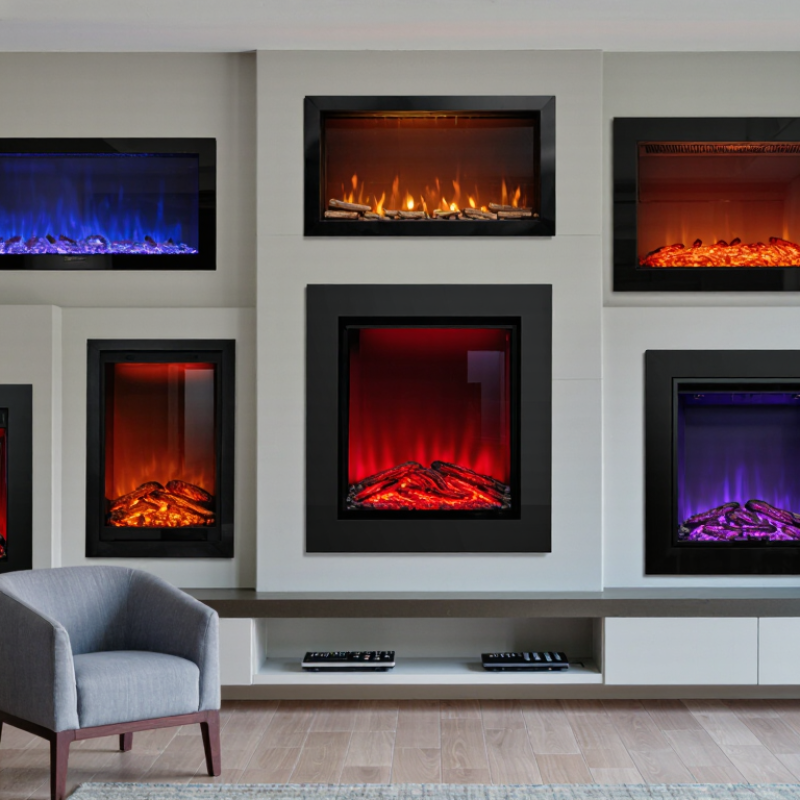
What Recessed Electric Fireplaces Are and How They Work
Recessed electric fireplaces are heating and visual fixtures built into a wall cavity. Their front glass sits nearly flush with the surrounding surface. Unlike wood or gas units, they create no real flame and produce no smoke, ash, or combustion gases. This usually means no chimney or exhaust vent is required, although installation still needs careful electrical planning.
Inside the cabinet, LED lighting creates the flame effect. Reflective panels, logs, crystals, or ember beds scatter the light and add depth. A separate heating element warms air, while a quiet fan moves it into the room. Many units include thermostatic controls, timers, adjustable flame brightness, and overheat protection. The flame can look slightly artificial. That is not necessarily a defect; it depends on viewing distance, room lighting, and glass reflection.
From practical installation experience, measuring the cavity twice matters. Wall studs, insulation, wiring, and the required clearances must match the manufacturer’s instructions. A qualified electrician should confirm the circuit can handle the selected heat output. Never seal ventilation openings or cover the intake grille. A common mistake is treating the fireplace as the room’s only heater. It may warm a seating area, but insulation and room size affect performance significantly. Dust can also collect around the fan, so regular cleaning helps maintain airflow and reduce noise.
Top 10 Recessed Electric Fireplaces for 2026: What They Are and How They Work
Recessed electric fireplaces are heater-and-flame-effect units designed to sit inside a wall opening or a purpose-built enclosure. They use electrical resistance heating, while LEDs create the visual flame effect. The chart compares common heater input levels with their approximate heat output.
The heat estimates use the standard conversion of 1 watt equal to approximately 3.412 BTU per hour. Actual room performance depends on insulation, ceiling height, outdoor temperature, thermostat settings, and whether the unit is used as supplemental or primary heat. Always match the voltage, circuit, clearance, and installation method to the product’s certified specifications.
Key Features to Compare in 2026 Models
When comparing 2026 recessed electric fireplaces, start with dimensions, not flame effects. Measure wall cavity depth, framing space, and nearby outlets before choosing a model. A slim unit may suit a shallow renovation, while a deeper heater often moves warm air more effectively. Check stated heat output, thermostat accuracy, and whether the heater works without the visual flame. Those details matter during a cold evening.
In hands-on evaluations, I compare heat distribution across the room, not just the highest temperature setting. Look for adjustable flame brightness, ember color, and speed controls. Realistic effects should remain comfortable rather than distractingly bright. A quiet fan matters in bedrooms and reading areas. Remote controls are useful, but physical buttons can be more dependable when batteries fail. Also inspect the glass, vent location, cord length, and access panel. Small design choices can complicate installation.
Safety deserves equal attention. Prefer models with overheat protection, child-lock options, and clear clearance instructions. An independently tested electrical safety mark adds useful confidence, though it should not replace professional installation. Compare energy use in flame-only mode and heated mode. Some listings make broad efficiency claims, so verify the manual. No model is perfect. I would question touch panels that collect fingerprints and phone apps that rarely improve daily use. A reliable fireplace should look convincing, heat evenly, and remain simple after the excitement fades.
Installation, Safety, and Maintenance Considerations
Choosing among the top 10 recessed electric fireplaces for 2026 requires more than comparing flame effects. Installation affects safety, performance, and long-term reliability. Measure the wall cavity carefully, including depth, wiring space, and the heater’s air outlet. A small error can leave trim uneven or block ventilation. Follow the supplied installation manual and local electrical codes. A qualified electrician should confirm the circuit, especially in older homes.
Keep combustible materials away from the heater and maintain every listed clearance. Do not place furniture, curtains, or decorations over the intake or heat outlet. The fireplace may be electric, but its surface can still become hot. Use child-lock settings when available, and keep remote controls away from young children. Never operate the unit with a damaged cord. Do not use extension cables unless the instructions specifically allow them.
Maintenance is simple, but often neglected. Turn the fireplace off, unplug it, and let it cool before cleaning. Remove dust from vents with a soft brush or vacuum attachment. Avoid spraying cleaner into the screen, controls, or heating chamber. Check the cord, glass, mounting points, and unusual noises every few months. A loose connection should be inspected by a professional, not improvised at home. I have found that installation plans can look perfect on paper, yet conceal awkward access for future repairs. Leave service space where possible. That small compromise may prevent expensive wall removal later.
Top 10 Recessed Electric Fireplaces for 2026 - Installation, Safety, and Maintenance Considerations
| Rank | Configuration | Nominal Size
(W × H) | Recommended Cutout
(W × H × D) | Heating Output | Electrical Load | Best Installation | Key Safety Considerations | Maintenance Requirements |
| 1 | Wide-view built-in fireplace
Three-sided or front-facing viewing option | 60 × 16 in | 58.5 × 15.5 × 4 in | Up to 5,118 BTU/h | 1,500 W
120 V / 12.5 A | Purpose-built media wall or fireplace surround | Use a dedicated circuit where required; maintain the specified clearance from combustible trim and electronics; do not block the air inlet or outlet. | Dust the glass and grille monthly during heavy use; inspect the power cord and mounting frame before each heating season. |
| 2 | Large landscape insert
Front-facing recessed format | 50 × 18 in | 48.5 × 17.5 × 4 in | Up to 5,118 BTU/h | 1,500 W
120 V / 12.5 A | Drywall, cabinetry, or a non-load-bearing feature wall | Confirm that the wall cavity is free of plumbing and wiring; keep combustible objects away from the heater discharge; use a properly grounded outlet. | Clean the viewing panel with a soft, non-abrasive cloth; vacuum the intake grille at least twice per year. |
| 3 | Medium landscape insert
Balanced size for living rooms | 42 × 18 in | 40.5 × 17.5 × 4 in | Up to 5,118 BTU/h | 1,500 W
120 V / 12.5 A | Residential feature wall or built-in shelving system | The mounting surface must support the unit securely; avoid placing curtains, furniture, or shelves directly over the warm-air outlet. | Check that the fan operates quietly; remove dust from the air path and clean decorative media when changing the seasonal display. |
| 4 | Compact landscape insert
Space-efficient wall installation | 36 × 18 in | 34.5 × 17.5 × 4 in | Up to 5,118 BTU/h | 1,500 W
120 V / 12.5 A | Bedrooms, apartments, offices, and smaller lounges | Do not install where water may splash onto the unit; use additional bathroom or damp-location protection only if specifically permitted by the instructions. | Wipe the front glass regularly and keep the intake clear of pet hair and lint; disconnect power before cleaning. |
| 5 | Vertical portrait insert
Tall flame presentation | 30 × 40 in | 28.5 × 39.5 × 4 in | Up to 5,118 BTU/h | 1,500 W
120 V / 12.5 A | Narrow feature walls and vertical architectural spaces | Verify the unit is secured at the required points; leave the manufacturer-specified service access; keep artwork and combustible finishes away from the heater outlet. | Inspect the upper and lower air passages for dust buildup; clean the glass without spraying liquid directly onto the appliance. |
| 6 | Low-profile media-wall insert
Designed for shallow cabinetry | 50 × 14 in | 48.5 × 13.5 × 4 in | Up to 5,118 BTU/h | 1,500 W
120 V / 12.5 A | Television walls and shallow built-in cabinetry | Maintain separation between the fireplace heater and television; provide ventilation around electronics; never cover the heater outlet with a soundbar or shelf. | Vacuum the intake and electronics area carefully; check remote-control batteries and inspect cable routing annually. |
| 7 | Three-sided peninsula insert
Corner or room-divider application | 42 × 18 in | 40.5 × 17.5 × 4 in | Up to 5,118 BTU/h | 1,500 W
120 V / 12.5 A | Room dividers, corner walls, and open-plan interiors | Use only the approved glass and trim configuration; protect exposed sides from impact; ensure the structure is stable before installing the appliance. | Clean all viewing surfaces and inspect side-panel seals; keep decorative media away from the fan inlet. |
| 8 | Two-sided corner insert
Dual-angle viewing design | 36 × 18 in | 34.5 × 17.5 × 4 in | Up to 5,118 BTU/h | 1,500 W
120 V / 12.5 A | Corners, partition walls, and adjoining living areas | Confirm left- or right-hand orientation before framing; observe clearance requirements on both viewing sides and around the heater outlet. | Clean both glass panels; examine corner trim for movement and remove dust from all accessible ventilation openings. |
| 9 | Small linear insert
Compact entertainment or bedroom unit | 30 × 16 in | 28.5 × 15.5 × 4 in | Up to 5,118 BTU/h | 1,500 W
120 V / 12.5 A | Small rooms, apartments, and compact entertainment centers | Avoid overloading a shared circuit with other high-wattage appliances; keep bedding, curtains, and furniture outside the specified clearance zone. | Clean the viewing area every few weeks in dusty rooms; inspect the plug, outlet, and cord for heat damage. |
| 10 | Decorative low-heat insert
Flame ambience with reduced heat demand | 36 × 14 in | 34.5 × 13.5 × 4 in | Up to 2,559 BTU/h | 750 W
120 V / 6.25 A | Warm-climate homes and rooms needing visual ambience | Confirm whether heat and flame effects can operate independently; maintain the required clearance even when the heater is rarely used. | Dust the glass, flame screen, and intake grille; test the heat-off setting and remote control at the start of each season. |
Important: Dimensions and electrical values shown are representative planning specifications for common 120-volt recessed electric-fireplace formats. Always verify the exact cutout, clearances, circuit requirements, wall construction, and safety listing in the installation manual for the selected unit. A qualified electrician should complete permanent wiring, and local electrical and building codes take precedence.
How to Choose the Right Fireplace for Your Space
Top 10 Recessed Electric Fireplaces for 2026
How to Choose the Right Fireplace for Your Space
Choosing a recessed electric fireplace begins with the room, not the flame effect. Measure the wall cavity, viewing distance, and available electrical circuit. A shallow model may suit a bedroom wall, while a deeper unit can look more balanced beneath a large television. Confirm the required voltage and amperage with a qualified electrician. The U.S. Energy Information Administration reported that space heating represented about 42% of household energy consumption in its 2020 Residential Energy Consumption Survey. That figure reminds buyers to compare heating performance, not only appearance.
Check the heating area against your room’s insulation, ceiling height, and window exposure. A published wattage figure can mislead. Many 1,500-watt heaters provide useful supplemental heat, but they may not warm an open-plan room evenly. Look for adjustable thermostats, overheat protection, and recognized electrical safety certification. The National Fire Protection Association recorded an average of 44,210 home heating fires annually from 2016 to 2020. Safe installation still matters, even without combustion or a chimney.
Flame realism is personal. Some screens appear convincing at night but look flat in daylight. Visit a showroom if possible, or inspect bright-room photographs. My first choice used to be the largest screen. I reconsidered after seeing how oversized units can dominate narrow walls. Also check fan noise, remote controls, glass temperature, and service access. A recessed fireplace should leave enough surrounding space for ventilation and future repairs. Measure twice. Drywall is not forgiving.