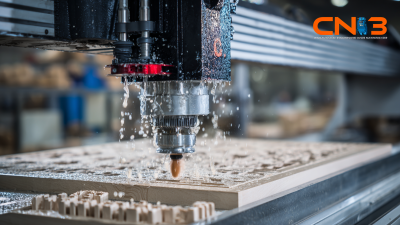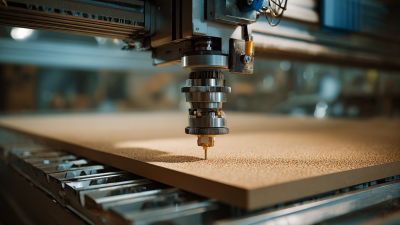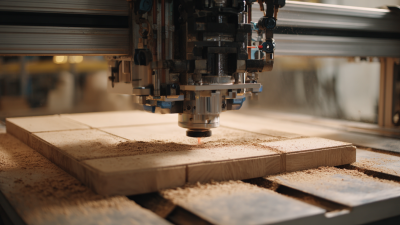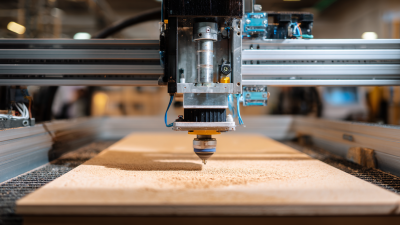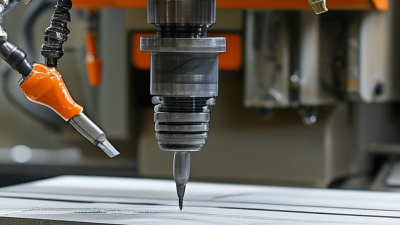
Choosing the right CNC router can feel confusing, especially when machines look similar in online photographs. A compact desktop model may fit a workshop corner, while a large gantry machine can handle full plywood sheets. Their cutting capacity, spindle power, software compatibility, and maintenance needs differ significantly. This guide explores the top 10 types of CNC routers and explains where each machine performs best.
A CNC router is more than a computer-controlled cutting tool. It is a production system involving motion accuracy, tooling, workholding, dust extraction, and operator judgment. Some routers suit delicate engraving on acrylic, while others are built for hardwood furniture, aluminum panels, or repeated commercial production. The right choice depends on material thickness, workspace, budget, expected workload, and required surface quality. Small details matter.
The categories in this guide are not perfectly separate. A machine may be desktop-sized, gantry-based, and designed for 3D carving at the same time. That overlap can make comparisons imperfect, but it reflects real workshop conditions. Based on practical use, common industry configurations, and manufacturer specifications, the following overview compares their strengths, limitations, and typical applications. It also highlights factors buyers sometimes overlook, such as spindle cooling, vacuum-table performance, tool-change speed, and after-sales support. A lower purchase price may become expensive when alignment problems or unsuitable software slow production. Reliability matters.
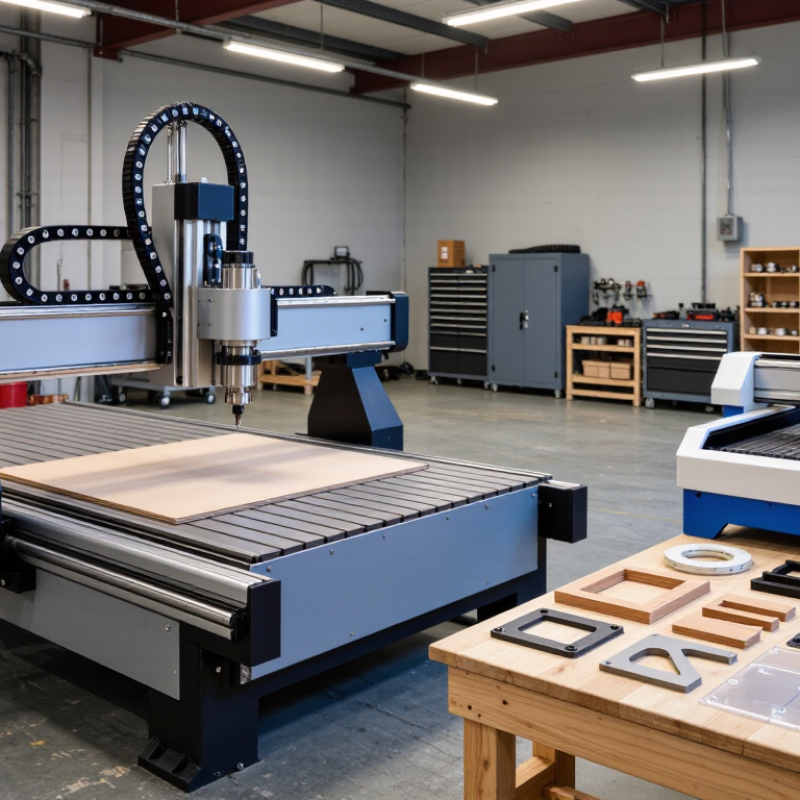
CNC routers should be classified by more than appearance. On a workshop floor, axis movement, cutting material, bed size, spindle power, and automation reveal real differences. The ten useful categories are 3-axis, 4-axis, 5-axis, desktop, gantry, nesting, ATC, wood, stone, and aluminum routers. These categories overlap. That is important. A nesting router may also be a gantry router with automatic tool changing.
Axis count is the clearest technical criterion. Three-axis machines handle flat panels and signs efficiently. Four-axis models can rotate workpieces for cylindrical cuts. Five-axis systems reach angled surfaces and complex molds. However, extra axes increase programming demands and maintenance points. Many small workshops buy capability they rarely use. That is not always a wise investment.
Material and workflow provide stronger buying evidence. Wood routers need clean chip extraction and stable feed control. Stone routers require water management, rigid frames, and suitable cooling. Aluminum cutting demands low vibration and careful spindle speed control. Desktop models suit prototypes, while large gantry machines support furniture panels. According to Grand View Research’s 2024 CNC machine market analysis, the broader market exceeds 80 billion U.S. dollars, with automation supporting continued growth. MarketsandMarkets also reports steady CNC market expansion through 2028. Yet market growth does not guarantee fit. In practice, dust control, operator skill, service access, and daily workload often matter more than advertised speed.
Desktop and benchtop CNC routers are two practical categories among the top ten CNC router types. Desktop models fit beside a computer and usually serve hobbyists, students, and small studios. They handle signs, panels, acrylic sheets, and light engraving with modest power. Space matters. Their compact frames are convenient, but limited work areas can restrict larger projects.
Benchtop CNC routers offer more rigidity and a larger cutting surface. In workshop testing, that extra mass reduced vibration during deeper passes in hardwood and plastics. Many models use threaded lead screws or ball screws for controlled movement. A stable spoilboard is essential. It supports accurate workholding and protects the machine table. Dust collection also deserves attention, especially when cutting wood for long periods.
The machine should match the material, not the operator’s ambition. Soft aluminum may be possible on a rigid benchtop router, but shallow passes and careful cooling are often necessary. A lightweight desktop machine may struggle with chatter, even when its spindle appears powerful. I once underestimated frame flex on a small project and had to repeat several cuts. That mistake was useful. Check the usable cutting area, spindle speed range, collet quality, emergency stop, and calibration process before buying. Manufacturer specifications help, but real rigidity and setup quality often decide the final surface finish.
Among the top ten CNC router types, gantry and three-axis models are widely used in workshops. A gantry router uses a bridge-like frame that moves across the cutting table. This structure improves rigidity during long cuts. It also supports larger workpieces, such as cabinet panels, signs, and foam molds. In practical use, frame stiffness matters as much as motor power.
A 3-axis CNC router moves along the X, Y, and Z axes. It can cut flat sheets, drill holes, engrave surfaces, and shape simple edges. These machines suit wood, plastic, composite boards, and some soft metals. Their programming is usually easier than multi-axis machining. However, a three-axis model cannot reach every angle on a complex curved part. That limitation appears quickly in detailed production work.
These categories can overlap. Many gantry routers are also three-axis machines. The gantry describes the frame, while three-axis describes movement. Buyers should check table size, spindle speed, drive accuracy, dust control, and software compatibility. A heavy frame may reduce vibration, but it can increase cost and installation demands. A compact router saves floor space, yet its cutting area may feel restrictive later. I would not choose by advertised power alone. Test cuts reveal more. Watch the edge quality, heat marks, noise, and repeated positioning accuracy before committing to a machine.
Among the top 10 types of CNC routers, 4-axis and 5-axis models handle complex work more efficiently. A 4-axis router adds a rotary axis, often called the A-axis, around the X-axis. It can cut cylindrical parts, curved panels, and spiral grooves with fewer repositioning steps. This reduces setup time and keeps repeated features more consistent. However, the rotary fixture needs accurate alignment. A small offset can create visible ridges along the finished surface.
Tips: Choose a 4-axis router when your projects include columns, tubes, or repeated parts around a central axis. Check the machine’s working diameter before ordering. Test the rotary axis with a simple waste piece. It is cheaper than discovering a clearance problem later.
A 5-axis CNC router moves the cutting tool or workpiece along five coordinated axes. It can reach angled surfaces, deep pockets, and undercuts without turning the material manually. Fewer setups can improve accuracy and reduce tool marks. Still, 5-axis machining demands careful CAM programming, collision checking, and tool-length measurement. More movement does not guarantee better results. An experienced operator must balance cutting speed, tool angle, rigidity, and dust control. In some workshops, a well-calibrated 4-axis machine produces cleaner parts than a poorly planned 5-axis job. The overlooked detail is often workholding.
| Rank | CNC Router Type | Typical Axes | Primary Cutting Materials | Typical Work Area | Best-Suited Applications | Main Advantages | Key Limitations |
|---|---|---|---|---|---|---|---|
| 1 | 3-Axis Gantry CNC Router | X, Y, Z | Wood, plastic, acrylic, MDF, composites, and soft non-ferrous metals | 600 × 900 mm to 2,000 × 4,000 mm | Cabinet making, furniture components, signage, panels, and general fabrication | Simple programming, broad material compatibility, and relatively low operating cost | Cannot machine complex undercuts or continuously rotate around a workpiece |
| 2 | 4-Axis CNC Router | X, Y, Z, A | Wood, foam, plastic, composites, and some aluminum applications | 600 × 900 mm to 1,500 × 3,000 mm | Rotary carving, columns, chair legs, cylindrical parts, and indexed multi-face machining | Machines multiple sides of a part and supports rotary work without several manual setups | More complex toolpaths and generally less access to compound surfaces than a 5-axis machine |
| 3 | 5-Axis CNC Router | X, Y, Z, A, B or C | Wood, plastics, foam, composites, aluminum, and model-making materials | 1,000 × 2,000 mm to 2,500 × 6,000 mm | Aerospace patterns, molds, sculptures, boat parts, automotive components, and compound surfaces | Excellent access to angled surfaces, fewer setups, and efficient complex-surface machining | Higher purchase cost, advanced CAM requirements, and more demanding operator training |
| 4 | Desktop CNC Router | Usually 3-axis | Wood, PCB materials, plastics, acrylic, wax, and thin aluminum | 300 × 300 mm to 900 × 600 mm | Prototyping, education, hobby projects, small signs, and product development | Compact footprint, lower power requirements, and accessible learning curve | Limited cutting depth, smaller work envelope, and lower production throughput |
| 5 | ATC CNC Router | Usually 3-axis or 4-axis | Wood, MDF, plywood, plastics, composites, and non-ferrous metals | 1,300 × 2,500 mm to 2,000 × 4,000 mm | High-volume panel processing, nested cabinet production, and repetitive machining | Automatic tool changes reduce setup time and improve production consistency | Costs more than a manual-tool machine and requires tool libraries and maintenance |
| 6 | Nesting CNC Router | Typically 3-axis | Sheet goods such as plywood, MDF, particleboard, laminates, and plastics | 1,220 × 2,440 mm to 2,100 × 3,700 mm | Cabinet parts, office furniture, retail fixtures, and optimized sheet cutting | Reduces material waste through nesting software and supports highly repeatable production | Primarily optimized for sheet materials and requires effective vacuum workholding |
| 7 | Rotary CNC Router | 3-axis with a rotary A-axis | Wood, foam, plastic, wax, and selected soft metals | Rotary diameters of approximately 100–500 mm | Spindles, balusters, posts, table legs, cylindrical signs, and decorative columns | Designed for efficient cylindrical and radial machining | Workpiece diameter and length are restricted by the rotary attachment or rotary bed |
| 8 | Stone CNC Router | Usually 3-axis or 4-axis | Granite, marble, quartz, engineered stone, ceramic, and glass | 1,300 × 2,500 mm to 2,000 × 4,000 mm | Countertops, monuments, sink cutouts, stone lettering, and architectural elements | Uses rigid construction, water cooling, and diamond tooling for hard materials | Requires slurry management, corrosion protection, specialized tooling, and strong workholding |
| 9 | Foam CNC Router | 3-axis or 5-axis | EPS, XPS, polyurethane foam, modeling board, and lightweight composites | 1,000 × 2,000 mm to 3,000 × 8,000 mm | Large molds, architectural models, prototypes, props, and pattern making | Large cutting volumes, fast material removal, and suitability for lightweight materials | Foam dust control is necessary, and the machine is not intended for heavy metal cutting |
| 10 | Hybrid CNC Router | Usually 3-axis or 4-axis | Wood, plastics, composites, aluminum, and sheet materials | 1,300 × 2,500 mm to 2,000 × 4,000 mm | Mixed-material workshops requiring routing, drilling, engraving, or auxiliary cutting | Combines multiple fabrication processes in one work platform and saves floor space | Configuration, maintenance, and programming can be more complex than with a dedicated router |
Note: Work areas, axis configurations, material capabilities, and performance ranges vary by machine design, spindle power, tooling, and application requirements.
What Are the Top 10 Types of CNC Routers?
Among the ten major CNC router categories, ATC, nesting, stone, and foam routers serve especially different production needs. ATC routers use automatic tool changers, often holding 8–24 tools. They reduce manual pauses during cutting, drilling, engraving, and edge work. Nesting routers arrange cabinet parts across one sheet. This can improve material utilization by roughly 10–20%, depending on part geometry and cutting gaps. Grand View Research valued the global CNC machine market at approximately USD 83.8 billion in 2023. Its analysis identifies automation and productivity as major growth factors.
Stone CNC routers require rigid frames, water cooling, and dust-control planning. They commonly process granite, marble, quartz, and engineered surfaces. Foam routers use long knives, hot wires, or spindle cutters for molds, packaging, scenery, and prototypes. Their lower cutting resistance allows high speeds, but vibration can damage delicate contours. MarketsandMarkets projects the CNC machine market to reach about USD 128.9 billion by 2028. That figure supports automation, but it does not guarantee profit for every workshop. I would avoid ranking one router as universally best.
Tips: Match the router to the material first. Check spindle power, vacuum capacity, table size, tool storage, and software compatibility. For nesting, test real sheet layouts before estimating savings. For stone, inspect water recovery and slurry handling. For foam, verify cutter reach and surface finish on sample blocks. These small checks often reveal weaknesses that brochures hide.