10 Best Cable Lug Manufacturers for Global Buyers?

Choosing a dependable Cable Lug manufacturer is not a simple price comparison.

Global buyers must examine material quality, crimp performance, plating, tooling, testing, and delivery consistency. A copper lug may look excellent under warehouse lighting, yet fail after months of heat, vibration, moisture, or repeated thermal cycling. Small details matter. Barrel thickness matters. Hole accuracy matters. Even packaging can affect reliability.

Electrical connection specialist Dr. Peter Van den Bossche has emphasized, “A safe electrical connection depends on both sound design and correct installation.” This principle remains highly relevant when comparing international suppliers. A premium Cable Lug cannot compensate for poor crimping, incorrect die selection, or careless conductor preparation.

This guide reviews ten leading Cable Lug manufacturers for global buyers. It considers production experience, product range, quality systems, international support, customization, and application knowledge. The assessment covers copper, aluminum, bimetallic, tin-plated, and specialized termination products.

Not every manufacturer suits every project.

Some excel in utility networks. Others focus on industrial panels, renewable energy, rail systems, or demanding export markets. Certifications can support confidence, but they do not replace independent verification. Buyers should request test reports, traceability records, sample approvals, and clear installation guidance.

There is no perfect ranking.

A supplier with fast delivery may offer limited engineering support. Another may provide excellent technical service but require longer lead times. That trade-off deserves attention. This overview aims to provide a practical starting point, while encouraging buyers to verify specifications against their actual voltage, conductor, environment, and compliance requirements.
10 Best Cable Lug Manufacturers for Global Buyers?

What Are Cable Lugs and Why Do Global Buyers Need Reliable Manufacturers?

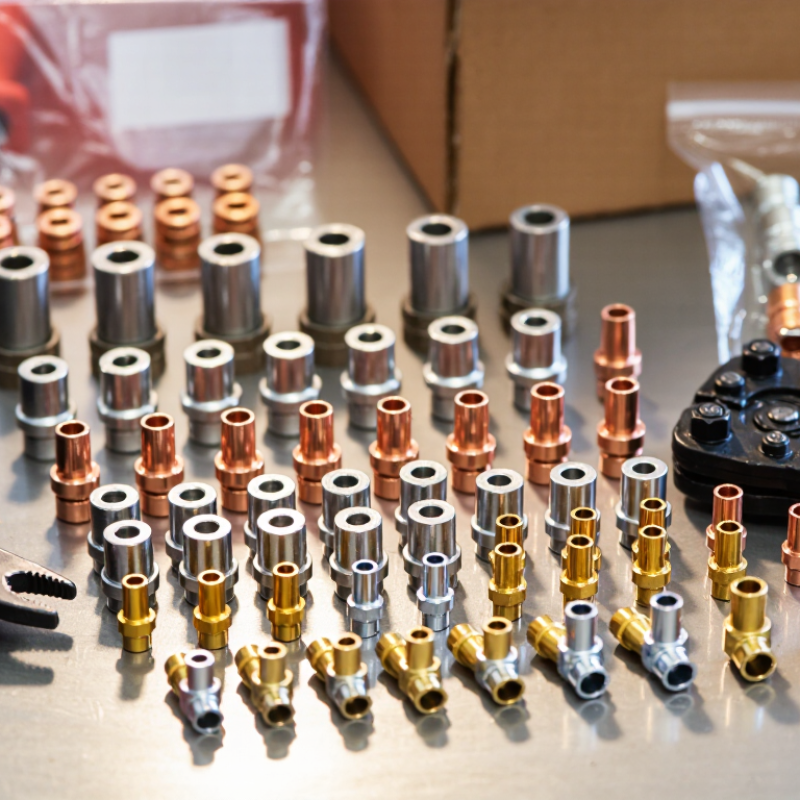
Cable lugs are conductive connectors that terminate cables onto busbars, switches, transformers, and circuit breakers. They create a stable electrical and mechanical connection. A poorly crimped lug can develop heat, loosen under vibration, or fail inside a crowded cabinet.

Global buyers need reliable manufacturers because electrical infrastructure is expanding quickly. IRENA’s Renewable Capacity Statistics 2024 reported 473 GW of renewable capacity additions in 2023. The IEA Electricity 2024 report also projected global electricity demand growth of about 4% in 2024. More projects mean more cable joints, often installed in humid ports, dusty substations, or exposed solar fields. Manufacturers should provide material certificates, dimensional records, batch traceability, and clear testing evidence. Compliance with standards such as IEC 61238-1 and UL 486A-486B can help buyers compare products across markets. Copper purity matters. So does plating thickness. A shiny surface alone proves very little. Field inspectors often check whether the barrel fits the cable, whether the crimp marks are consistent, and whether the terminal shows cracks after installation. Some purchasing teams focus too heavily on unit price. That is understandable, but it can hide replacement labor, downtime, and thermal failures. No checklist is perfect. Even experienced buyers should question unclear test reports, vague alloy descriptions, and unusually short delivery promises. Reliable manufacturers make those details visible before shipment, not after a failed connection.

Cable Lug Materials: Typical Electrical Resistivity at 20°C

Copper and aluminium are the main conductive materials used in cable lugs. Copper has lower electrical resistivity, while aluminium offers lower weight and cost. For global buyers, material selection should be evaluated together with conductor compatibility, crimp performance, corrosion protection, temperature rating, and compliance with applicable standards such as IEC 61238-1-1 and UL 486A-486B.

Reference values: typical electrical resistivity at 20°C based on internationally recognized material data for copper and aluminium. Lower values indicate better electrical conductivity.

How to Evaluate Cable Lug Manufacturers for International Procurement

When comparing the 10 best cable lug manufacturers for global procurement, look beyond product photos and catalog claims. A reliable manufacturer should provide clear material specifications, dimensional drawings, plating details, and application limits. Copper purity, aluminum grade, barrel thickness, and contact resistance directly affect connection performance. Ask for recent test reports from qualified laboratories, not generic certificates. Reports should match the exact lug design and size you plan to purchase.

Factory experience also matters. Review production equipment, crimping control, inspection records, and batch traceability. A capable supplier can explain how it prevents burrs, cracks, poor plating, and incorrect hole dimensions. Request samples from several production batches. Test them with your intended cable and tooling. Small differences can become serious installation problems. Communication is another practical test. Suppliers should answer technical questions clearly and confirm tolerances in writing. Vague replies deserve caution.

Tips: Check sample consistency, packaging strength, lead time, and replacement procedures. Confirm export documents, labeling, and payment terms before placing an order. Independent factory audits can reveal gaps that online research misses. However, audits are not perfect. A polished visit may hide weak daily controls. Keep evaluating after approval through incoming inspections and periodic testing. The cheapest quotation may become expensive after delays, rejected goods, or field failures. Procurement teams should record evidence, compare risks, and avoid selecting a manufacturer based on price alone.

The 10 Best Cable Lug Manufacturers for Global Buyers

The 10 Best Cable Lug Manufacturers for Global Buyers should be judged by evidence, not advertising. The IEA’s Electricity Grids and Secure Energy Transitions report estimates that annual grid investment must exceed one trillion dollars by 2030. That expansion increases demand for dependable low-voltage and medium-voltage connections.

Experienced buyers should examine compliance with IEC 61238-1, conductor compatibility, and verified crimp performance. A strong manufacturer should provide batch certificates, dimensional drawings, and traceable alloy information.

Test a 240 mm² lug with the specified die, torque, and conductor type. Check temperature rise, pull-out strength, corrosion resistance, and installation consistency. Small details matter.

My ranking would also consider factory inspection records, export experience, packaging quality, and technical response time. A lug may look perfect but fail after repeated heating cycles. Salt exposure is another practical concern for coastal projects.

No ranking is completely objective. I may overvalue documentation and undervalue local service. Buyers should request independent test reports and sample approvals before placing large orders. A reliable supplier explains failures clearly, including weaknesses in its own process. That honesty is often more useful than a polished catalogue.

Which Standards and Certifications Should Cable Lug Manufacturers Meet?

For global buyers, a cable lug manufacturer should prove more than production capacity. It should show compliance with recognized electrical and material standards. IEC 61238-1 is important for compression and mechanical connectors. It evaluates electrical performance, temperature rise, and mechanical strength. UL 486A-486B may matter for buyers serving North American projects. DIN 46235 remains useful when equipment specifications require standardized copper lugs.

Certificates need careful checking. ISO 9001 indicates a controlled quality management system, but it does not prove that every lug is safe. Ask for current test reports from an ISO/IEC 17025-accredited laboratory. Reports should identify the exact model, conductor size, material, crimp die, and test conditions. A certificate with no product reference is weak evidence. I have seen documents that looked impressive but failed to explain batch traceability.

Reliable manufacturers also control copper purity, tin-plating thickness, and barrel dimensions. They should test pull-out force, electrical resistance, thermal cycling, and corrosion exposure. For outdoor or marine applications, salt-spray data deserves attention. RoHS and REACH declarations can support market access, but they should match the supplied material and production site. Compliance claims may change when factories, alloys, or subcontractors change. That detail is often overlooked. Buyers should request sample inspections, crimping instructions, and inspection records before approving large orders. Even a well-written datasheet cannot replace a practical fit check on the actual cable and tooling.

How to Compare Pricing, Customization, Quality, and Global Support

Global buyers should compare cable lug manufacturers beyond the unit price. The IEA Electricity 2024 report forecasts global electricity demand to grow by about 4% in 2024 and average 3.4% annually through 2026. That growth increases pressure on reliable connection components.

Look at landed cost, not only quotation price. Check copper assumptions, plating thickness, tooling fees, minimum order quantity, packaging, and delivery terms. A cheaper lug may require special dies or create higher installation labor. Ask for dimensional drawings, conductor ranges, hole sizes, and sample approval before placing volume orders. Small details matter.

Quality needs evidence. IEC 61238-1-1 testing covers electrical and mechanical performance for compression connectors. Request test reports, material certificates, batch traceability, and inspection records. ISO 9001 certification helps, but it does not replace product verification. Customization should include die compatibility, tin plating, marking, and corrosion requirements. Global support also means clear technical English, quick engineering replies, spare samples, and realistic lead times. I have seen attractive quotations fail because drawings were vague. That is an uncomfortable lesson. Compare response quality, not promises. The best supplier may cost slightly more but reduce rework, rejected shipments, and field delays.

10 Best Cable Lug Manufacturers for Global Buyers: Pricing, Customization, Quality, and Global Support

Comparative benchmark of ten anonymized manufacturer profiles for copper, aluminum, and bimetallic cable lugs. Figures are typical export-market ranges and should be confirmed against the current quotation, product drawing, test report, and shipping terms.

Rank Manufacturer Profile Main Product Coverage Common Standards Material & Surface Options Customization Capability Typical MOQ Typical Export Lead Time Indicative Price Range* Quality Documentation Global Support Best Fit for Buyers
1 Manufacturer Profile A Compression lugs, tubular lugs, palm lugs, inspection-window lugs IEC 61238-1 DIN 46235 UL 486A-486B* High-conductivity copper; electro-tin plating; aluminum alloy options High 500–1,000 pcs 20–35 days USD 0.08–1.80 per piece Material certificate, dimensional report, batch inspection report; selected ranges may include third-party certification Export packing, multilingual documentation, standard sea and air freight coordination Industrial distributors and recurring OEM orders
2 Manufacturer Profile B Heavy-duty copper lugs, cable connectors, grounding lugs, palm connectors IEC 61238-1 DIN 46235 EN 13600 99.9% copper options; tin-plated copper; bare copper; aluminum High 1,000 pcs 25–40 days USD 0.10–2.20 per piece RoHS/REACH declarations, hardness data, plating-thickness records, routine test reports Strong technical drawing support and private-label packaging for bulk orders Power distribution and electrical panel projects
3 Manufacturer Profile C Aluminum lugs, bimetallic lugs, shear-bolt connectors, outdoor cable accessories IEC 61238-1 IEC 61442 DIN 46329 Aluminum alloy; friction-welded copper-aluminum; tin-plated contact surfaces Medium–High 300–800 pcs 30–50 days USD 0.65–8.50 per piece Type-test reports, torque specifications, thermal-cycle data, installation instructions Useful for utility tenders; supports project-based technical submittals Medium- and high-voltage infrastructure buyers
4 Manufacturer Profile D Standard tubular cable lugs, pin terminals, fork terminals, ring terminals DIN 46228 DIN 46235 IEC 61238-1 Tinned copper; bare copper; nickel-plated options for selected applications Medium 2,000–5,000 pcs 15–30 days USD 0.03–0.90 per piece Certificate of conformity, dimensional inspection, plating inspection, packing list Competitive carton packing and consolidated shipment support Cost-sensitive distributors and standard product programs
5 Manufacturer Profile E Battery lugs, welding cable lugs, flexible conductor lugs, grounding terminals IEC 61238-1 UL 486A-486B* RoHS High-conductivity copper; tin-plated copper; anti-corrosion finishes High 500 pcs 20–35 days USD 0.06–1.50 per piece Electrical-resistance data, material declarations, sample approval records, lot traceability Fast sampling and responsive support for low-voltage applications Automotive, battery, renewable-energy, and equipment manufacturers
6 Manufacturer Profile F Precision stamped lugs, custom terminals, PCB-compatible cable terminals IEC 61238-1 RoHS REACH Copper, brass, phosphor bronze; tin, nickel, or silver plating by application Very High 5,000–10,000 pcs 35–60 days, including tooling USD 0.02–0.75 per piece; tooling quoted separately First-article inspection, dimensional capability reports, plating records, PPAP-style files where required Strong engineering support, tooling control, and repeat-order management OEMs requiring special geometry or high-volume production
7 Manufacturer Profile G Marine-grade lugs, corrosion-resistant terminals, sealed cable connection components IEC 61238-1 ISO 9227 testing* RoHS Tinned copper; nickel-plated copper; corrosion-resistant aluminum options Medium–High 500–1,000 pcs 25–45 days USD 0.12–3.20 per piece Salt-spray data where applicable, coating records, material certificates, inspection reports Suitable for export packaging, marine documentation, and environmental application guidance Marine, coastal, solar, and outdoor equipment projects
8 Manufacturer Profile H High-voltage cable lugs, shear-bolt terminals, mechanical connectors, separable connectors IEC 61238-1 IEC 60840* IEC 62067* Aluminum alloy; copper; bimetallic designs; sealed and screened configurations High 100–500 pcs 40–75 days USD 8.00–85.00 per piece Type-test reports, installation manuals, torque charts, thermal and electrical performance data Project engineering, site-installation guidance, and tender documentation support Utility, rail, renewable-energy, and major infrastructure projects
9 Manufacturer Profile I Private-label cable lugs, retail kits, assorted terminal sets, service-packing formats DIN 46228 IEC 61238-1 RoHS Tinned copper; bare copper; aluminum; mixed terminal assortments Very High 1,000–3,000 pcs 25–45 days USD 0.04–2.00 per piece Barcode and label verification, packing inspection, conformity declaration, sample approval Retail-ready packaging, carton customization, barcode support, and mixed-SKU consolidation Importers, wholesalers, and electrical retail channels
10 Manufacturer Profile J Small-batch custom lugs, repair parts, special hole patterns, prototype components IEC 61238-1 DIN 46235 RoHS Copper, aluminum, brass, and custom plated finishes subject to design review Very High 100–500 pcs 15–35 days for standard items; 30–60 days for custom items USD 0.15–12.00 per piece Prototype inspection report, drawing approval, material declaration, dimensional records Flexible communication, small-order support, and engineering feedback on manufacturability Prototype development, maintenance, and specialized low-volume projects

*Price ranges depend on conductor size, copper or aluminum grade, plating thickness, hole diameter, certification requirements, order volume, packaging, and Incoterms. Certification and test standards apply only to product ranges that have completed the relevant assessment; buyers should request current certificates and test reports before purchase.

CAMaster Logo