
Who Are the Top CNC Metal Parts Manufacturers in China?

China has a broad network of manufacturers producing precision components for industrial equipment, electronics, automotive systems, and medical devices. Yet finding a dependable partner takes more than comparing prices or polished website photos. Buyers need to understand a factory’s machining capabilities, material options, inspection methods, and communication practices. Small details matter. A cleanly machined aluminum housing, for example, may still fail if its threaded holes or surface finish miss the drawing requirements.

This guide to the top Cnc Metal Parts manufacturers in China examines what separates capable suppliers from merely convenient ones. It considers equipment and processes such as CNC milling, turning, multi-axis machining, and finishing, alongside evidence of quality control. Look for documented inspection procedures, clear tolerance discussions, and sample parts that match the intended application. Ask how the supplier handles drawing revisions and production issues, too. Those conversations can reveal more than a catalog.

There is no single best manufacturer for every project. A workshop suited to short runs may not be ideal for large-volume production, while a low quote may omit packaging, finishing, or inspection costs. Supplier rankings can also change as capabilities and customer needs evolve. Treat any shortlist as a starting point, then verify claims through technical discussions, references, and sample evaluation. The right Cnc Metal Parts partner should make requirements clear and flag risks early. Even experienced buyers can miss something. Check twice.
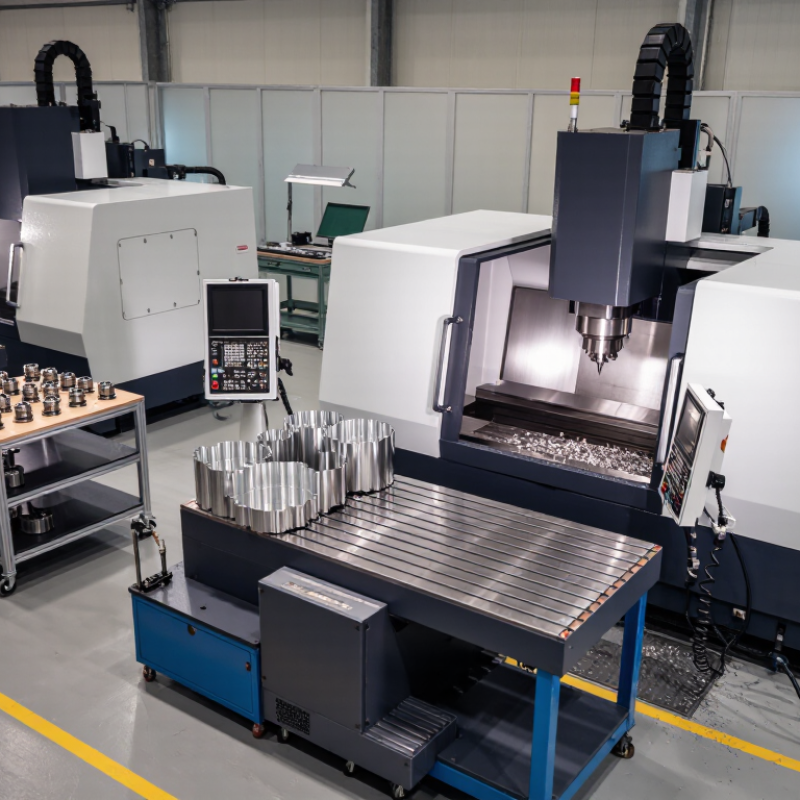
Who Are the Top CNC Metal Parts Manufacturers in China?

What Makes a CNC Metal Parts Manufacturer a Leader in China?

A leading CNC metal parts manufacturer in China is not defined by machine count alone. It must turn drawings into parts that fit, function, and arrive consistently. Engineers should review tolerances, material grades, surface finishes, and production quantities before quoting. That early discussion can reveal design risks, such as a deep pocket that needs special tooling. Small details matter.

Strong manufacturers use documented processes for machining, deburring, and inspection. They can explain how they measure critical features, using tools such as micrometers or coordinate measuring machines when appropriate. Ask for sample parts and inspection records for features that affect fit. Reliable suppliers also track material batches and communicate changes promptly. A polished website is not proof. Real capability shows in repeatable results and clear answers. Even capable teams can miss a detail, so review drawings together.

Tips: Send a fully dimensioned drawing and identify critical tolerances. Request a sample run before larger orders. Compare inspection reports, lead times, and communication—not just unit price. Ask how the supplier handles a part that fails inspection.

How China’s CNC Manufacturing Industry Is Organized

China’s CNC manufacturing industry is not one uniform factory floor. It is a network of specialist workshops, engineering teams, material suppliers, and finishing facilities. Many manufacturers focus on particular processes, such as turning, milling, sheet-metal cutting, or surface treatment. This specialization lets buyers match a project with the right equipment and experience. Details vary.

Production often follows a chain. A customer shares drawings, tolerances, and expected quantities; engineers review the design and plan machining steps. Nearby suppliers may provide aluminum, stainless steel, or other stock, while separate partners handle anodizing, coating, or heat treatment. A machined housing might move between several facilities before inspection. That coordination matters.

The industry also includes small job shops and larger factories with dedicated production lines. Smaller shops can be flexible for prototypes and low-volume orders. Larger operations may offer steadier capacity for repeat batches, though scale alone does not guarantee consistent quality. Buyers should ask how dimensions are checked, how revisions are tracked, and whether inspection records accompany parts. A clear process is reassuring, but paperwork cannot replace a careful review of sample parts. China’s industrial clusters can shorten sourcing routes, yet communication and quality checks still need attention. Not always simple.

Leading CNC Metal Parts Manufacturers and Their Specialties

Chinese CNC metal parts manufacturers often build their strengths around specific processes rather than covering every need equally. Some focus on precision turning, producing small shafts, threaded connectors, and bushings with consistent dimensions. Others specialize in multi-axis milling, where deep pockets and angled features require careful toolpath planning.

Sheet-metal specialists handle laser cutting, bending, and welding. Their work may include brackets with clean edges and accurately positioned mounting holes. Surface treatment is another common specialty, from anodizing aluminum to applying protective coatings. These finishes affect appearance, corrosion resistance, and fit, so buyers should confirm requirements early.

Details matter. A capable supplier should explain its materials, tolerances, inspection methods, and production limits clearly. Ask for sample parts and dimensional reports, especially when a component has tight fits or several machined faces. A polished catalog proves little on its own. One supplier may offer excellent machining but lack reliable finishing partners; that distinction can be easy to miss. Reviewing drawings together can reveal practical issues, though it may not expose every production risk. Past performance and clear communication are useful evidence, not guarantees.

Material Specialties in CNC Metal Parts Manufacturing

CNC manufacturers commonly work with aluminum, steels, brass, and titanium alloys. Density affects part weight and material selection; the values shown are typical approximate values and can vary by grade and specification.

Production Capabilities, Materials, and Quality Standards

China’s CNC metal-parts manufacturers differ in machine capacity, batch size, and process control. Many shops combine CNC milling and turning, while advanced facilities may offer multi-axis machining for complex geometries. Ask whether the quoted tolerance applies to every feature or only selected dimensions. That matters. A small aluminum housing may need a different setup from a stainless-steel shaft, even when both appear simple on a drawing.

Common materials include aluminum alloys, stainless steel, brass, carbon steel, and titanium. Confirm the exact grade and request material certificates when traceability matters.

Quality checks should match the part’s risks, not just the supplier’s brochure. Look for first-article inspection, in-process measurements, and final checks using tools such as micrometers or coordinate-measuring machines. For critical dimensions, ask for actual inspection records and a clear sampling plan. Not always. A polished sample can still conceal inconsistent production, so review parts from a normal production run when possible.

Certifications such as ISO 9001 can indicate a documented quality system, but they do not guarantee that every part will meet specification. Ask how nonconforming parts are recorded and corrected. Small details count. Burr removal, surface finish, and packaging can affect fit after machining; these points are easy to overlook, even by experienced buyers.

How to Compare Manufacturers for Your Project

Comparing CNC metal parts manufacturers in China requires more than matching prices. Start with the part itself: send a clear drawing, material grade, target quantity, critical dimensions, and surface-finish requirements. Then compare quotations line by line. Check whether tooling, packaging, inspection, and shipping are included. A low unit price may still make sense for a simple part, but unclear assumptions can change the final cost.

Ask how each manufacturer verifies dimensions. A useful answer names the inspection tools and explains when checks occur, such as after machining and before shipment. Request sample inspection records for similar work, with sensitive customer details removed. Also confirm material traceability, realistic lead times, and how design changes are handled. One detail is easy to miss: a promised tolerance may apply only to selected features, not the entire part.

Tips: Share a 2D drawing and a 3D model when available. Mark critical dimensions clearly. Ask for a first-article sample before approving a larger run. Compare response quality, not just response speed. If answers feel vague, pause and clarify; that extra step can save rework.

A manufacturer’s equipment list is useful, but it does not prove consistent output. Ask about comparable part sizes, batch controls, and the process for handling out-of-spec results. If possible, review a sample under the same measurement conditions you will use at delivery. Not every project needs the most elaborate inspection plan. Still, choosing one without checking the risks is a judgment worth revisiting.

Who Are the Top CNC Metal Parts Manufacturers in China? - How to Compare Manufacturers for Your Project

This table compares common Chinese CNC supplier profiles rather than ranking or identifying specific companies. Capability figures are indicative industry benchmarks, not guarantees; confirm tolerances, equipment, certifications, and lead times against the supplier’s quotation and inspection plan.

Comparison factor Prototype-Focused Machine Shop Precision CNC Specialist High-Volume Production Supplier Integrated Manufacturing Supplier Large-Part Machining Supplier
Typical project fit Design validation, one-off parts, and early-stage product development Tight-tolerance components and repeatable small-to-medium production runs Stable, recurring orders where cycle time and unit cost are priorities Parts requiring machining plus finishing or other coordinated processes Structural or industrial components with large dimensions or mass
Common processes 3-axis and 5-axis milling, turning, drilling, and tapping Multi-axis milling, precision turning, grinding, and fine-feature machining CNC milling and turning, automation, and dedicated production fixtures CNC milling and turning, with services such as deburring, finishing, or assembly coordination Large-format milling, boring, turning, and machining of heavy workpieces
Common metals Aluminum alloys, stainless steel, brass, and engineering steels Aluminum, stainless steel, alloy steel, brass, and selected titanium grades Aluminum, steel, stainless steel, brass, and other materials suited to repeat production Aluminum, stainless steel, carbon steel, copper alloys, and project-specific metals Carbon and alloy steels, stainless steel, aluminum, and cast metal components
Indicative tolerance discussion General machined features are often quoted around ±0.05 mm; tighter features require review Some features may be quoted around ±0.01 mm or tighter when geometry, material, and inspection method permit Production capability should be assessed using process capability data for the specific feature Machining tolerances depend on the operation; finishing or coating may affect final dimensions Large-part tolerances depend on size, setup, material movement, and measurement method
Typical order profile Samples and low quantities; suitable for iterative drawing changes Prototype through medium batches, especially for dimensionally demanding parts Medium-to-high recurring quantities after process validation Prototype through production orders requiring multiple coordinated operations Low-to-medium quantities of large or heavy components
Lead-time considerations Often suited to short sample runs; material availability and finishing affect delivery Inspection requirements, special tooling, and tight tolerances can extend production time Initial setup and qualification may take longer; repeat orders can follow a planned schedule Multiple processes and outside finishing can add coordination time Machine availability, workpiece handling, and transport planning can affect schedules
Quality evidence to request First-article measurements, material identification, and a documented revision check Inspection reports for critical dimensions, calibrated equipment records, and process controls First-article approval, sampling plan, traceability, and ongoing process-control records Inspection records covering machining and any secondary processes or finishes Measurement plan suited to large features, datum strategy, and handling conditions
Questions to ask before selecting Can you support drawing revisions, material certificates, and a documented sample inspection? Which tolerances can you hold consistently, and how will each critical feature be measured? What is the validated production capacity, and how are changes and nonconforming parts controlled? Which operations are performed in-house, and who is responsible for final-part conformity? What are the machine travel limits, workpiece capacity, and inspection method for the part?
Best comparison priority Responsiveness, sample quality, and engineering communication Verified capability on the actual critical features Stable quality, total landed cost, and dependable repeat capacity Process coordination, traceability, and clear responsibility for outsourced work Machine envelope, dimensional verification, and safe logistics
CAMaster Logo