Selecting the top industrial CNC machine manufacturers worldwide requires more than comparing glossy brochures. Buyers need evidence from real production environments, service records, and engineering performance.
An industrial CNC machine may cut aluminum panels, hardened steel parts, or complex aerospace components. Its value depends on accuracy, rigidity, control software, spindle stability, and long-term maintenance. A machine running beside a noisy stamping line faces different demands than one installed in a clean research facility. Those details matter.
This overview examines established manufacturers through practical and technical criteria. These include machining precision, automation options, energy efficiency, operator support, training, and global service coverage. It also considers how manufacturers respond when production problems occur. Fast troubleshooting can protect an entire shift.
No ranking is perfectly neutral. Market needs differ. A high-speed five-axis system may suit an aerospace supplier, while a compact three-axis model may serve a smaller workshop better. Price alone can mislead buyers. A lower purchase cost may conceal expensive tooling, downtime, or limited technical support.
The discussion draws on published specifications, industry reputation, customer experience, and manufacturing trends. It avoids treating brand recognition as proof of quality. Some details also change quickly, especially software features and automation capabilities. Readers should verify current specifications before making a purchase.
Reliable performance is built over time. Not only on day one.
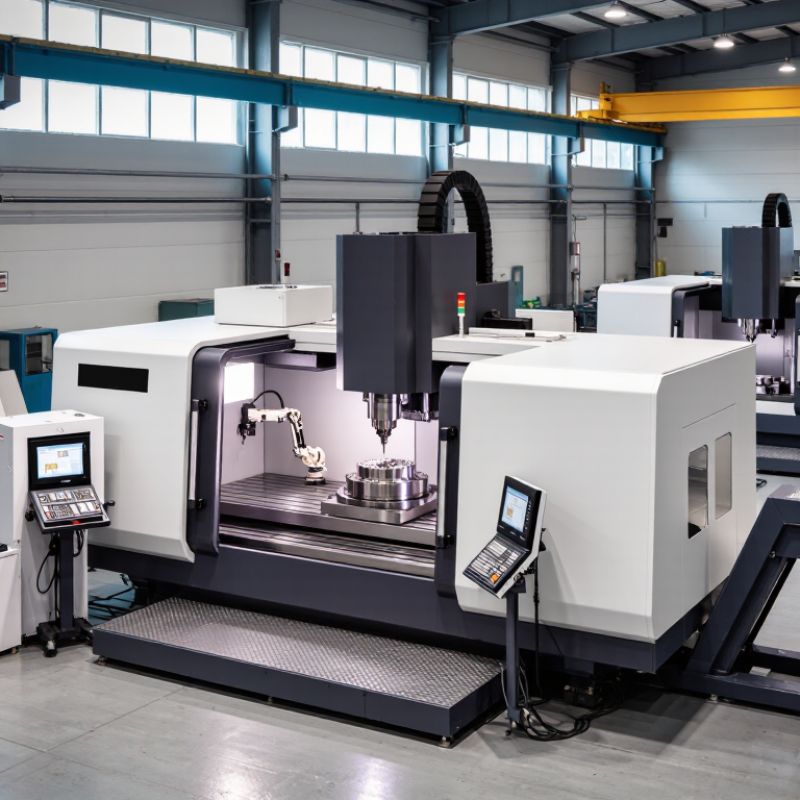
Industrial CNC manufacturing is shifting toward flexible, connected, and energy-conscious production. Demand comes from aerospace, automotive, medical, electronics, and precision tooling. Buyers now examine accuracy, uptime, service support, and operator training. A reliable machine must hold tolerances during long production runs, not only during demonstrations. Dust, vibration, heat, and poor maintenance can quickly change results.
CNC machines are commonly classified by process and movement. CNC turning centers rotate the workpiece while cutting tools remove material. Milling machines move tools across fixed material. Three-axis systems suit many standard parts. Four-axis and five-axis machines reach complex surfaces with fewer setups. EDM systems remove conductive material through controlled electrical discharge. Routers often process wood, plastics, and composite sheets. This classification is useful, but it is not perfect. A five-axis machine is not automatically the best choice. Part geometry, batch size, material, and programming skill still matter.
Tips: Match the machine to the hardest regular task, not the rarest job. Check spindle power, work envelope, repeatability, coolant control, and local technical support. Ask for sample cuts using your material. Review maintenance records carefully. A cheaper purchase can become expensive when training, tooling, and downtime are ignored. I have seen workshops overbuy advanced equipment, then underuse its capabilities. That mistake deserves more attention.
Modern industrial CNC systems depend on coordinated technologies, not cutting speed alone. High-resolution encoders measure axis position continuously. Servo drives then correct motion within milliseconds. Multi-axis interpolation keeps a cutter smooth across curved surfaces. Thermal compensation matters too. Heat changes geometry.
The International Federation of Robotics reported 541,302 industrial robots installed worldwide in 2023. This figure shows the scale of connected automation surrounding CNC production. CNC controllers increasingly exchange data with robots, inspection equipment, and factory software. Digital twins can test toolpaths before metal is cut. Adaptive control can also adjust feed rates when cutting forces rise. However, more sensors do not automatically create better machining. Poor calibration still produces expensive errors. A 2024 industry survey by Deloitte found that 86% of manufacturers view smart manufacturing as important for future competitiveness. The difficult part is implementation, not ambition.
Tips: Start with reliable feedback signals. Check encoder alignment, spindle vibration, and thermal drift. Use a small pilot cell before expanding across the plant. Record tool life, scrap rates, cycle time, and energy use. These measurements reveal whether new software delivers value. Cybersecurity also deserves attention. Connected controllers need network separation, access control, and regular patching. Standards help, but they are not magic. Operators still need training and permission to question automated decisions. Sometimes, the old manual check catches what the dashboard misses.
Regional strength shapes the global CNC machine market. East Asia remains the largest production and consumption center, supported by dense electronics, automotive, and precision-engineering supply chains. The International Federation of Robotics reported that Asia installed about 74% of new industrial robots in 2023. That concentration supports faster automation adoption, although robot demand does not measure CNC output directly.
Europe competes through high-accuracy machining, energy-efficient systems, and strong technical training. European manufacturers often serve aerospace, medical, and specialized industrial customers, where repeatability matters more than sheer volume. North America emphasizes flexible production, automated loading, and nearshoring. Grand View Research estimates that the global CNC machine market will expand at roughly 8% annually through 2030, but market definitions differ between reports. That gap deserves caution.
India and Southeast Asia are gaining attention as manufacturing investment spreads beyond established centers. Their growth is visible in machine-tool imports, factory construction, and rising demand for skilled operators. A workshop floor tells the story: coolant lines, probing systems, and digital dashboards now sit beside traditional cutting tools. Yet adoption is uneven. Smaller factories may purchase capable machines but lack maintenance engineers, process data, or stable training programs. Regional manufacturers that address those practical weaknesses may compete more effectively than suppliers focused only on speed and specifications.
Top Industrial CNC Machine Manufacturers Worldwide
Comparing Product Capabilities, Applications, and Market Strengths
Industrial CNC manufacturers differ less by appearance than by measurable performance. A strong five-axis platform can machine turbine components, medical housings, and complex molds with fewer setups. Turning centers suit shafts, bushings, and repeat production. Large gantry systems handle steel plates, aerospace structures, and heavy tooling. Cutting accuracy matters, but thermal stability matters more during long shifts.
Control software also separates capable suppliers from average ones. Look for collision protection, tool-life monitoring, probing, and remote diagnostics. These features reduce scrap when operators face changing materials or tight tolerances. Automation adds value through pallet changers, robotic loading, and connected scheduling. However, automation can become expensive if the factory lacks skilled maintenance staff. That limitation is often ignored.
Market strength depends on more than machine volume. A reliable service network can shorten downtime when a spindle or encoder fails. Training quality matters too. Manufacturers serving automotive plants may emphasize cycle time and high-volume consistency. Suppliers focused on job shops often prioritize flexible programming and fast changeovers. Construction, energy, and defense-related production may require larger work envelopes and strict traceability. Price comparisons can mislead. A cheaper machine may consume more labor, tooling, and inspection time over several years. Real production data should decide. Perfect forecasts rarely exist.
Comparing Product Capabilities, Applications, and Market Strengths
The chart compares representative spindle-speed ranges commonly specified for major industrial CNC machine categories. Higher spindle speeds generally support smaller tools, faster material removal, and improved productivity in suitable materials. Actual performance varies by machine configuration, workpiece material, tooling, and cutting strategy.
Top Industrial CNC Machine Manufacturers Worldwide
Key Factors for Evaluating Industrial CNC Machine Suppliers
Choosing an industrial CNC supplier requires more than comparing spindle speed or brochure prices. Deloitte’s 2024 Smart Manufacturing Survey found that 92% of manufacturing leaders view smart manufacturing as important for future competitiveness. That makes software integration, data access, and upgrade support serious evaluation points. Check positioning accuracy, thermal stability, controller usability, and tooling compatibility under real production conditions. A clean showroom test is not enough. Request sample cuts using your material, tolerances, and cycle times.
Supplier reliability also appears in the details. Ask for documented acceptance tests, calibration procedures, spare-part availability, and service response targets. The International Federation of Robotics reported 541,302 industrial robot installations worldwide in 2023. This indicates growing automation demand, but connected equipment can increase integration risks. Evaluate network security, remote diagnostics, operator training, and compatibility with existing systems. Calculate total ownership costs, including maintenance, energy use, tooling, downtime, and technician travel. The cheapest machine may become expensive after one serious stoppage.
Tips: Visit a working customer site, if possible. Watch a complete shift, not a staged demonstration. Measure repeatability after warm-up. Ask what failed during the last year and how it was corrected. Some supplier claims remain difficult to verify. Independent testing and written service commitments reduce that uncertainty. Even experienced buyers can overlook operator comfort, chip management, or access around the worktable. These practical details often shape productivity more than headline specifications.
| Evaluation Dimension | Indicative Screening Benchmark | What to Verify | Why It Matters | Recommended Evidence |
|---|---|---|---|---|
| Quality Management | A documented quality management system certified to ISO 9001:2015 or an equivalent national standard. | Check certificate validity, scope, issuing body, covered production sites, and the date of the latest surveillance audit. | A structured quality system supports consistent manufacturing, corrective actions, traceability, and controlled process changes. | Current certificate, audit summary, quality manual, and nonconformity records. |
| Machine Accuracy | Accuracy and repeatability should be stated by machine model and tested under ISO 230-2 or an equivalent recognized procedure. | Review axis positioning accuracy, bidirectional repeatability, measurement uncertainty, test length, and ambient conditions. | Published accuracy values are meaningful only when the measurement method and operating conditions are clearly defined. | Recent machine test report, calibration certificate, and laser interferometer or equivalent measurement records. |
| Machining Performance | For machining centers, performance testing should reference ISO 10791 or an equivalent standard covering geometry, interpolation, and cutting capability. | Request circularity results, surface-finish samples, dimensional inspection data, and cutting tests using the intended material. | A machine may meet positioning specifications but still produce poor parts because of vibration, thermal drift, tooling, or process instability. | Standardized test-part report, sample components, inspection results, and cutting-parameter records. |
| Thermal Stability | The supplier should define warm-up procedures, thermal compensation functions, and expected accuracy variation during extended operation. | Ask for thermal growth test data, spindle warm-up instructions, coolant-temperature controls, and compensation documentation. | Heat from the spindle, motors, coolant, and surrounding environment can cause dimensional drift during long production cycles. | Thermal test report, machine parameter list, compensation settings, and production trial results. |
| Spindle Capability | Rated speed, torque, power, taper type, and duty cycle should match the target material and tooling system; continuous and peak ratings must be distinguished. | Compare torque-speed curves, spindle runout, bearing specification, tool interface, and maximum permissible tooling loads. | Spindle power alone does not determine cutting performance; torque availability, rigidity, runout, and duty cycle are also critical. | Spindle specification sheet, torque curve, runout test, tool-holder requirements, and application trial. |
| Structural Rigidity | The machine structure should be evaluated for mass, guideway design, support geometry, vibration control, and maximum workpiece load. | Review static load limits, acceleration settings, guideway construction, foundation requirements, and test results for chatter or vibration. | Adequate rigidity improves tool life, surface finish, dimensional stability, and productivity during heavy or interrupted cutting. | Structural drawings, load charts, vibration test data, foundation plan, and sample cutting results. |
| Automation Readiness | The control system should support the required number of axes, probing, tool management, data interfaces, and integration with loading or inspection equipment. | Verify interface protocols, robot or bar-feeder compatibility, automatic tool measurement, work probing, and remote monitoring functions. | Automation compatibility affects labor requirements, machine utilization, production consistency, and future expansion. | Interface list, integration drawings, software license details, cycle-time demonstration, and acceptance test. |
| Service and Spare Parts | A clearly defined support network, spare-parts process, escalation path, and remote diagnostic capability should be available in the target region. | Confirm local technicians, response process, critical-parts inventory, technical documentation, and service coverage by country. | Service accessibility directly affects downtime, commissioning speed, and the total cost of ownership. | Service-level agreement, regional support map, spare-parts list, escalation contacts, and customer references. |
| Warranty and Liability | Commercial warranties commonly cover approximately 12–24 months, but coverage, exclusions, travel costs, and labor terms must be specified in writing. | Review warranty start date, covered components, consumable exclusions, response times, repair obligations, and cross-border claims procedures. | Warranty wording can materially change financial risk, especially for spindle, drive, control, and accuracy-related issues. | Signed warranty terms, exclusions schedule, service response commitments, and insurance documentation. |
| Energy and Environmental Performance | The supplier should provide rated electrical input, compressed-air demand, coolant requirements, noise data where available, and environmental certifications such as ISO 14001 when relevant. | Compare energy consumption at idle, standby, and representative cutting conditions; assess waste-fluid and chip-management requirements. | Utility consumption and environmental controls influence operating cost, facility design, regulatory compliance, and sustainability reporting. | Utility specification sheet, energy test data, environmental certificate, waste-handling instructions, and facility requirements. |
| Operator Safety | The machine should comply with applicable machinery-safety requirements for the installation location and include guarding, interlocks, emergency stops, and documented risk controls. | Review conformity documentation, risk assessment, electrical safety records, guarding design, access controls, and safety-function validation. | Safety compliance reduces operational risk and helps prevent delays during commissioning, audits, and site acceptance. | Declaration of conformity, risk assessment, safety circuit test, operator manual, and site acceptance checklist. |
| Delivery and Commissioning | The supplier should provide a written schedule covering design approval, manufacturing, factory acceptance testing, shipping, installation, training, and site acceptance. | Assess lead-time assumptions, logistics responsibilities, installation prerequisites, commissioning duration, and training hours. | A realistic implementation plan reduces production delays and clarifies responsibility for site readiness and acceptance criteria. | Project schedule, milestone plan, factory acceptance protocol, installation checklist, and training plan. |
| Total Cost of Ownership | Evaluate purchase price together with tooling, installation, utilities, maintenance, software, spare parts, training, downtime, and expected service life. | Use a five-year or seven-year cost model with consistent assumptions for utilization, labor, energy, preventive maintenance, and replacement parts. | The lowest initial quotation may not provide the lowest long-term cost when maintenance, downtime, and integration expenses are included. | Itemized quotation, lifecycle-cost model, maintenance schedule, energy estimate, and spare-parts pricing. |
| Reference Projects | At least three comparable installations should be reviewed for machine type, material, production volume, region, and application complexity. | Contact references directly and ask about accuracy retention, service response, delivery performance, training quality, and recurring problems. | Comparable operating history provides practical evidence that is not visible in brochures or laboratory specifications. | Reference list, customer interviews, production samples, acceptance records, and service-history summaries. |