
What Are the Top Remote Control Actuator Suppliers?

Choosing among the top Remote Control Actuator suppliers takes more than comparing price or wireless range. Buyers must match actuator force, stroke, speed, duty cycle, and control interface to the actual load. A unit moving a small ventilation damper faces very different demands from one positioning a heavy industrial valve. Small details matter: mounting space, cable routing, feedback accuracy, and access for maintenance can shape long-term performance.

The wider automation market shows why supplier capability deserves careful review. The International Federation of Robotics’ World Robotics 2024 report counted 4.28 million industrial robots operating worldwide in 2023, a 10% increase from 2022. Robots depend on reliable motion components, though this figure is not a market-size measure for remote actuators. The International Energy Agency’s World Energy Investment 2024 report also documented continued investment in energy systems, where remote positioning and monitoring can support operations across dispersed sites. Context matters.

As instrumentation expert Béla G. Lipták’s Instrument Engineers’ Handbook emphasizes, final-control-element selection affects control-loop performance. A practical takeaway: verify the application, not just the brochure. This introduction compares suppliers by product range, specifications, customization, support, and documented performance. It also flags a limitation: published ratings may not predict performance under every installation condition. Check the datasheet, test requirements, and service terms before shortlisting a Remote Control Actuator supplier.
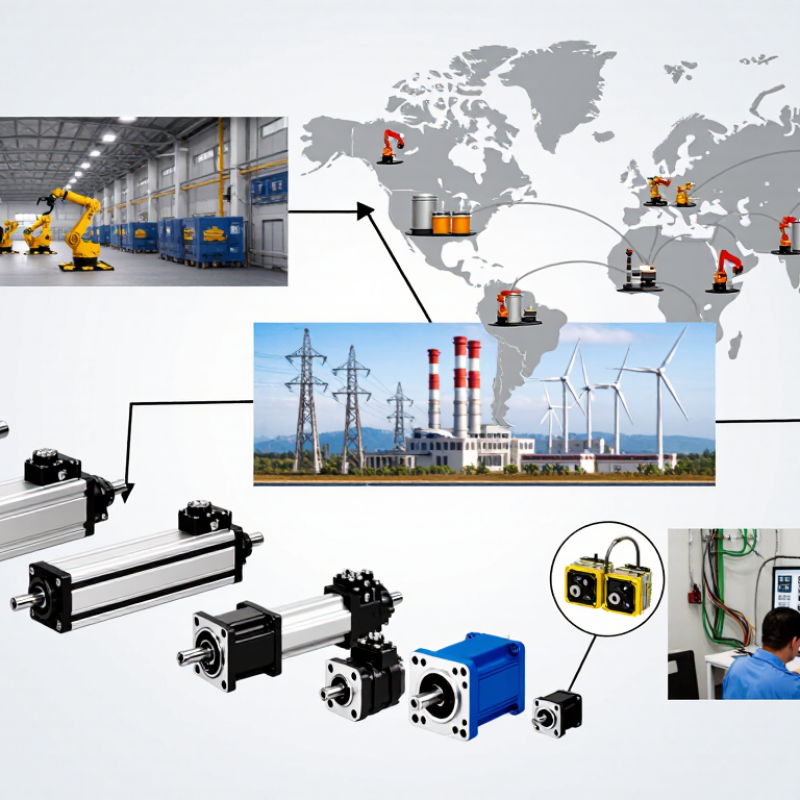
What Are the Top Remote Control Actuator Suppliers?

Remote Control Actuators: Linear, Rotary, and Electric Drive Types

Remote control actuators convert a command into controlled movement, but their working motion differs by type. Linear actuators push or pull along a straight path. They suit adjustable vents, access panels, and equipment covers where the travel distance is known. A visible rod moving several centimeters can make setup and inspection straightforward. Rotary actuators turn a shaft through a set angle, often to position dampers or valves. They need suitable torque and accurate end limits. Small details matter.

Electric drive actuators use a motor and transmission to deliver either linear or rotary motion. They can offer repeatable positioning and simple integration with control systems, though speed, load, duty cycle, and power supply must all match the task. A supplier should provide clear force or torque ratings, stroke or rotation limits, wiring details, and environmental specifications. Ask how performance changes under continuous operation, not just at peak load. Datasheets can still leave gaps.

When comparing suppliers, describe the real operating conditions: load, mounting space, movement frequency, temperature, and control signal. Request dimensional drawings and sample testing where possible. A compact unit may look ideal, yet stall under a side load or cycle too slowly. It is easy to overlook that. Strong technical support helps identify these mismatches before installation, while transparent test data makes comparisons more dependable.

Leading Suppliers: LINAK, Thomson, TiMOTION, Actuonix, and Progressive Automations

What Are the Top Remote Control Actuator Suppliers?

The leading suppliers serve different needs: established makers often offer broad industrial and healthcare ranges, while specialist firms focus on compact units or configurable online ordering. Compare their engineering support, not just product pages. IFR’s World Robotics 2024 report recorded 541,302 industrial robots installed worldwide in 2023, bringing the operational stock to about 4.28 million. This reflects wider automation demand, not actuator sales specifically. It does, however, make reliable motion components increasingly important.

For a real comparison, check rated force, stroke length, speed, duty cycle, voltage, and control options. A unit moving a quiet office screen faces different demands from one positioning a loaded platform all day. Fit matters more. Also check mounting dimensions and cable routing; a few millimeters can complicate installation. Noise matters too. Published peak force is not necessarily a sensible continuous working load.

One weakness in my own first-pass comparisons: maximum force looked decisive, but duty cycle and service access mattered more in practice. Ask suppliers for load curves, wiring diagrams, and replacement-part availability. A polished specification sheet helps, but it cannot reveal every installation issue. Compare lead times and warranty terms as well, and test a sample under the actual load where possible.

What Are the Top Remote Control Actuator Suppliers? — Supplier Comparison Guide
Evaluation Dimension Common Options or Specifications What to Check with a Supplier Why It Matters
Actuator type Electric linear, electric lifting column, or rotary actuator Confirm the motion type, mounting arrangement, and available stroke or rotation range. The actuator must match the movement and space requirements of the application.
Power and control Wired control, radio-frequency remote, or integration with a control system Check supply voltage, controller compatibility, remote pairing, and any required interfaces. Compatible electronics are essential for reliable operation and installation.
Load and speed Rated force or torque and travel speed vary by model and operating conditions. Request the rated load, duty cycle, speed under load, and performance data for the intended setup. A unit’s performance depends on the load, direction of travel, and duty cycle.
Stroke and installation Stroke length, retracted length, mounting points, and end-of-travel limits Compare dimensional drawings and confirm clearance throughout the full movement range. Dimensions and mounting geometry determine whether an actuator fits the equipment.
Environmental protection Ingress protection ratings are specified by model; enclosure protection is not universal. Verify the stated IP rating and permitted temperature, moisture, dust, and cleaning conditions. The operating environment affects service life and suitability.
Safety features Options may include limit switches, overload protection, or anti-collision functions. Confirm which features are included, optional, or dependent on the controller and system design. Safety functions and responsibilities can differ across products and applications.
Certifications and documentation Compliance documents and certifications depend on the product, market, and configuration. Ask for current declarations, test reports, wiring diagrams, and installation instructions relevant to the project. Documentation helps verify regulatory and technical requirements before purchase.
Customization and support Availability varies; potential requirements include custom cables, brackets, controls, or product configurations. Clarify engineering support, sample availability, production lead times, warranty terms, and spare-parts access. Support and supply arrangements influence integration, maintenance, and project schedules.

Compare Supplier Data: Force (N), Stroke (mm), Speed (mm/s), and Duty Cycle (%)

Remote control actuator suppliers are easier to compare when their specifications use the same test conditions. Force, listed in newtons, may describe pushing capacity, but confirm whether it is peak force or continuous force. A large peak value can look impressive and still mislead. Check the rated voltage, load direction, and operating temperature behind the figure.

Stroke, measured in millimetres, shows how far the rod travels. Match it to the mechanism’s actual clearance; extra travel is not always useful. Speed in millimetres per second should be compared under load, not only at no load. A supplier’s fast figure may slow noticeably when moving a heavy panel. Numbers need context.

Duty cycle, expressed as a percentage, indicates how long an actuator can run within a stated period without overheating. For example, a 25% rating might allow 15 seconds of operation in each minute, subject to the supplier’s conditions. Ask whether rest periods, ambient temperature, and load affect that rating. A comparison table helps, but gaps matter too. If one supplier omits loaded speed or duty-cycle conditions, mark the value as unverified rather than treating it as equal. It is an imperfect comparison, but an honest one.

Verify IP67 Ratings: IEC 60529 Specifies 1 m Immersion for 30 Minutes

What Are the Top Remote Control Actuator Suppliers?

When comparing remote control actuator suppliers, check the test evidence behind every IP67 claim. IEC 60529 defines the IP code, including dust protection and temporary immersion. Its IPX7 test uses immersion at 1 metre for 30 minutes under specified conditions. That is a laboratory rating, not a promise of unlimited underwater operation.

Ask for the complete test report, not just a product-page badge. Confirm the tested actuator matches the model, cable entry, connector, seals, and mounting configuration you plan to buy. Small changes matter. A different cable gland or an opened housing can alter water resistance. Check whether the report identifies the test depth, duration, sample condition, and result. An ISO/IEC 17025-accredited lab can provide stronger confidence in test competence, though accreditation alone does not prove every configuration was tested.

Look closely at the installation environment. Spray, vibration, temperature swings, and repeated cycling may challenge seals differently from a single immersion test. IP67 does not automatically establish suitability for prolonged submersion or high-pressure washing. Still, suppliers’ documents can be hard to compare. That is worth questioning. Request a written explanation of the rating’s limits and the maintenance steps needed to preserve sealing over time.

Remote Control Actuator Suppliers: Verifying IP67 Ratings

IEC 60529 defines the IPX7 reference immersion test as 1 m of water for 30 minutes. IP67 also requires dust-tight protection (IP6X).

Reference condition shown, not supplier test results. When evaluating suppliers, request the actuator’s IP test report and confirm that it covers both IP6X and IPX7.

Check Part-Turn Actuator Mounting Against ISO 5211 Dimensions

A remote-control actuator can match a valve’s torque needs and still fail at the mounting face. Check the flange code, bolt circle, thread size, and drive interface against ISO 5211:2017 before ordering. The standard’s F05 interface uses a 50 mm bolt circle and four M6 fasteners. Small mismatches matter: a hole pattern that is only slightly off can prevent a flush fit or strain the coupling.

Treat the drawing as a working check, not a formality. Measure the valve top flange and actuator base, then confirm the stem or coupling dimensions. Also compare required operating torque with the actuator’s rated output, allowing for the valve’s service conditions. ISO 5211 provides standardized attachment dimensions and torque-related guidance, but it does not confirm that every actuator suits every valve. A drawing can look right and still feel wrong at the bench; that is worth investigating before installation.

Tips: Use a caliper to verify the bolt circle and drive size. Check thread engagement, clearance, and alignment with the actuator unpowered. Keep the relevant ISO 5211 table beside the assembly drawing, and record any deviation before approving the fit.

CAMaster Logo