What Types of Sealing Rings Are There?
Sealing Rings are compact components, but they often protect the most important parts of a machine. They fit between surfaces to limit leaks, keep dust out, or maintain pressure. You may find them in pumps, pipe connections, engines, and hydraulic equipment. A ring that looks simple on a workbench can behave very differently once exposed to heat, pressure, motion, or chemicals.
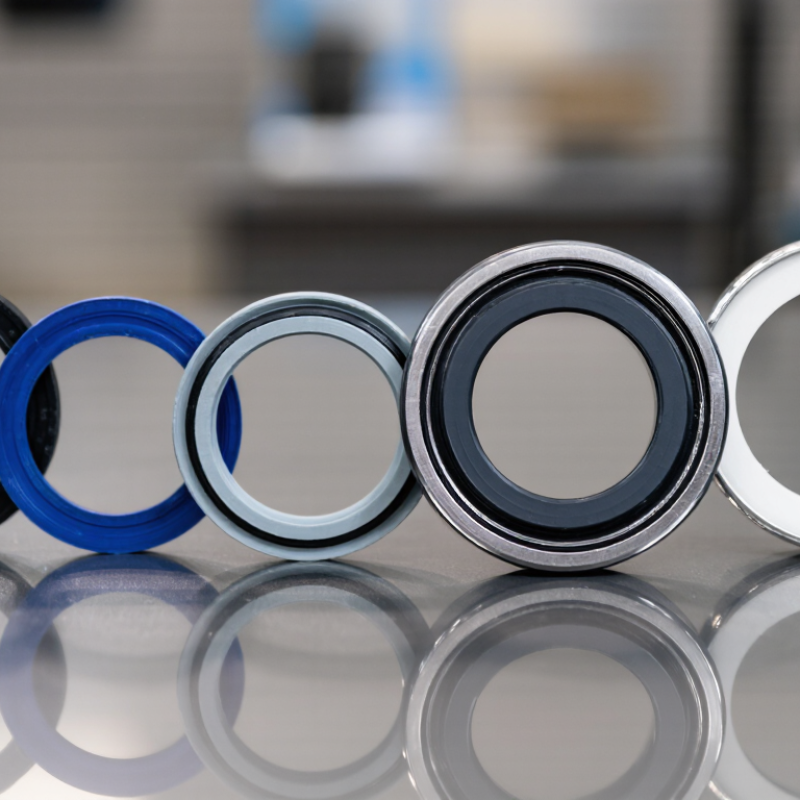
Common designs include O-rings, flat sealing rings, lip seals, bonded seals, and metal rings. O-rings are widely used in both static and moving applications. Flat rings suit many flanged connections, while lip seals are designed to control leakage around rotating shafts. Bonded seals combine a metal washer with an elastomer layer. Metal rings can serve demanding conditions, though their use depends on the joint and installation. Simple, but not trivial.
Material matters just as much as shape. NBR is often selected for oil-related applications, while EPDM may suit certain water-based environments. FKM can handle higher temperatures and some chemicals, but no material works everywhere. Compatibility depends on the exact fluid, temperature, pressure, and compound formulation. That detail is easy to overlook.
This guide introduces the main types of Sealing Rings and explains where each may be appropriate. It also considers installation, surface condition, and common causes of leakage. Selection charts are useful, but they cannot replace checking the equipment specifications. A careful choice starts with the operating conditions—and sometimes with admitting what is still unknown.
How Sealing Rings Are Classified
What Types of Sealing Rings Are There?
How Sealing Rings Are Classified
Sealing rings are commonly classified by shape, material, and sealing action. Shape offers a quick starting point. O-rings have a round cross-section and fit into a groove. X-rings have additional contact lips, while flat rings seal between stationary faces. A ring’s outline tells only part of the story.
Material provides another useful classification. Common choices include elastomers, PTFE, and metal, each suited to different temperatures, fluids, and pressures. Rings are also grouped by movement: static seals stay between fixed surfaces, while dynamic seals work against sliding or rotating parts. These categories can overlap. A material name alone does not confirm compatibility; the exact fluid and operating conditions matter.
Tips: Check the groove dimensions, shaft movement, and working temperature before choosing a ring. Look for wear, swelling, or flattened edges on a used seal. When specifications are unclear, pause and verify them. Classification is helpful, but it is not a substitute for checking the actual application.
Common Sealing Ring Designs and Their Functions
O-rings are round-section rings used in static joints and moving parts. When compressed in a groove, they block fluid or air from passing through the gap. A hydraulic cylinder, for example, may use an O-ring to seal a stationary connection, while a suitable dynamic design can seal around a moving piston. Material, pressure, temperature, and lubrication all affect performance.
Lip seals use a thin, flexible edge that presses against a shaft or bore. This shape can help retain lubricant and keep dust out, though friction and wear need attention in rotating equipment. Flat sealing rings, often called gaskets, sit between two flat faces. They are common on covers and pipe connections, where even bolt pressure helps the ring close small surface irregularities.
Backup rings support an O-ring under high pressure and help reduce extrusion into a clearance gap. X-rings have a four-lobed profile, which can provide more contact points and room to hold lubricant than a basic O-ring. Fit matters. A ring that looks correct may still leak if its groove is too deep, its material is incompatible, or the mating surface is scratched. Real assemblies are rarely perfect, so checking dimensions and operating conditions is more useful than choosing by shape alone.
Sealing Rings by Material and Construction
Sealing rings are chosen by matching their material and construction to the job. Nitrile rubber is commonly used with oils and fuels, while EPDM often suits water, steam, and outdoor exposure. Silicone remains flexible across a broad temperature range, but may wear quickly in abrasive contact. PTFE offers low friction and broad chemical resistance, though it can deform under sustained pressure. No universal winner.
Construction matters just as much. A round O-ring sits in a groove and seals when compressed. Lip seals use a thin edge to control fluid or exclude dust around a moving shaft. Backup rings support seals under higher pressure and help limit extrusion into small gaps. Some designs bond elastomer to a metal insert, adding support where assembly loads or movement could distort a plain ring. A tiny burr on a shaft can still damage a soft sealing lip.
Before specifying a ring, check the fluid, temperature, pressure, motion, groove dimensions, and surface finish. A seal that works well in a static joint may fail in a fast-moving assembly. Installation details matter, too: twisting an O-ring can create a leak path before equipment even starts. Material charts are useful, but they cannot capture every real operating condition; testing the chosen design in its actual environment is often necessary.
What Types of Sealing Rings Are There?
Typical temperature ranges by sealing-ring material
How to read: The bars show approximate, commonly cited service-temperature ranges in °C. Actual limits depend on the compound, fluid, pressure, and operating conditions.
Common constructions: O-rings are versatile for static and some dynamic seals; X-rings can reduce twisting in reciprocating applications; lip seals are commonly used for rotating shafts; bonded seals combine a metal washer with an elastomer sealing element; backup rings help resist extrusion in high-pressure applications. Choose both material and construction for the specific design.
Where Different Sealing Ring Types Are Used
O-rings suit static joints and many low-speed hydraulic or pneumatic connections. Their circular cross-section compresses inside a groove, such as beneath a valve cover or around a cylinder port. For compressed-air equipment, material compatibility and groove fit matter: a ring that swells in oil or gets pinched during assembly can leak. The U.S. Department of Energy’s Improving Compressed Air System Performance guidance reports that leaks commonly waste 20–30% of a system’s compressed-air output. Small seals can have costly consequences.
Rotary shafts often use lip seals to retain lubricant while keeping dust and splash water out. You’ll find them around motor shafts, gearboxes, and wheel hubs. Pumps handling liquids may instead use mechanical seals, which control leakage where a rotating shaft passes through the casing. DOE’s Improving Pumping System Performance sourcebook notes that pumping systems consume 25–50% of energy in some industrial operations. Seal choice alone will not fix inefficient equipment, but leakage and friction deserve attention.
Flange joints commonly use flat rings or gaskets, selected for the fluid, temperature, pressure, and surface finish. Not interchangeable. A soft elastomer ring may work well on a low-pressure water line, while a hot, vibrating pipe joint may need a different material and profile. That choice is not always obvious from a drawing; real operating conditions can expose gaps in the specification.