What Is the Best Woodworking CNC Machine in China?

Choosing the best woodworking cnc machine in China depends on the work it must do, not just its price or advertised speed. A small workshop making cabinet doors has different needs from a factory cutting full-size panels every day. Bed dimensions, spindle power, motion accuracy, dust collection, and control software all affect the result. The details matter.

This guide compares the factors buyers can check before choosing a machine. It looks at frame construction, component specifications, setup requirements, and the availability of training and technical support. A practical test is simple: ask whether the machine can cut your intended material cleanly, repeatedly, and at a realistic production pace. Ask for specification sheets and sample results, then confirm which options are included in the quoted price. Do not assume that a higher spindle rating guarantees better finished parts; tooling, feeds, and operator skill also matter.

There is no single model that suits every shop. A machine that performs well on plywood may need different tooling and settings for solid wood. Even a promising supplier can leave questions unanswered. That deserves attention. Buyers should check warranty terms, spare-parts access, installation support, and the cost of routine maintenance before committing. Where possible, inspect a working machine or request a sample cut using your own material. This comparison offers a grounded way to assess Chinese woodworking CNC options—and a reminder to verify important claims directly with the manufacturer.
What Is the Best Woodworking CNC Machine in China?

Woodworking CNC Machines in China: Types, Axes, and Core Functions

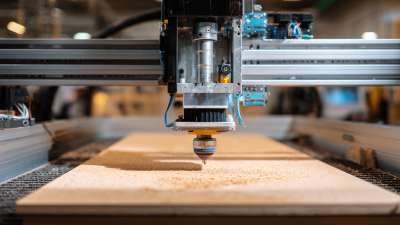
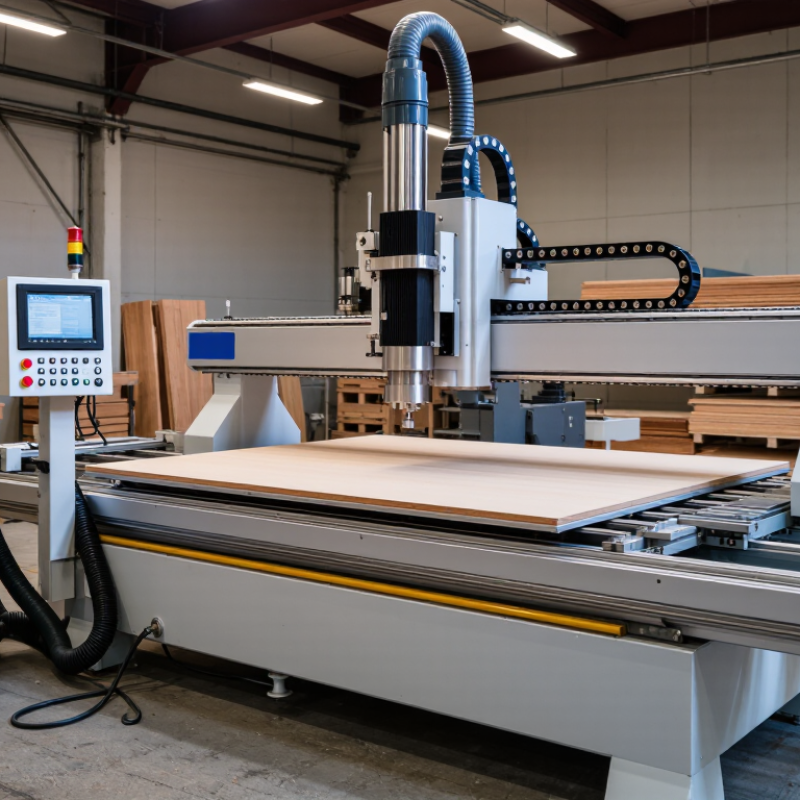
Woodworking CNC machines in China range from compact routers to large production systems. A 3-axis machine moves along the X, Y, and Z directions. It can cut cabinet panels, engrave signs, and drill flat workpieces. For many workshops, this is the practical starting point. The setup is easier to understand. Yet tool choice and workholding still affect accuracy.

A 4-axis machine adds rotary movement, often for carving posts, chair legs, or other rounded parts. A 5-axis model tilts or rotates the cutting head, helping it reach angled surfaces with fewer repositioning steps. More axes do not automatically mean better results. They also require suitable programming, careful calibration, and an operator who understands tool paths.

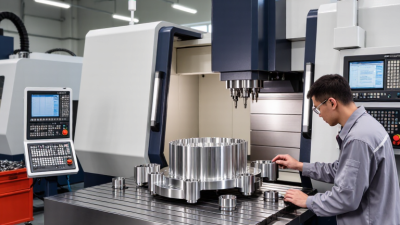
Core functions include routing, pocketing, drilling, engraving, and panel nesting. Some machines use automatic tool changers, while vacuum tables hold sheet material flat during cutting. When comparing options, check the working area, spindle power, controller, dust extraction needs, and local service support. Ask to see a sample cut in material similar to your own. A clean showroom sample can hide setup problems. Specifications matter, but real production tests matter more.

Typical Work Envelopes: 1,300 × 2,500 mm and Larger Formats

A 1,300 × 2,500 mm work envelope suits many cabinet and furniture shops because it accommodates standard sheet goods with modest clearance. APA’s Engineered Wood Construction Guide identifies 4 × 8 ft panels, about 1,219 × 2,438 mm, as a common format. That leaves roughly 81 mm across the width and 62 mm along the length, before clamps, trimming, or vacuum-bed margins. Tight, but workable. In practice, check the usable cutting area, not just the machine’s advertised travel. Fixtures can quietly consume the space you thought you had.

Larger formats, such as 1,500 × 3,000 mm, can reduce repositioning and handle oversized components, but need more floor space and a suitable dust-collection and vacuum system. Grand View Research estimated the global CNC router market at about US$4.6 billion in 2023, reflecting broad demand across applications, not proof that every shop needs a larger bed. A useful selection test is to place your largest regular sheet, clamps, and toolpath margins on a floor plan. Measure twice. Then check door access and sheet-loading height. I would still leave room for awkward jobs; production plans rarely stay perfect.

Core Specifications: 3–12 kW Spindles and Speeds Up to 24,000 rpm

For a woodworking CNC machine in China, spindle power and speed should match the actual cutting work. A 3 kW spindle can suit lighter routing and panel work, while 6–12 kW offers more headroom for deeper cuts and larger tools. That extra power is not automatically better. At 24,000 rpm, a 6 mm cutter travels at about 452 metres per minute at its edge; feed rate, cutter geometry, and timber species still shape the finish. Too much speed with a slow feed can scorch wood.

Grand View Research’s CNC machine market report estimated the global market at about US$101.2 billion in 2023, reflecting broad investment in automated machining. It does not prescribe a woodworking spindle size, so buyers should treat the figure as market context, not a technical rule. Ask suppliers for spindle-load details, runout tolerances, cooling method, and test-cut results in the materials you use. A clean sample matters more than a glossy specification sheet. I would also check local service access; this detail is easy to overlook.

Tips: Match spindle power to your usual cutter and material, then verify stable operation across the working speed range. Request a sample cut in hardwood and sheet goods. Check the edge.

Match 3-, 4-, and 5-Axis Machines to Cabinetry, Doors, and 3D Carving

What Is the Best Woodworking CNC Machine in China?

The right woodworking CNC machine depends on the parts you make, not the number of axes. For cabinet doors, shelves, and flat panels, a 3-axis machine can cut profiles, pockets, and holes efficiently. It is often easier to program and maintain. Check the working area against your largest sheet, and consider dust extraction before comparing cutting speeds. Sawdust matters.

A 4-axis machine adds rotation, helping shape columns, curved rails, and detailed door components. It suits workshops that regularly handle rounded work, though setup takes practice. A 5-axis machine can tilt and rotate the tool to reach compound angles and carve complex forms with fewer repositionings. That capability is useful for sculptural furniture parts, but it costs more and requires skilled programming. More axes are not automatically better; an impressive machine can sit underused if most jobs are flat.

Tips: Match the machine to real sample parts. Ask for a test cut in your wood, then inspect edge quality, tool access, and cycle time. Leave room for operator training. A small detail is easy to miss: cutters wear, and worn tools can spoil a clean finish. Recheck your assumptions after the first production run.

What Is the Best Woodworking CNC Machine in China? — Match 3-, 4-, and 5-Axis Machines to Cabinetry, Doors, and 3D Carving
Comparison Factor 3-Axis CNC Router 4-Axis CNC Router 5-Axis CNC Machine
Axis movement Moves along X, Y, and Z axes. The tool approaches the work from above, making it suitable for flat and shallow-profile work. Adds a rotary axis to X, Y, and Z, allowing the workpiece or tool to rotate for machining around a fourth axis. Uses three linear axes and two rotational axes, allowing the tool to tilt and reach multiple faces in one setup.
Best-fit applications Cabinet panels, nested-based cutting, flat-pack components, signage, and 2D or shallow 3D reliefs. Decorative columns, turned components, curved furniture parts, and selected door or furniture details. Complex 3D carving, sculptural furniture parts, compound curves, and components requiring access from several angles.
Cabinetry suitability Strong choice. Efficient for sheet processing, pocketing, drilling, and profile cutting when the work is mainly planar. Useful when cabinetry includes rotary or curved components; often more capability than standard flat-panel production requires. Can machine complex cabinet components, but is usually unnecessary for routine panel cutting and drilling.
Door-making suitability Suitable for flat doors, panel profiles, shallow carvings, and standard 2D designs. Helpful for selected curved details or rotary features, depending on the machine configuration and workholding. Best suited to doors with deep relief, compound surfaces, or details that require angled tool access.
3D carving suitability Can produce reliefs and 3D forms reachable from the top, but may require repositioning for other faces. Can carve around a rotary workpiece and is useful for suitable cylindrical or rotational designs. Offers the greatest access to angled surfaces and complex forms, subject to machine reach and programming.
Typical setup complexity Generally the simplest of the three to program and fixture for flat-sheet work. Requires rotary-axis setup, suitable fixtures, and toolpaths designed for the additional motion. Requires more advanced programming, calibration, collision checking, and workholding planning.
Floor-space and investment considerations Often the most practical entry point for shops focused on standard woodworking and sheet goods. May add machine and setup cost compared with a basic 3-axis configuration; value depends on rotary work volume. Typically involves greater equipment and programming investment; best justified by frequent complex, multi-face work.
Key specification checks Working area, spindle power, tool-changing needs, vacuum hold-down, dust collection, and controller compatibility. All relevant 3-axis checks, plus rotary-axis capacity, workpiece clearance, indexing or simultaneous rotation, and fixtures. Axis travel, head/table configuration, usable clearance, simultaneous control, calibration, collision prevention, and service support.
Practical recommendation Choose for high-volume cabinetry, flat doors, and most panel-based woodworking. Choose when rotary or curved components are a regular part of production. Choose when complex 3D forms or multi-angle machining are routine and the added capability will be used.

Assess Safety and Build Quality Against GB/T 5226.1-2019

Choosing the best woodworking CNC machine in China means examining safety and construction, not just cutting speed. GB/T 5226.1-2019 addresses electrical equipment on machinery, including protective measures, control circuits, and electrical documentation. It is a useful reference, but it does not certify every aspect of a machine’s build quality.

During a factory inspection, check that the main isolator is easy to reach and clearly marked. Open the electrical cabinet with a qualified technician. Look for tidy wiring, secure terminals, and clear labels. Test emergency stops and confirm that restarting requires deliberate action. Ask for the wiring diagram and evidence of testing against the standard. Paperwork helps, but it cannot replace hands-on checks.

Build quality needs separate attention. Inspect the gantry joints, cable carriers, dust covers, and fasteners for looseness or rough finishing. Run a sample cut and listen for unusual vibration. Small details matter. A machine can appear solid yet need repeated alignment. I would not judge reliability from one demonstration alone; a longer trial under realistic workshop conditions gives a more useful picture.

CAMaster Logo