
What Are the Top Industrial CNC Machine Types in 2026?
Choosing an industrial CNC machine in 2026 is not simply a matter of buying more axes or faster spindles. The right choice depends on the part, material, tolerance, production volume, and available operators. A small workshop cutting aluminum brackets has different needs from an aerospace supplier machining titanium housings. Details matter.
This guide compares the leading machine types: CNC mills, lathes, routers, grinders, and electrical discharge machines. It also considers multi-axis platforms and hybrid systems, which combine machining methods in one setup. Each type has strengths. Each has limits. A five-axis mill can reach complex surfaces, but its cost and programming demands may not suit every shop. A CNC lathe can produce cylindrical components efficiently, yet it is not a universal solution.
Manufacturing scholar Yoram Koren’s definition of reconfigurable systems emphasizes designs “for rapid change in structure.” That idea is useful when assessing modern CNC equipment, where production needs can shift quickly. Still, flexibility alone does not guarantee a good investment. Tooling, maintenance, training, and cycle time deserve equal attention. Even experienced buyers can misjudge these trade-offs.
The sections ahead explain how each machine works, where it performs best, and what to check before purchase. Expect practical comparisons, not a single winner. The best industrial CNC machine is the one that reliably makes your parts, within your real budget and production constraints.
Core Categories of Industrial CNC Machines in 2026
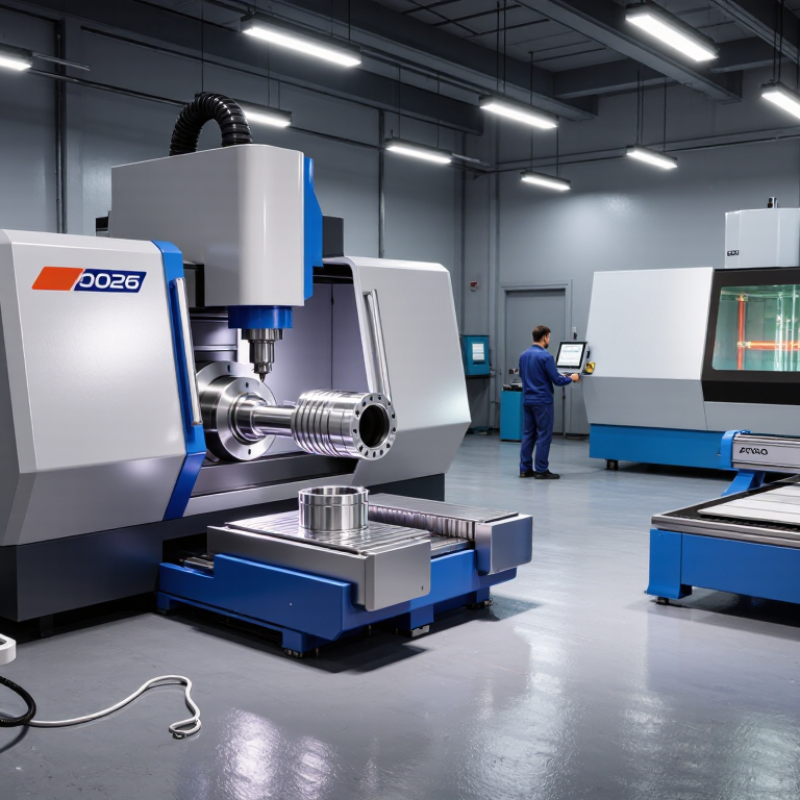
Industrial CNC machines are grouped by how they remove material and shape a part. CNC milling machines use rotating tools to cut slots, pockets, and flat surfaces. Three-axis models handle many common parts, while additional axes can reach angled features with fewer setups. CNC lathes rotate the workpiece against a stationary cutting tool. They suit shafts, bushings, and other round components.
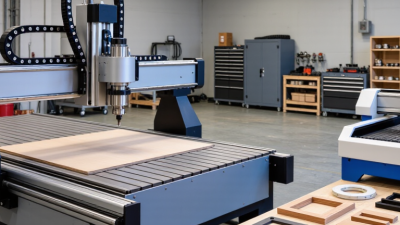
CNC routers are built for large sheets and lighter materials, such as wood, plastics, and composites. Their broad tables make panel work practical, though rigidity varies by machine. CNC grinders use abrasive wheels to refine dimensions and surface finish. They are useful when a part needs close tolerances. Electrical discharge machines shape conductive materials with controlled sparks. They can reach narrow details, but material removal is often slower.
The right category depends on part geometry, material, tolerance, and production volume. A milling machine may be versatile, yet a dedicated lathe can be more efficient for repeated cylindrical parts. That trade-off deserves a real review. Tooling, workholding, operator skill, and maintenance also affect results. Published accuracy figures alone do not tell the whole story; conditions on the shop floor matter. A machine that fits the part and process is usually more valuable than one with the most axes.
What Are the Top Industrial CNC Machine Types in 2026? — Core Categories of Industrial CNC Machines in 2026
| CNC Machine Type | How It Works | Common Axis Configurations | Typical Materials | Common Industrial Uses | Key Strength |
|---|---|---|---|---|---|
| CNC Milling Machine | Rotating cutting tools remove material from a workpiece held on a table or fixture. | 3-axis; 4-axis and 5-axis configurations are also widely used. | Aluminum, steel, stainless steel, titanium, plastics, and composites. | Machining housings, brackets, molds, dies, and precision components. | Versatile cutting of flat surfaces, slots, pockets, and complex contours. |
| CNC Lathe and Turning Center | The workpiece rotates while a stationary or driven tool cuts its outside or inside surfaces. | Typically 2-axis; turning centers may add live tooling, a Y-axis, or a second spindle. | Steel, stainless steel, aluminum, brass, titanium, and engineering plastics. | Producing shafts, pins, bushings, threaded parts, and other rotational components. | Efficient, accurate production of cylindrical parts and turned features. |
| CNC Router | A rotating spindle cuts or engraves sheet and panel materials, often over a large work area. | Commonly 3-axis; some machines provide 4-axis or 5-axis movement. | Wood, plywood, MDF, plastics, foam, aluminum, and composite panels. | Cabinetry, furniture, signs, panel fabrication, and composite trimming. | Fast, flexible machining of large panels and non-metallic materials. |
| CNC Grinding Machine | An abrasive wheel removes small amounts of material to achieve fine dimensions and surface finishes. | Varies by process; common types include cylindrical, surface, and tool grinding. | Hardened steels, carbide, ceramics, and other hard or wear-resistant materials. | Finishing precision shafts, bearing surfaces, cutting tools, and hardened components. | High dimensional accuracy and fine surface finish, particularly on hard materials. |
| CNC Electrical Discharge Machine (EDM) | Controlled electrical discharges erode electrically conductive material without conventional cutting forces. | Wire EDM commonly uses multiple controlled axes; sinker EDM uses programmed electrode movement. | Electrically conductive metals, including hardened tool steel and carbide. | Making intricate dies, molds, narrow slots, and features that are difficult to mill. | Machining complex details in hard conductive materials with minimal cutting force. |
| CNC Laser Cutting Machine | A focused laser beam cuts or marks material along a programmed path. | Usually 2-axis cutting; some systems add a rotary axis or multi-axis cutting head. | Sheet metal, stainless steel, aluminum, and, on suitable systems, wood or plastics. | Sheet-metal blanks, enclosures, panels, brackets, and intricate profiles. | Fast, precise profile cutting with narrow kerfs and minimal mechanical contact. |
| CNC Plasma Cutting Machine | An electrically conductive, high-temperature plasma arc cuts through conductive metal plate or sheet. | Typically 2-axis; bevel cutting and additional axes are available on some systems. | Mild steel, stainless steel, and aluminum plate or sheet. | Structural parts, fabrication components, and heavy plate cutting. | High cutting speed for conductive metals, especially in medium-to-thick plate work. |
| CNC Waterjet Cutting Machine | A high-pressure water stream, often mixed with abrasive, cuts material without a heat-affected zone. | Commonly 2-axis; 3-axis and 5-axis systems can cut angled edges and complex contours. | Metals, stone, glass, ceramics, rubber, composites, and many heat-sensitive materials. | Cutting plate, tiles, gaskets, composite panels, and heat-sensitive parts. | Cold cutting minimizes thermal distortion and suits a broad range of materials. |
Related Posts
-
Top Industrial CNC Machine Manufacturers Worldwide
-

What Kind of CNC Machines Are Right for Your Manufacturing Needs?
-
China's Intelligent Manufacturing Revolutionizes the Global Market for Best CNC Router Machines
-

CNC Router Machines Highlighted at 2025 China Import and Export Fair Celebrating Innovation in Industry
-
Mastering the Art of CNC Router Table Techniques for Precision Woodworking
-
What Are the Top 10 Types of CNC Routers?
BUSINESSES USING CAMASTER